
MARKETMAZE · ECOMMERCE TOOLS · RESEARCH
12 Best Multichannel & Marketplace Management Software (2026)
Multichannel commerce gets messy when listings, stock and orders live in separate channel consoles. We compared 12 marketplace management platforms on marketplace coverage, catalog mapping, inventory sync, order routing, exception handling, implementation burden and current value for ecommerce teams.
Research checked 27 September 2026 against official vendor sources.
New to this category? Marketplace management software sits between your source systems and the sales channels where customers buy. The useful products do more than copy listings: they adapt product data to each marketplace, keep sellable stock aligned, import orders, route operational work and show teams where channel-specific errors need attention. The right choice depends on how many marketplaces you run, how complex your catalog is, which system owns inventory and orders, and how much implementation effort your team can support.
🧭 Jump to a tool
🏆 The quick answer
ChannelEngine
Broad marketplace coverage with centralized control for scaled teams.
Sellbrite
A simpler entry point for smaller sellers starting multichannel operations.
Base.com
Strong marketplace operations coverage with accessible entry pricing.
Rithum
A broad enterprise commerce network for larger brands and retailers.
Descartes Sellercloud
Deep control across catalog, inventory, orders and fulfillment workflows.
PlentyONE
Strong European fit across marketplaces, inventory and operational workflows.
MarketMaze take: The category splits into three distinct buying patterns. Enterprise platforms such as ChannelEngine and Rithum optimize for channel breadth and integration. Operations suites such as Sellercloud, Linnworks and PlentyONE connect marketplaces to inventory and fulfillment. SMB tools such as Sellbrite and LitCommerce optimize for fast setup and price. Choose the operating model first, then compare channel lists.
📊 Tool comparison & scores
Rank | Tool | Score | Best for | Pricing |
|---|---|---|---|---|
1 | 94/100 | Scaled marketplace operations | Custom quote | |
2 | 93/100 | Enterprise commerce networks | Custom quote | |
3 | 92/100 | Best value across sizes | Free; Business $99/mo | |
4 | 91/100 | Ops-heavy multichannel sellers | From $1,349/mo annual | |
5 | 90/100 | Mature ops automation | Custom quote | |
6 | 89/100 | Complex catalog mapping | Custom quote | |
7 | 88/100 | US marketplace catalog ops | From $300/mo | |
8 | 87/100 | European multichannel suite | From €59/mo | |
9 | 86/100 | Listings + repricing | From $99/mo | |
10 | 84/100 | Simple SMB marketplace ops | Free; paid from $29/mo | |
11 | 83/100 | Low-cost cross-listing | From $29/mo | |
12 | 80/100 | UK multichannel operations | From £114/mo |
🧪 How we scored these tools
This ranking uses MarketMaze proprietary scoring.
Core job performance — 30% How well the platform handles listings, inventory, orders and channel exceptions.
Ecommerce fit — 20% Depth for real marketplace workflows, catalog requirements and multichannel operating models.
Workflow & control — 15% Automation, rules, exceptions, bulk operations and day-to-day operational visibility.
Integrations & implementation — 15% Marketplace coverage, commerce-system connectivity and the practicality of implementation.
Pricing & value — 10% Cost transparency and functional value relative to the target customer segment.
Scale & advanced capabilities — 10% Support for larger catalogs, teams, regions, governance and complex operating requirements.
🤔 Do you even need marketplace management software?
Probably yes ✅
You sell on multiple marketplaces and spend real time fixing listings, reconciling stock, importing orders or adapting product data separately for each channel.
Maybe 🟡
You are adding a second or third marketplace and manual work is starting to grow, but your order volume and catalog complexity are still manageable.
Probably not yet ⏳
You sell on one marketplace, maintain a small catalog and can keep stock, listings and orders accurate without repetitive cross-channel work.

🥇 1. ChannelEngine
94/100 · 💰 Enterprise price · 🧩 Advanced · 🏢 Mid-market–Enterprise · ⚙️ Enterprise implementation
🎯 Best for: Mid-market and enterprise teams that need broad marketplace coverage from a central operating layer.
⚡ Choose ChannelEngine if you need deep marketplace reach, centralized control and an implementation model built for larger catalogs and teams.
ChannelEngine is a marketplace orchestration platform for brands and retailers operating across many sales channels. It centralizes listings, pricing, inventory and orders while connecting back to systems such as ecommerce platforms, ERP, PIM and WMS software. The vendor positions the platform for mid-market and enterprise businesses, with support for more than 1,300 sales channels and a guided onboarding model that is better suited to scaled operations than lightweight cross-listing.
📷 ChannelEngine dashboard for monitoring marketplace activity and operational exceptions. Source: official vendor website/documentation.
💚 What we like
Very broad marketplace and retail-channel coverage for international expansion.
Central control across listings, prices, inventory and orders, with integrations into core commerce systems.
Enterprise onboarding and support structure for businesses with complex catalogs, regions or business units.
🟠 What to know
Pricing is tailored rather than published as a simple self-serve plan.
Implementation is heavier than SMB-first tools and requires clean source data plus clear channel ownership.
💡 Why this score: ChannelEngine scores highest because its marketplace breadth, operating controls and integration depth are unusually strong for complex multichannel programs. It loses a few points on pricing transparency and implementation simplicity, but those tradeoffs matter less for the mid-market and enterprise buyers it is built to serve.
💰 Pricing: Custom quote. ChannelEngine says pricing is tailored using factors such as marketplace GMV, SKU count, business units and geography; onboarding fees and optional success-based fees can apply.
✅ Best fit: Brands and retailers with meaningful marketplace revenue, 100+ SKUs, several markets or a roadmap that requires many marketplace connections.
🚫 Less ideal for: Small sellers that mainly need inexpensive cross-listing to two or three channels with minimal implementation.
🧩 Key capabilities
Marketplace listing and catalog distribution
Inventory and price synchronization
Central marketplace order management
ERP, PIM, WMS and ecommerce integrations
Marketplace onboarding and expansion workflows
Operational dashboards and exception monitoring
🔎 Official sources: Product · Pricing · Documentation / feature / integration

🥈 2. Rithum
93/100 · 💰 Enterprise price · 🧩 Advanced · 🏢 Enterprise · ⚙️ Enterprise implementation
🎯 Best for: Large brands and retailers that want enterprise marketplace management plus a broader connected-commerce network.
⚡ Choose Rithum if you operate at enterprise scale and want marketplace listing, inventory and order workflows tied into a large commerce ecosystem.
Rithum brings together the capabilities historically associated with ChannelAdvisor, CommerceHub and related commerce products under one platform. For marketplace operations, it supports centralized product listing, inventory synchronization and order workflows across hundreds of channels, with managed services and enterprise implementation options. It is especially relevant when marketplace management sits inside a larger retailer, dropship, digital marketing or fulfillment architecture rather than being a standalone cross-listing task.

📷 Rithum dashboard view for identifying listing errors and channel issues. Source: official vendor website/documentation.
💚 What we like
Large connected-commerce network with marketplace, retailer and fulfillment relationships.
Strong catalog distribution and marketplace listing workflows for complex enterprise assortments.
Managed services and implementation support for organizations that want operational help as well as software.
🟠 What to know
Commercial terms are quote-based and can include project, service and variable fees defined in order forms.
The breadth of the platform can be excessive for smaller teams that only need basic listing and stock sync.
💡 Why this score: Rithum is nearly tied for the top spot because its enterprise network, channel connectivity and catalog operations are exceptionally deep. ChannelEngine edges it on category focus and pricing structure clarity for marketplace operations, while Rithum remains stronger for organizations that need marketplace software inside a wider connected-commerce program.
💰 Pricing: Custom quote. Rithum uses contracted order forms and service terms rather than publishing a standard marketplace-management price card; implementation or project services can be scoped separately.
✅ Best fit: Enterprise brands, retailers and suppliers with large catalogs, multiple commerce relationships and dedicated ecommerce operations teams.
🚫 Less ideal for: Small and mid-sized sellers that want transparent monthly pricing and a quick self-service setup.
🧩 Key capabilities
Central marketplace listing management
Inventory synchronization across connected channels
Order ingestion and operational workflows
Catalog transformation and channel-specific mapping
Managed implementation and project services
Connections across marketplaces, retailers and fulfillment partners
🔎 Official sources: Product · Pricing · Documentation / feature / integration
🥉 3. Base.com
92/100 · 💰 Budget · 🧩 Intermediate · 🏢 All sizes · ⚙️ Low-code
🎯 Best for: Growing sellers that want unusually broad marketplace connectivity with a low starting price and modular automation.
⚡ Choose Base.com if you want to start cheaply, connect many marketplaces and automate operational workflows without buying an enterprise suite.
Base.com combines marketplace management with a broader ecommerce automation layer for orders, inventory, products, shipping and integrations. Its Marketplace Manager supports bulk offer control, listing workflows and automatic price and stock synchronization, while the wider platform connects to hundreds of marketplaces and many operational systems. The unusually accessible entry point, including a free tier and a $99 Business plan, makes it useful from early-stage multichannel selling through more advanced operations.
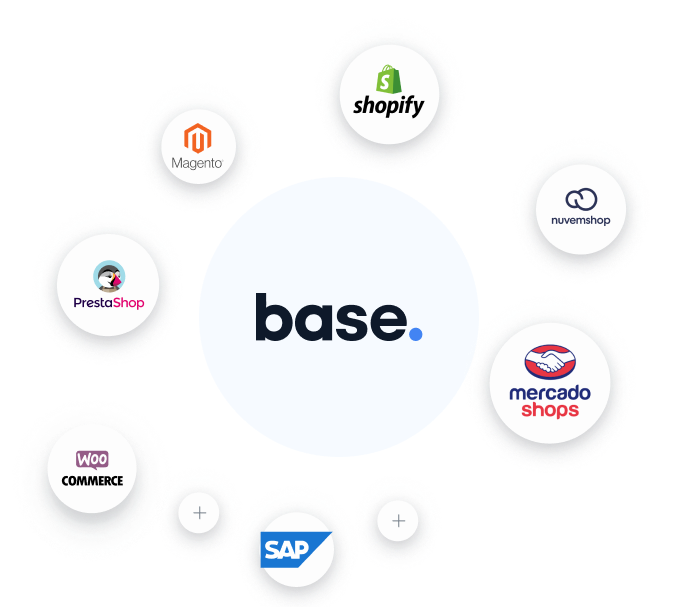
📷 Base.com workflow view showing centralized order forwarding across connected systems. Source: official vendor website/documentation.
💚 What we like
Very strong value for the breadth of marketplace and operational functionality available.
Large integration catalog spanning marketplaces, stores, couriers, ERP and other ecommerce systems.
Flexible automation and modular workflows let teams grow beyond basic cross-listing without replacing the platform immediately.
🟠 What to know
The breadth of modules creates a learning curve compared with simpler marketplace-only tools.
Usage-based commercial mechanics and add-ons require buyers to model their actual order volume before comparing total cost.
💡 Why this score: Base.com scores especially well on ecommerce fit and value. It covers the core jobs buyers expect, offers a broad integration ecosystem and is accessible at a much lower entry price than enterprise platforms. It trails the leaders mainly on enterprise governance, managed implementation and the depth required by the largest global organizations.
💰 Pricing: Freemium plan at $0 for limited order and product volume. Business starts at $99 per month, with higher usage and Enterprise pricing scaling with order volume and GMV.
✅ Best fit: SMBs through larger ecommerce teams that want one operations hub for marketplaces, stores, orders, shipping and automation.
🚫 Less ideal for: Enterprises that need a heavily managed global rollout, complex organizational governance or a dedicated marketplace services layer.
🧩 Key capabilities
Marketplace listing and offer management
Automatic inventory and price synchronization
Central order management and routing
Marketplace and store integrations
Workflow automation and operational rules
Shipping, warehouse and back-office integrations
🔎 Official sources: Product · Pricing · Documentation / feature / integration

4. Descartes Sellercloud
91/100 · 💰 Premium · 🧩 Advanced · 🏢 Mid-market–Enterprise · ⚙️ Specialist-led
🎯 Best for: Operationally complex multichannel sellers that need marketplace management plus deep inventory, warehouse and order control.
⚡ Choose Descartes Sellercloud if you need marketplace operations tightly connected to purchasing, warehousing, order rules and fulfillment.
Descartes Sellercloud is broader than a listing tool. It centralizes catalog data, inventory, orders, purchasing, warehouse workflows, shipping and channel operations in one system. The platform supports more than 150 sales-channel integrations and a larger ecosystem of service integrations, making it especially useful for merchants whose marketplace complexity is driven by physical inventory and fulfillment. Its depth is a strength, but it also means setup and operating discipline matter.
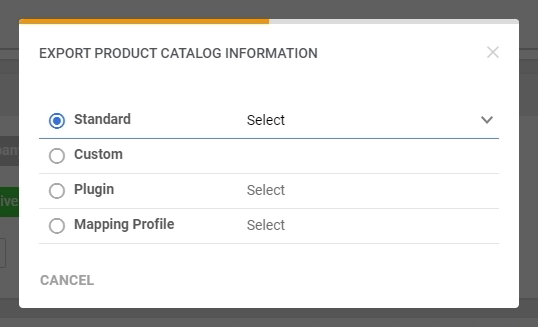
📷 Descartes Sellercloud product catalog export interface. Source: official Sellercloud LMS.
💚 What we like
Deep operational coverage across catalog, inventory, orders, warehouse and shipping workflows.
Strong marketplace connectivity for sellers that need one source of truth across channels and locations.
Order rules, purchasing and fulfillment functions reduce the number of separate operational systems required.
🟠 What to know
The annual pricing starts well above SMB cross-listing tools and increases with volume or add-ons.
Its wide operational scope means implementation and training are more involved than a lightweight marketplace connector.
💡 Why this score: Sellercloud earns a high score for core marketplace operations and workflow control, particularly where stock, warehousing and fulfillment complexity drive the buying decision. It gives up points on price accessibility and implementation simplicity. For high-volume operators, however, that operational depth can be more valuable than a cleaner but narrower listing experience.
💰 Pricing: Starts at $1,349 per month on an annual contract, according to the current pricing page. Volume, optional products and add-ons can increase the total.
✅ Best fit: Mid-market and enterprise merchants with multiple warehouses, high order volume or complex purchasing and fulfillment workflows.
🚫 Less ideal for: Small sellers that mainly need easy listing duplication and basic stock synchronization.
🧩 Key capabilities
Central catalog and multichannel listings
Real-time inventory synchronization
Marketplace order management
Warehouse and fulfillment workflows
Purchasing and replenishment operations
Order-rule automation and integrations
🔎 Official sources: Product · Pricing · Documentation / feature / integration

5. Linnworks
90/100 · 💰 Enterprise price · 🧩 Advanced · 🏢 Mid-market–Enterprise · ⚙️ Specialist-led
🎯 Best for: Established multichannel retailers that want strong automation across orders, inventory, listings and fulfillment.
⚡ Choose Linnworks if your marketplace program is already material and you want a mature operations platform with guided implementation.
Linnworks is a mature multichannel commerce operations platform covering orders, listings, inventory, warehouses, shipping and automation. Its native channel integrations cover major marketplaces and ecommerce platforms, while additional reach is available through partner ecosystems such as Mirakl. The Advanced product is aimed at established sellers rather than beginners, and the vendor highlights guided onboarding with a typical implementation measured in weeks rather than a same-day self-service connection.
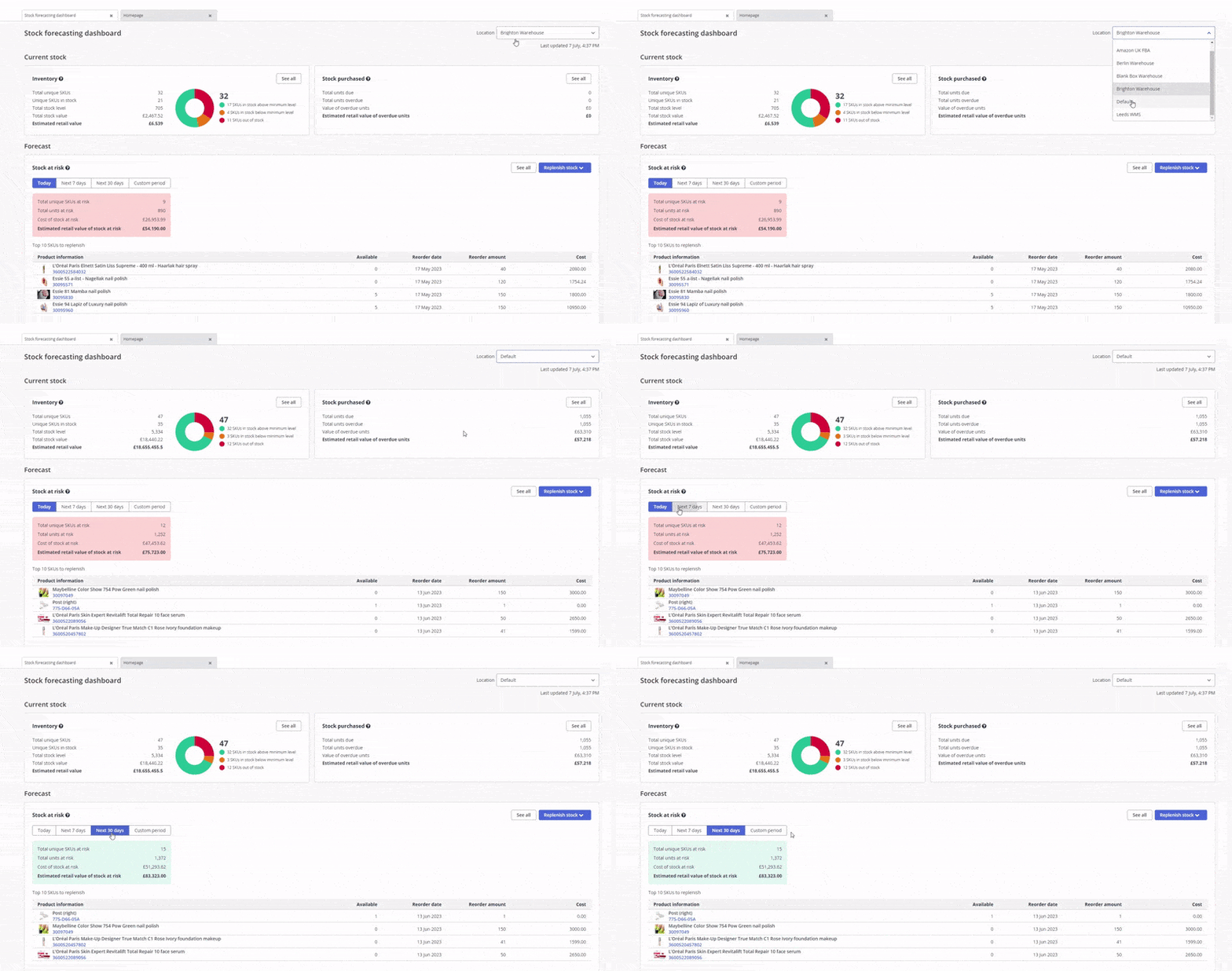
📷 Linnworks Stock Forecasting dashboard for multichannel inventory planning. Source: official Linnworks website.
💚 What we like
Mature order and inventory automation for merchants operating across many sales channels.
Strong rules and workflow controls that reduce repetitive work as order volume grows.
Broad ecosystem of marketplace, shipping and operational integrations backed by implementation support.
🟠 What to know
Pricing is quote-based, so buyers need a sales process before they can compare total cost.
Implementation is typically a project rather than a quick plug-in setup, which may be excessive for simpler catalogs.
💡 Why this score: Linnworks performs strongly across the core jobs and advanced workflow dimensions, with particular strength in operational automation. It ranks just behind Sellercloud because marketplace management is one part of a broader commerce platform and pricing remains opaque. Its maturity and ecosystem still make it a serious choice for scaled multichannel retailers.
💰 Pricing: Custom quote. Linnworks prices according to the selected product and operating profile, including order volume and implementation needs.
✅ Best fit: Established mid-market retailers with significant multichannel order volume and a need for automation across inventory, fulfillment and channel operations.
🚫 Less ideal for: Teams wanting transparent low-cost plans or a marketplace-only tool they can configure in a few hours.
🧩 Key capabilities
Central order management
Inventory synchronization and stock control
Marketplace and webstore integrations
Listing management and catalog workflows
Shipping and warehouse operations
Rules-based automation
🔎 Official sources: Product · Pricing · Documentation / feature / integration

6. StoreAutomator
89/100 · 💰 Enterprise price · 🧩 Advanced · 🏢 Mid-market–Enterprise · ⚙️ Enterprise implementation
🎯 Best for: Brands and high-volume sellers that need detailed product-data mapping and channel-specific marketplace control.
⚡ Choose StoreAutomator if catalog complexity and marketplace-specific product data are harder problems for you than simple order consolidation.
StoreAutomator focuses heavily on high-volume catalog distribution and marketplace operations. It supports product and catalog management, listings, inventory, orders, pricing and custom feed requirements across major marketplaces and retail channels. Its strongest use case is a brand or retailer that needs granular data mapping, channel-level overrides and custom logic across a large assortment. Pricing is quote-based, and the vendor pairs the platform with hands-on onboarding and ongoing operational support.

📷 StoreAutomator multichannel listing-management view illustrating centralized catalog distribution. Source: official vendor website/documentation.
💚 What we like
Strong catalog transformation, field mapping and channel-specific override capabilities.
Broad channel coverage that includes major marketplaces, retail programs and shopping carts.
Hands-on onboarding and support are useful when product data or channel requirements are genuinely complex.
🟠 What to know
No simple public price card means commercial comparison requires a sales conversation.
The platform is more implementation-heavy than tools designed for a small seller connecting a few mainstream marketplaces.
💡 Why this score: StoreAutomator scores highly because it handles complex product data and marketplace-specific controls very well, while still covering inventory and order operations. It trails the top five on pricing transparency and ecosystem maturity. Its score rises materially for brands whose biggest challenge is catalog mapping rather than warehouse or fulfillment orchestration.
💰 Pricing: Custom quote. StoreAutomator states that plans are tailored, with no revenue share and no long-term contract requirement on its current pricing page.
✅ Best fit: Mid-market and enterprise brands with large catalogs, complex attributes and several retailer or marketplace-specific listing requirements.
🚫 Less ideal for: Small sellers that need fast, inexpensive cross-listing with minimal data transformation.
🧩 Key capabilities
Multichannel listing management
Product-data mapping and transformations
Channel-specific catalog overrides
Inventory and order synchronization
Pricing and feed controls
Marketplace, retail and shopping-cart integrations
🔎 Official sources: Product · Pricing · Documentation / feature / integration

7. Zentail
88/100 · 💰 Premium · 🧩 Intermediate · 🏢 SMB–Mid-market · ⚙️ Specialist-led
🎯 Best for: Marketplace-focused brands that want automated category mapping and listing compliance across major US channels.
⚡ Choose Zentail if you want to reduce the manual work of adapting product data to Amazon, Walmart, Target Plus and similar marketplaces.
Zentail is a marketplace-focused platform designed to simplify listing creation and catalog maintenance across channels such as Amazon, Walmart and Target Plus. Its SMART Types approach maps products into marketplace categories and required attributes, while listing status and compliance workflows help teams identify errors before they become a manual spreadsheet project. Pricing starts above entry-level cross-listing tools, but the product is purpose-built for sellers whose main pain is marketplace catalog accuracy.

📷 Zentail listing-status dashboard for monitoring marketplace publishing and errors. Source: official vendor website/documentation.
💚 What we like
Strong marketplace-specific catalog mapping designed to reduce repetitive attribute work.
Clear listing-status and compliance workflows for identifying channel errors.
More focused marketplace experience than broad ERP-style operations suites.
🟠 What to know
The entry price is higher than SMB-first listing tools and scales with usage.
Its marketplace footprint is more curated than platforms built primarily around maximum global channel count.
💡 Why this score: Zentail scores well on ecommerce fit because marketplace listing quality and catalog mapping are central to the product rather than secondary modules. It loses points on channel breadth and price accessibility versus broader rivals. For US marketplace brands, the automation around category mapping can outweigh those gaps and reduce day-to-day listing maintenance.
💰 Pricing: Starts at $300 per month for Base. Pro starts at $2,000 per month, with Enterprise pricing tailored for larger businesses; pricing scales with catalog, sales volume and marketplace activity.
✅ Best fit: SMB and mid-market brands selling on major marketplaces where category mapping, listing compliance and catalog accuracy are recurring operational problems.
🚫 Less ideal for: Businesses prioritizing the widest possible international marketplace network or a full warehouse-management suite.
🧩 Key capabilities
Marketplace listing creation
SMART Types category mapping
Catalog editing and data enrichment
Listing compliance and status monitoring
Inventory and order synchronization
Marketplace-specific publishing workflows
🔎 Official sources: Product · Pricing · Documentation / feature / integration

8. PlentyONE
87/100 · 💰 Mid · 🧩 Intermediate · 🏢 SMB–Mid-market · ⚙️ Low-code
🎯 Best for: European multichannel merchants that want marketplaces, PIM, OMS, WMS and automation in one commerce platform.
⚡ Choose PlentyONE if you sell across European marketplaces and want a broad operational suite with transparent entry pricing.
PlentyONE combines marketplace connectivity with product information, order management, warehouse management and workflow automation. The platform supports more than 150 channels and offers a comparatively transparent pricing ladder, from Lite through Scale and a custom Ultimate tier. It is especially relevant for European sellers that want one system to centralize marketplaces and core commerce operations. The tradeoff is breadth: teams need to configure a larger platform rather than a narrow marketplace connector.
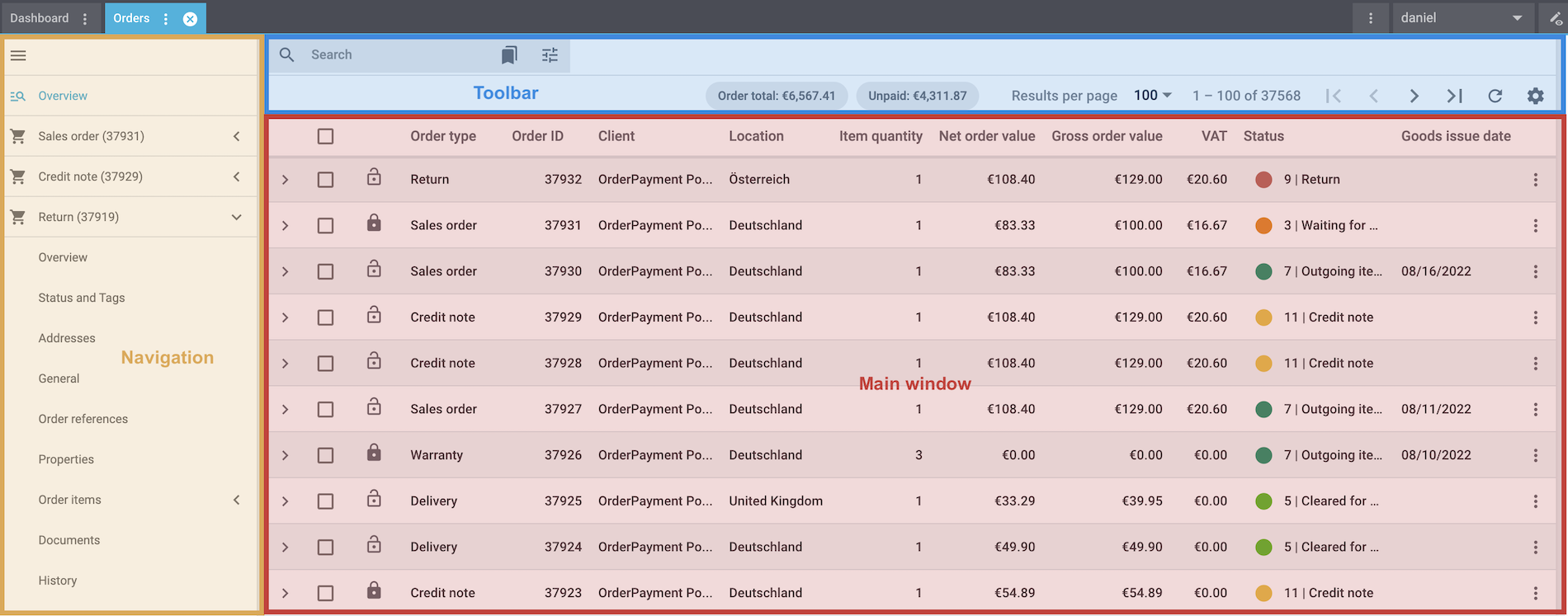
📷 PlentyONE backend order-management navigation from the official product manual. Source: official vendor website/documentation.
💚 What we like
Strong European marketplace orientation with more than 150 connected channels.
Transparent plan ladder makes early commercial comparison easier than quote-only enterprise tools.
PIM, OMS, WMS and automation reduce the need to stitch together several operational products.
🟠 What to know
Pricing depends on both plan and monthly GMV, so the headline subscription is not the whole cost model.
The broader suite requires process design and configuration beyond simply connecting a marketplace account.
💡 Why this score: PlentyONE scores well on value, integration breadth and operational completeness. It ranks below the more enterprise-focused leaders because marketplace management shares attention with a wider commerce suite and global channel depth varies by market. For European SMB and mid-market teams, its combination of transparent plans and broad operations is particularly compelling.
💰 Pricing: Lite €59/month, Lite+ €99, Expand €149 and Scale €229, with Ultimate custom pricing. Plans include marketplace and SKU allowances, and final pricing also depends on average monthly GMV.
✅ Best fit: European SMB and mid-market merchants that need marketplaces plus central product, order, inventory and warehouse workflows.
🚫 Less ideal for: Organizations that want a marketplace-only system or require a heavily managed global enterprise rollout.
🧩 Key capabilities
150+ sales-channel connections
Product information management
Central order management
Inventory and warehouse management
No-code and workflow automation
Marketplace-specific product and stock synchronization
🔎 Official sources: Product · Pricing · Documentation / feature / integration

9. SellerActive
86/100 · 💰 Mid · 🧩 Intermediate · 🏢 SMB–Mid-market · ⚙️ Specialist-led
🎯 Best for: Growing marketplace sellers that want listings, repricing, inventory and order routing under one practical subscription.
⚡ Choose SellerActive if you need multichannel listings plus automated repricing and fulfillment routing without moving into enterprise-only pricing.
SellerActive combines listing management, repricing, inventory synchronization, order routing and multichannel analytics for marketplace sellers. The platform supports major marketplaces directly and extends reach through a large network of shopping and feed destinations. Pricing is published by GMV tier, and core plans include unlimited orders, channels and listings, which makes cost comparison easier than many enterprise alternatives. Guided onboarding and paid implementation services are available when a seller needs more help.
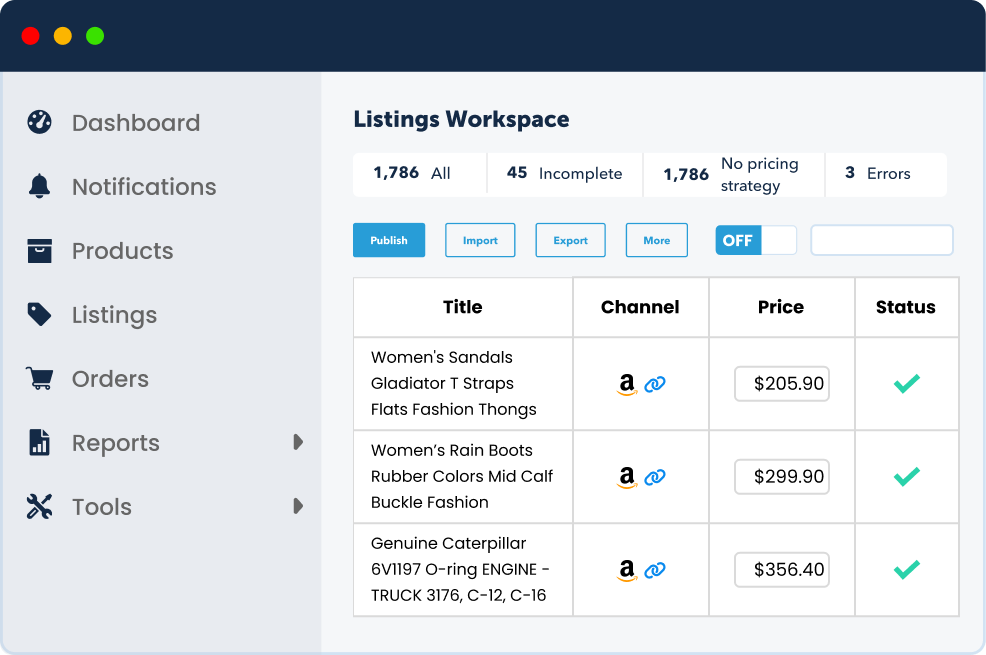
📷 SellerActive Listings Workspace for publishing and monitoring multichannel listings. Source: official vendor website/documentation.
💚 What we like
Published pricing makes it easier to model cost as marketplace GMV grows.
Listing, inventory, order routing and repricing cover a practical set of day-to-day marketplace workflows.
Guided onboarding is available without forcing every customer into a full enterprise implementation project.
🟠 What to know
Some advanced capabilities such as repricing can carry separate add-on fees.
Its channel-count marketing includes feeds and shopping destinations, so buyers should verify the exact marketplace integrations they need.
💡 Why this score: SellerActive balances strong core marketplace operations with relatively clear pricing and a practical mid-market setup model. It scores below specialist leaders on catalog transformation and enterprise governance, but earns value points for unlimited channels and orders within its GMV-based plans. Repricing is also a meaningful differentiator for marketplace sellers.
💰 Pricing: Basic $99/month up to $10,000 GMV, Premium $209 up to $25,000 GMV and Plus $349 up to $100,000 GMV, with custom pricing above that. Repricing is a paid add-on.
✅ Best fit: SMB and mid-market marketplace sellers that want listings, repricing, inventory and order operations in one system with published pricing.
🚫 Less ideal for: Large global brands requiring complex organizational governance, retail-network services or highly customized catalog transformations.
🧩 Key capabilities
Multichannel listing management
Automated marketplace repricing
Inventory synchronization
Order routing and fulfillment connections
Marketplace and feed integrations
Marketplace analytics and listing automation
🔎 Official sources: Product · Pricing · Documentation / feature / integration

10. Sellbrite
84/100 · 💰 Budget · 🧩 Beginner · 🏢 SMB · ⚙️ No-code
🎯 Best for: Small ecommerce teams that need straightforward listing, stock and order sync across major marketplaces.
⚡ Choose Sellbrite if you want a simple, low-cost way to manage a handful of major marketplaces from one place.
Sellbrite is one of the easiest entry points into multichannel marketplace management. It centralizes listings, inventory and orders across major marketplaces and webstores without asking a small team to adopt a full operations suite. The Forever Free plan supports very low order volume, while paid plans scale by monthly orders. That simplicity is the main advantage: Sellbrite is less configurable than enterprise products, but it is much easier to evaluate and start.

📷 Sellbrite multichannel interface showing the product, listing and order-management workflow. Source: official vendor website/documentation.
💚 What we like
Very accessible pricing, including a free plan for low-volume sellers.
Simple marketplace listing, inventory and order workflows are easier for small teams to adopt.
Transparent order-based pricing makes it straightforward to understand when the next plan tier is required.
🟠 What to know
Advanced catalog transformation and enterprise workflow controls are limited versus higher-ranked platforms.
The product is best for mainstream marketplace needs rather than large international channel portfolios.
💡 Why this score: Sellbrite scores strongly on value and ease of use. It covers the essential marketplace jobs with much less setup burden than enterprise systems, which is ideal for small teams. It ranks lower on advanced controls, integration depth and scale because it deliberately prioritizes simplicity over highly customized marketplace operations.
💰 Pricing: Forever Free at $0 up to 30 orders per month. Paid plans include Pro 100 at $29/month, Pro 500 at $79/month and Pro 2K at $179/month; FBA support is an additional fee.
✅ Best fit: Small sellers moving from manual marketplace consoles to one central tool for listings, stock and orders.
🚫 Less ideal for: High-volume or enterprise teams that need sophisticated data mapping, warehousing, custom workflows or managed implementation.
🧩 Key capabilities
Central product listing management
Inventory synchronization
Marketplace order import
Bulk listing workflows
Webstore and marketplace connections
FBA support on eligible plans
🔎 Official sources: Product · Pricing · Documentation / feature / integration
11. LitCommerce
83/100 · 💰 Budget · 🧩 Beginner · 🏢 SMB · ⚙️ No-code
🎯 Best for: Small sellers expanding from a webstore or one marketplace into several mainstream channels.
⚡ Choose LitCommerce if you want no-code cross-listing, 15-minute sync and channel-specific controls at a low monthly price.
LitCommerce is an SMB-focused multichannel listing tool that connects a main store or central catalog to marketplaces such as Amazon, eBay, Etsy, TikTok Shop and Walmart. It supports bulk listing, channel-specific rules, price and inventory synchronization, and unified order handling on a 15-minute automatic cycle. Pricing starts at a comparatively low level, making it appealing to sellers who have outgrown manual cross-listing but do not need an enterprise commerce platform.
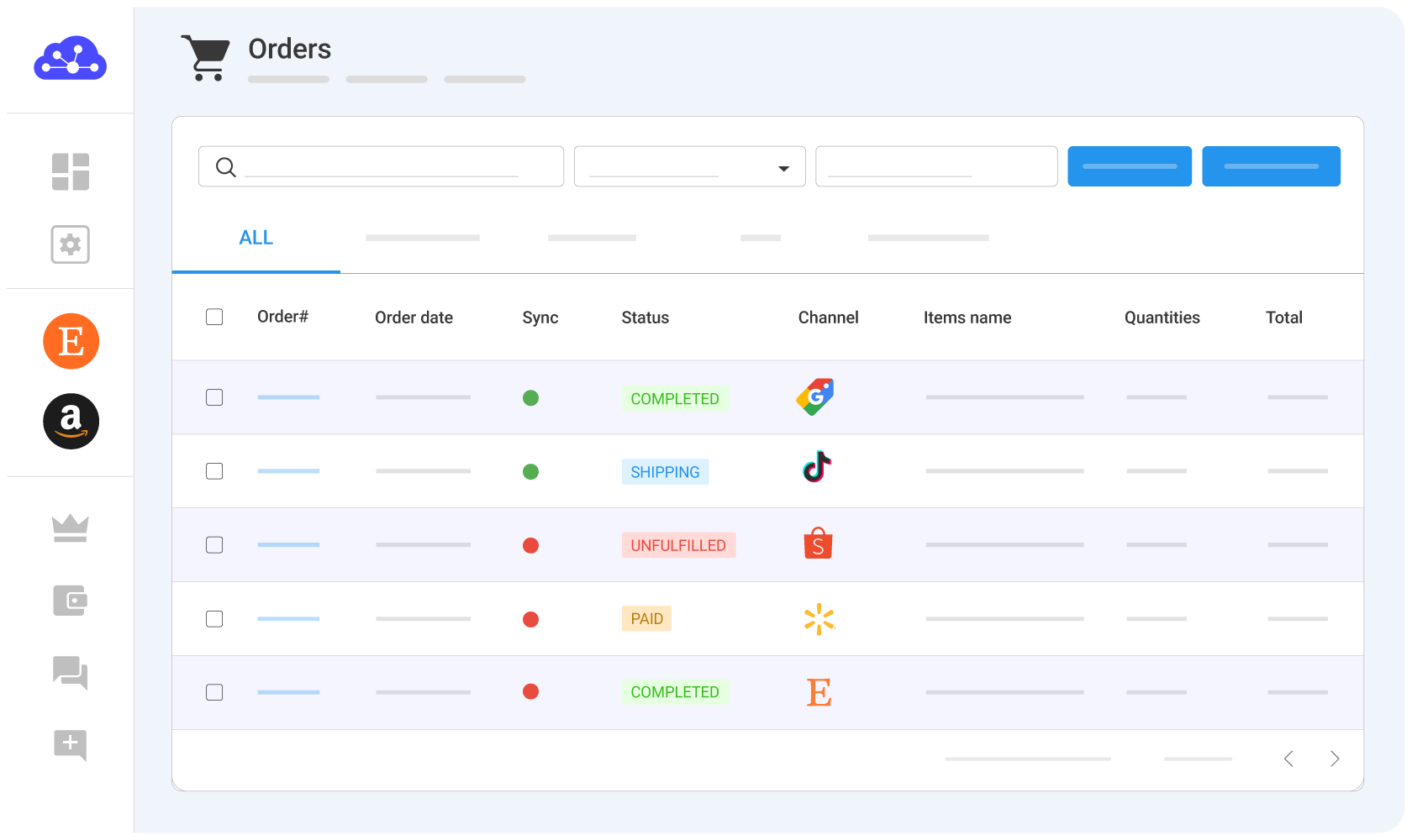
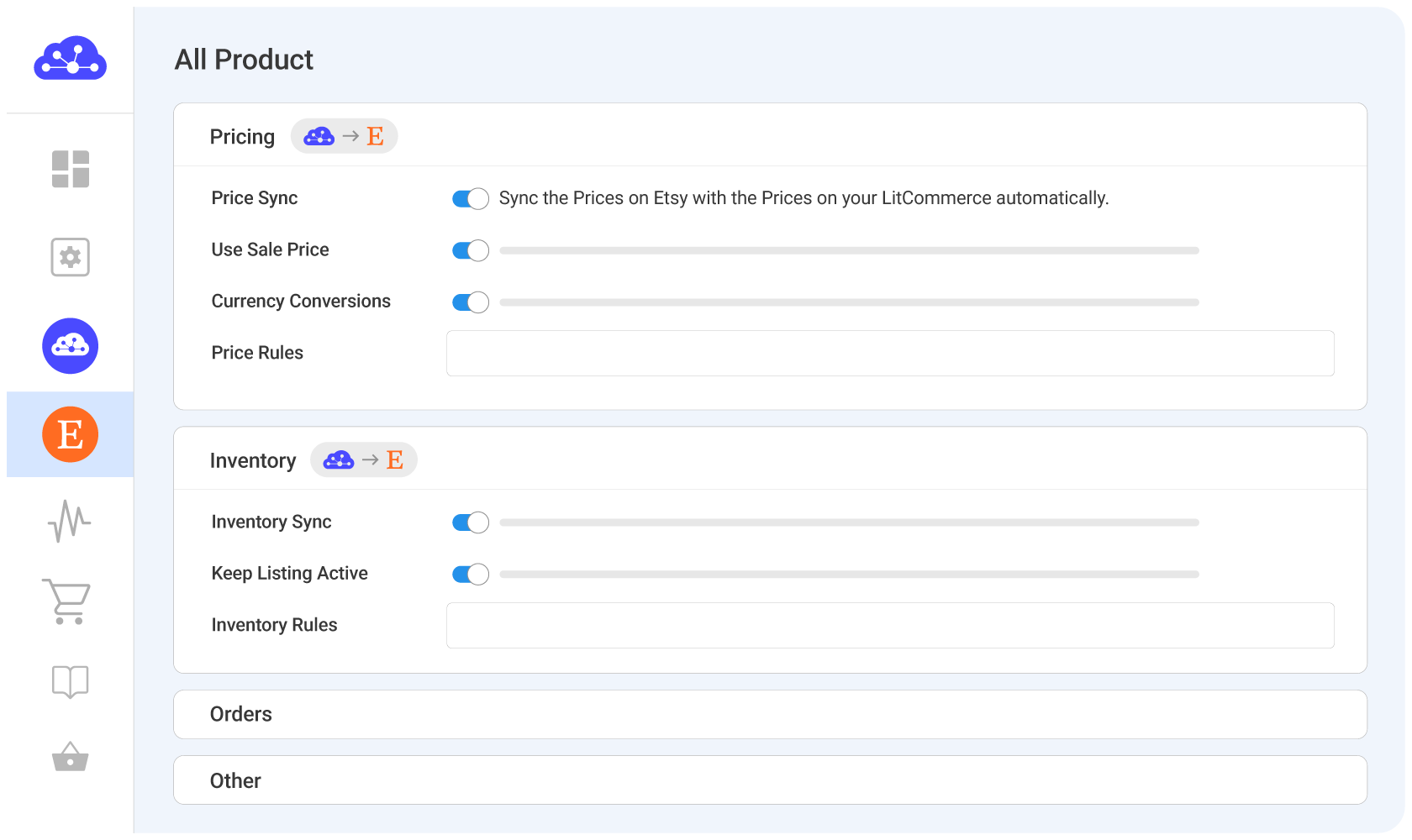
📷 LitCommerce multichannel product interface for channel-specific listing management. Source: official vendor website/documentation.
💚 What we like
Low entry price for multichannel listings, inventory sync and order consolidation.
Channel-specific rules help avoid treating every marketplace as an identical copy of the main store.
No-code setup and a guided workflow make it approachable for merchants without technical teams.
🟠 What to know
Marketplace coverage is narrower than enterprise platforms with hundreds of direct channels.
The 15-minute sync model is sufficient for many SMBs but may not suit every high-velocity inventory use case.
💡 Why this score: LitCommerce scores well on value, accessibility and ecommerce fit for smaller sellers. It is deliberately narrower than the enterprise leaders, which limits points for scale, integrations and advanced controls. Within its target segment, however, the combination of channel-specific tools, straightforward setup and published low-cost pricing is competitive.
💰 Pricing: Paid multichannel selling starts at $29 per month for 1,000 listings and three channels, with higher plans and custom options for larger needs. A trial is available.
✅ Best fit: SMBs expanding from Shopify, WooCommerce, Wix or a primary marketplace into several additional selling channels.
🚫 Less ideal for: Large organizations requiring global marketplace networks, complex enterprise integrations or real-time high-volume warehouse orchestration.
🧩 Key capabilities
Cross-listing to major marketplaces
Channel-specific listing rules
Inventory and price synchronization
Unified marketplace order management
Bulk product editing and templates
Main-store and file-based catalog workflows
🔎 Official sources: Product · Pricing · Documentation / feature / integration

12. ChannelGrabber
80/100 · 💰 Mid · 🧩 Intermediate · 🏢 SMB–Mid-market · ⚙️ No-code
🎯 Best for: UK-focused small and mid-sized retailers that prioritize centralized orders, stock, shipping and marketplace messaging.
⚡ Choose ChannelGrabber if you want a practical multichannel operations system with published UK pricing and strong order-management emphasis.
ChannelGrabber is a UK-oriented multichannel platform covering orders, inventory, shipping, invoicing, messaging and product listings across marketplaces and webstores. Its current pricing is transparent and scales by monthly order volume, sales channels and users, with unlimited SKUs across plans. The product is narrower than global enterprise suites, but it can be a sensible fit for smaller retailers that care more about consolidating day-to-day marketplace operations than building a large international channel network.

📷 ChannelGrabber order-management interface for consolidating multichannel orders. Source: official vendor website/documentation.
💚 What we like
Transparent plan structure with clear order, channel and user allowances.
Strong operational focus on orders, stock, shipping and messaging for smaller retailers.
Unlimited SKUs across the published plans reduces catalog-based pricing anxiety.
🟠 What to know
Marketplace breadth is more limited than global enterprise platforms.
Some integrations and courier setup can require onboarding time rather than being instant plug-and-play.
💡 Why this score: ChannelGrabber covers the essential multichannel jobs and offers clear pricing, which supports a solid SMB value proposition. It ranks lower because its channel network, catalog transformation and advanced automation are less extensive than the category leaders. For UK retailers with mainstream marketplaces, the simpler operational scope can still be a positive.
💰 Pricing: Startup from £114/month for 2,000 orders, two sales channels and two users; Advanced from £286; Premium from £458 with unlimited orders, channels and users. Overage charges can apply.
✅ Best fit: UK SMB and mid-market retailers that want one place for marketplace orders, stock, shipping, invoicing and customer messages.
🚫 Less ideal for: Global brands needing hundreds of marketplace connections, complex catalog mapping or enterprise implementation services.
🧩 Key capabilities
Multichannel order management
Inventory and stock synchronization
Product listing management
Shipping and courier integrations
Marketplace messaging consolidation
Invoicing and API connectivity
🔎 Official sources: Product · Pricing · Documentation / feature / integration
🎯 Which tools should you actually shortlist?
Choose ChannelEngine when broad marketplace reach, enterprise integrations and a structured global rollout matter more than self-service pricing.
Choose Base.com when you want unusually broad connectivity and automation at an accessible starting price, with room to grow into more operational workflows.
Choose Descartes Sellercloud when inventory, warehouses, purchasing and fulfillment are inseparable from your marketplace-management problem.
Choose Zentail when marketplace category mapping, listing compliance and major US channels are the recurring operational bottleneck.
Choose Sellbrite or LitCommerce when a small team needs inexpensive cross-listing, stock sync and order consolidation without enterprise implementation overhead.
Choose PlentyONE when European marketplace coverage plus PIM, OMS, WMS and automation are more useful than a marketplace-only point solution.
🧪 Run this test before you buy
A polished demo can hide the operational work that matters after launch. Use your own products, marketplace accounts and exception cases. A credible vendor should be willing to show how the platform behaves when data is incomplete, inventory moves quickly or one channel rejects a listing while the rest continue normally.
Connect the exact marketplace accounts and regions you use today, not a generic demo account.
Import 50–100 representative SKUs including variants, bundles, missing attributes and difficult categories.
Map the same products to at least two marketplaces with materially different category requirements.
Change stock in the source system and measure when each marketplace reflects the new quantity.
Create test orders on two channels and verify import, routing, fulfillment status and cancellation handling.
Force listing errors and confirm the platform surfaces useful diagnostics rather than a generic failure state.
Apply channel-specific prices, titles or attributes without damaging the shared master catalog.
Test a bulk catalog change and confirm exactly which fields and channels will be affected before publishing.
Connect the ERP, PIM, WMS, store or shipping system that will actually be part of production.
Export or document exception queues so the team knows who owns failures after launch.
📏 Record the same things for every vendor: time to complete each workflow, manual steps, error visibility, sync delay, external help required and the exact cost assumptions used in the quote.
🧾 10 questions to ask in every demo
Which exact marketplaces, regions and seller programs are native today, and which rely on partners or custom feeds?
How do you map categories and required attributes when marketplace taxonomies change?
What is the normal inventory-sync cadence, and what happens when an update fails?
Can one product carry channel-specific titles, prices, descriptions, images and inventory rules?
How are marketplace listing errors grouped, diagnosed, assigned and retried?
How do orders flow into our ERP, OMS or WMS, including cancellations, returns and partial fulfillment?
Which implementation work is included in the subscription and which services are charged separately?
What usage metric drives price increases: orders, GMV, SKUs, channels, users or API volume?
Which workflows require developer work or custom API integration rather than native configuration?
Show us the exact operating dashboard our team will use to find sync failures and marketplace exceptions every day.
❓ Frequently asked questions
What is multichannel marketplace management software?
Multichannel marketplace management software gives ecommerce teams one operating layer for product listings, inventory, pricing and orders across several marketplaces. The key difference from simply logging into each channel is synchronization: the software keeps shared data aligned while preserving marketplace-specific requirements, reducing duplicate work and lowering the chance that stock, product fields or order states diverge.
How is marketplace management software different from marketplace analytics?
Marketplace management software is primarily operational. It publishes and updates listings, synchronizes inventory, imports orders and routes workflow exceptions. Marketplace analytics software focuses on measurement, such as sales trends, profitability, market share, advertising performance or competitive intelligence. Some products include both, but this ranking evaluates the systems used to run marketplace operations rather than tools used mainly to analyze them.
Which platforms are best suited to Amazon and Walmart sellers?
Several tools in this list support both Amazon and Walmart, but their operating models differ. Zentail and SellerActive focus strongly on major US marketplaces; Sellercloud adds deeper inventory and fulfillment operations; ChannelEngine and Rithum are built for broader enterprise channel portfolios. Buyers should verify exact marketplace programs, fulfillment modes and regional support rather than assuming one integration covers every Amazon or Walmart workflow.
How much does multichannel marketplace software cost?
Pricing ranges from free or low-cost SMB plans to enterprise contracts priced by GMV, order volume, catalog size, channels or implementation scope. In this comparison, Sellbrite starts with a free tier, LitCommerce starts at $29 per month, Base.com has a free plan and a $99 Business tier, while several enterprise platforms use custom quotes. Model total cost using your actual channel and order profile.
How long does implementation take?
Implementation can range from hours for simple self-service tools to several weeks for enterprise platforms. The biggest variable is usually not the connector itself but catalog quality, marketplace account readiness, attribute mapping, order-routing design and integrations with ERP, PIM, WMS or ecommerce systems. Test with real SKUs and real marketplace requirements before committing to an implementation timeline.
What does listing mapping mean in marketplace management?
Listing mapping is the process of translating your source product data into the categories, attributes and formats required by each marketplace. One product might need different taxonomy, variation, compliance or descriptive fields on Amazon, Walmart, eBay or a retailer marketplace. Strong mapping tools reduce repetitive manual edits while still allowing channel-specific overrides when marketplaces do not share the same data model.
🔍 About this research
MarketMaze reviewed the assigned tools in this category using current official vendor product pages, pricing pages and documentation or integration resources. We checked pricing and product claims on 27 September 2026, excluded third-party software ratings from the score and evaluated each product against the same six weighted dimensions. Marketplace counts and feature availability can change, so buyers should verify the exact channels, regions and account types required for production.
