
MARKETMAZE · ECOMMERCE TOOLS · RESEARCH
10 Best Product Review & Customer UGC Platforms (2026)
Product review and customer UGC platforms help ecommerce teams collect credible buyer feedback, ratings, photos and videos, then place that proof where it can reduce purchase anxiety and improve product decisions across the customer journey.
Updated 26 September 2026 · Pricing and product claims checked against official vendor sources.
👋 New to this category?
Product-review software collects feedback about specific items after purchase and displays it on product pages. ⭐ Product reviews focus on an item’s quality, fit or performance. 🏢 Company reviews rate the overall business or service experience. 📸 User-generated content (UGC) means customer photos or videos that show products in real life. The important differences are not just star widgets: look at how each platform verifies reviewers, automates requests, handles moderation, migrates existing reviews, syndicates content to other channels and connects review data to the rest of your ecommerce stack.
🧭 Jump to a tool
🏆 The quick answer
🏆 Best overall
Okendo
🌱 Best for getting started
Junip
💸 Best value
Judge.me
🏢 Best for larger teams / enterprise
Bazaarvoice
🧠 Best for advanced or technical users
Yotpo Reviews
📸 Best for visual UGC
Loox
Start with the job you actually need reviews to do. A small Shopify store may get more value from Judge.me or Junip than from an enterprise suite. Visual categories should look closely at Loox. Brands that need deep integrations or syndication should compare Okendo, Yotpo and Bazaarvoice. Use the ranking as a shortlist, then test collection flow, migration quality and storefront performance with your own catalog.
📊 Tool comparison & scores
Rank | Tool | Score | Best for | Pricing |
|---|---|---|---|---|
1 | 92/100 | Growing ecommerce brands that want rich product reviews, visual UGC and deep retention integrations | Mid | |
2 | 90/100 | Brands that need mature review collection, analytics and broad multi-channel review syndication | Free | |
3 | 88/100 | Shopify stores that want an unusually capable review stack at a very low cost | Free | |
4 | 86/100 | Brands that want product and company reviews plus strong ecommerce integrations in one platform | Mid | |
5 | 85/100 | Large brands and retailers that need review syndication, governance and network-scale distribution | Enterprise price | |
6 | 84/100 | Shopify brands that want visual product reviews and customer photos to do most of the selling | Budget | |
7 | 82/100 | Ecommerce teams that want reviews, UGC and customer insights in a familiar retention-oriented stack | Mid | |
8 | 80/100 | Shopify brands that want modern review requests, clean forms and simple migration without bloat | Free | |
9 | 78/100 | Businesses that prioritize company reputation and third-party trust signals alongside product feedback | Premium | |
10 | 77/100 | Brands that want verified transactional feedback, product reviews and structured customer-insight workflows | Mid |
🧠 How the scoring works
This ranking uses MarketMaze proprietary scoring.
Dimension | Weight | What we look for |
|---|---|---|
Core job performance | 30% | Review collection quality, authenticity controls, display, media support and moderation |
Ecommerce fit | 20% | Storefront workflows, product catalogs, post-purchase triggers and commerce-channel relevance |
Workflow & control | 15% | Operator usability, moderation control, customization, migration and day-to-day review management |
Integrations & implementation | 15% | Commerce platforms, marketing integrations, APIs, syndication connections and implementation flexibility |
Pricing & value | 10% | Transparent economics and useful capability relative to the buyer each product targets |
Scale & advanced capabilities | 10% | Multi-store support, governance, analytics, syndication and demanding enterprise review programs |
🤔 Do you even need product review & customer UGC software?
Probably yes ✅
You have meaningful order volume, shoppers ask for proof before buying, or customer photos and product-specific feedback could reduce uncertainty on product pages. Reviews are also useful when you sell through channels that can syndicate ratings.
Maybe 🟡
You are still early but already have repeat orders and enough customers to collect credible feedback. Start with a low-cost tool and measure submission rate, widget speed and whether reviews improve conversion before buying deeper analytics.
Probably not yet ⏳
Your store has very low order volume, an unstable product catalog or no repeatable post-purchase workflow. First fix product quality, fulfillment and basic customer communication; review software cannot manufacture credible proof where there is little customer experience to collect.
🥇 1. Okendo
92/100 · 💰 Mid · 🧩 Intermediate · 🏢 SMB–Mid-market · ⚙️ Specialist-led
🎯 Best for: Growing ecommerce brands that want rich product reviews, visual UGC and deep retention integrations
⚡ Choose Okendo if you want reviews to feed the rest of your customer-marketing stack instead of living in a silo.
Okendo is an ecommerce customer-marketing platform whose Reviews product combines review requests, product ratings, customer photos and videos, on-site widgets and review analytics. Its strongest advantage is how naturally reviews connect to tools such as Klaviyo, Attentive, TikTok Shop and Bazaarvoice syndication. That makes it particularly useful for growing direct-to-consumer brands that want review data to influence retention, merchandising and channel distribution rather than simply sit on product pages.

📷 Okendo’s shopper-facing review experience showing verified-buyer attributes and visual customer content. Source: official vendor website.
💚 What we like
Strong ecommerce-native review collection and display workflows.
Useful integrations that push review data into retention and commerce channels.
Good balance of visual UGC, analytics, syndication and operator control.
🟠 What to know
The broader Okendo platform can be more than a small store needs.
Advanced workflows and integrations benefit from a dedicated ecommerce or retention owner.
💡 Why this score
Okendo scores highest because it combines strong review collection, rich shopper-facing content, ecommerce-specific integrations and meaningful syndication without requiring full enterprise infrastructure. It is especially strong for brands that want reviews to become reusable customer data across marketing and merchandising workflows.
💰 Pricing: Plans start from $19/month, with higher tiers and broader platform bundles scaling by order volume and capabilities.
✅ Best fit: Scaling Shopify and direct-to-consumer brands with a dedicated retention, ecommerce or customer-experience team.
🚫 Less ideal for: Very small stores that only need a basic star-rating widget and simple review emails.
🧩 Key capabilities
Automated post-purchase review requests
Photo and video review collection
Custom attributes and shopper-facing review widgets
Review analytics and Google Analytics connections
Syndication to retail and commerce channels
Integrations with email, SMS and customer-marketing tools
🔎 Official sources
🥈 2. Yotpo Reviews
90/100 · 💰 Free · 🧩 Intermediate · 🏢 Mid-market–Enterprise · ⚙️ Specialist-led
🎯 Best for: Brands that need mature review collection, analytics and broad multi-channel review syndication
⚡ Choose Yotpo Reviews if you need reviews to travel across your store, search, social commerce and major retail channels.
Yotpo Reviews is a mature reviews and user-generated-content platform for collecting product and site reviews, photos, videos and shopper feedback. It supports automated requests, moderation, on-site widgets, analytics and extensive syndication. Its breadth is the main attraction: merchants can use one reviews layer across several ecommerce platforms and distribution channels. That breadth also brings more configuration than lightweight review apps, making Yotpo a better fit when reviews are a meaningful part of a larger commerce stack.

📷 Yotpo’s review insights interface showing product-level ratings and sentiment analysis. Source: official Shopify App Store listing.
💚 What we like
Broad collection, moderation, analytics and syndication capabilities.
Supports multiple major ecommerce platforms and more complex deployments.
Strong path from on-site reviews into search, social and retail distribution.
🟠 What to know
The product is more complex than focused Shopify review apps.
Useful advanced capabilities are spread across plan levels and may require specialist setup.
💡 Why this score
Yotpo ranks near the top for mature review operations, multi-platform support and syndication depth. It loses a small amount on simplicity and value because advanced deployments can become more complex, but it remains one of the strongest choices for brands treating reviews as shared commerce infrastructure.
💰 Pricing: Free plan available; paid Starter and Pro plans scale with monthly orders, with higher Premium and Enterprise options.
✅ Best fit: Mid-market and enterprise brands that need one review system across ecommerce, retail and marketing channels.
🚫 Less ideal for: Small stores prioritizing the simplest possible setup and the lowest ongoing cost.
🧩 Key capabilities
Product and site review collection
Photo and video UGC collection
Review moderation and authenticity workflows
On-site widgets, filtering and summaries
Review analytics and sentiment insights
Syndication across Google, social commerce and retail partners
🔎 Official sources
🥉 3. Judge.me
88/100 · 💰 Free · 🧩 Beginner · 🏢 SMB–Mid-market · ⚙️ No-code
🎯 Best for: Shopify stores that want an unusually capable review stack at a very low cost
⚡ Choose Judge.me if you want unlimited core review collection, strong widgets and simple economics without enterprise overhead.
Judge.me is a product-review app built around straightforward review collection, display and migration for online stores. Merchants can automate requests, collect photo and video reviews, show ratings and review widgets, import existing reviews and syndicate content to selected commerce channels. Its standout advantage is value: the free plan covers the core job and the paid plan remains simple. It is strongest for Shopify merchants that want a broad practical feature set without a heavy implementation project.

📷 Judge.me’s official product-review showcase with star ratings, customer media and review cards. Source: official Shopify App Store listing.
💚 What we like
Excellent value with a genuinely useful free plan.
Fast no-code setup for common Shopify review workflows.
Broad widget, migration, visual review and syndication features for the price.
🟠 What to know
Enterprise reporting and governance are lighter than specialist enterprise platforms.
The strongest product fit is still ecommerce stores rather than complex multi-brand review programs.
💡 Why this score
Judge.me scores exceptionally well on ecommerce fit, operator simplicity and value. It gives smaller and mid-sized stores most of the review workflows they actually use without forcing an enterprise buying motion. It ranks below Okendo and Yotpo mainly on advanced scale, governance and syndication breadth.
💰 Pricing: Free plan available; Awesome is $15/month.
✅ Best fit: Shopify merchants and lean ecommerce teams that want capable reviews without a large software budget.
🚫 Less ideal for: Large global organizations that need complex governance, retail syndication networks or multi-team implementation support.
🧩 Key capabilities
Unlimited product and store review collection
Photo and video review requests
Review widgets, carousels and ratings badges
Review imports and migration tools
Google, Meta and Shop App syndication options
Coupons, referrals and marketing integrations
🔎 Official sources
🏅 4. REVIEWS.io
86/100 · 💰 Mid · 🧩 Intermediate · 🏢 SMB–Mid-market · ⚙️ Specialist-led
🎯 Best for: Brands that want product and company reviews plus strong ecommerce integrations in one platform
⚡ Choose REVIEWS.io if you need both store-level reputation and product-level social proof without moving to an enterprise suite.
REVIEWS.io combines company reviews, product reviews, visual user-generated content and ecommerce integrations in one platform. Teams can collect feedback, display review widgets, manage product ratings, use customer photos and videos, and connect review data to marketing systems. It sits between lightweight review apps and larger enterprise syndication suites, which makes it attractive for established ecommerce brands that need more control and analytics but still want a comparatively focused reviews product.

📷 REVIEWS.io’s official AI Insights dashboard interface for analysing review content and customer themes. Source: official vendor website.
💚 What we like
Covers both product reviews and company reputation workflows.
Good ecommerce integration footprint and flexible display options.
Useful analytics and review-insight capabilities beyond simple star ratings.
🟠 What to know
Pricing and feature depth vary meaningfully by plan.
Brands focused only on basic Shopify product reviews may find lighter tools easier.
💡 Why this score
REVIEWS.io earns a strong score for covering product and company reviews while remaining ecommerce-friendly. Its workflow control, integrations and analytics are deeper than many app-first competitors, although it does not match Bazaarvoice or Yotpo on enterprise distribution scale and is less simple than entry-level tools.
💰 Pricing: Paid plans scale by review volume, feature set and integration depth; higher tiers add advanced analytics and distribution capabilities.
✅ Best fit: Established ecommerce brands that want product reviews, company reviews and marketing integrations under one roof.
🚫 Less ideal for: Very small stores that only need basic product stars and automated review-request emails.
🧩 Key capabilities
Product and company review collection
Photo and video UGC
Review widgets and social-proof displays
AI-assisted review insights and analytics
Ecommerce and marketing integrations
Review migration and distribution workflows
🔎 Official sources
🏅 5. Bazaarvoice
85/100 · 💰 Enterprise price · 🧩 Advanced · 🏢 Enterprise · ⚙️ Enterprise implementation
🎯 Best for: Large brands and retailers that need review syndication, governance and network-scale distribution
⚡ Choose Bazaarvoice if your biggest problem is distributing trusted product reviews across many retailers, markets and brand properties.
Bazaarvoice is an enterprise ratings, reviews and user-generated-content platform built for brands and retailers operating at scale. Its differentiator is network reach: review collection can connect with syndication, moderation, retail distribution and enterprise reporting across multiple destinations. The platform is much heavier than a Shopify review app, but that is intentional. Bazaarvoice makes the most sense when review coverage, retailer relationships, governance and international scale matter more than low-cost self-service setup.
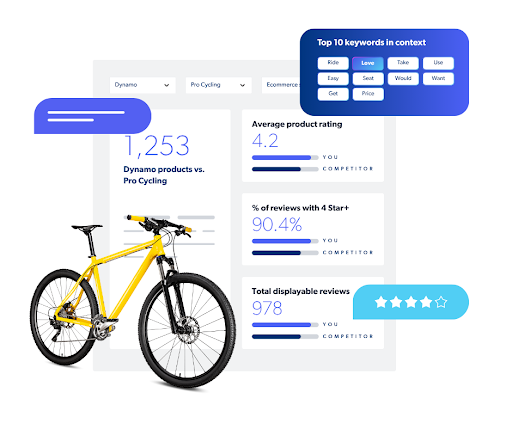
📷 Bazaarvoice Portal showing the enterprise workspace used to monitor and manage review programs. Source: official vendor website.
💚 What we like
Exceptional retail review syndication and enterprise distribution capabilities.
Designed for multi-brand, multi-market governance and large product catalogs.
Strong moderation, analytics and program-management depth.
🟠 What to know
Sales-led pricing and implementation put it outside most small-business budgets.
Deployment is substantially heavier than app-store review tools.
💡 Why this score
Bazaarvoice scores extremely well on scale, syndication and enterprise capabilities. It ranks below the leaders overall because value and implementation simplicity matter in this category too. For a global manufacturer or retailer, however, its network and governance advantages can outweigh the complexity that hurts its general score.
💰 Pricing: Custom quote.
✅ Best fit: Enterprise brands, manufacturers and retailers that need large-scale syndication and governed review operations.
🚫 Less ideal for: Small and mid-sized merchants looking for a quick self-service review app.
🧩 Key capabilities
Ratings and product review collection
Enterprise moderation and authenticity controls
Retail review syndication network
Multi-brand and multi-market program management
Portal analytics and reporting
UGC, sampling and broader social-commerce programs
🔎 Official sources
🏅 6. Loox
84/100 · 💰 Budget · 🧩 Beginner · 🏢 SMB–Mid-market · ⚙️ No-code
🎯 Best for: Shopify brands that want visual product reviews and customer photos to do most of the selling
⚡ Choose Loox if your merchandising depends heavily on customer photos, videos and polished visual social proof.
Loox is a Shopify-focused reviews platform built around visual social proof. It helps merchants collect product reviews, customer photos and videos, then display that content through storefront widgets, galleries and review blocks. The product is easy to understand and quick to deploy, which is a major advantage for smaller teams. Compared with broader review suites, Loox is narrower on enterprise governance and cross-platform complexity, but it is particularly strong when visual customer content is the main conversion lever.

📷 Loox’s official visual-review widget example showing customer imagery and shopper-facing review content. Source: official vendor media kit.
💚 What we like
Excellent visual review and customer-photo presentation.
Very approachable setup for Shopify operators.
Strong fit for products where shoppers want to see real-world usage and styling.
🟠 What to know
Shopify specialization is a limitation for more complex multi-platform businesses.
Enterprise reporting, governance and broad retailer syndication are not its primary strength.
💡 Why this score
Loox scores highly because it performs the visual-review job extremely well and keeps implementation simple. Its ecommerce fit and ease of use are excellent, but its narrower platform focus and lighter enterprise capabilities keep it below broader review systems that can support more complex distribution and governance needs.
💰 Pricing: Paid Shopify plans scale by monthly order volume and feature tier.
✅ Best fit: Shopify brands in fashion, beauty, home, lifestyle and other categories where visual proof materially helps conversion.
🚫 Less ideal for: Enterprises needing extensive multi-platform governance, retailer syndication or complex review analytics.
🧩 Key capabilities
Photo and video review collection
Automated post-purchase review requests
Visual review widgets and galleries
Review incentives and referrals
Shopify storefront integration
Review display and social-proof merchandising
🔎 Official sources
🏅 7. Stamped
82/100 · 💰 Mid · 🧩 Intermediate · 🏢 SMB–Mid-market · ⚙️ Specialist-led
🎯 Best for: Ecommerce teams that want reviews, UGC and customer insights in a familiar retention-oriented stack
⚡ Choose Stamped if you want product reviews and visual UGC with enough analytics to support ongoing retention work.
Stamped provides product reviews, ratings and customer-generated content for ecommerce brands, with tools for collection, display, moderation and analysis. The platform supports common post-purchase review workflows and connects social proof to a broader retention-oriented product suite. It is a solid middle-ground choice for teams that have outgrown the simplest review apps but do not need enterprise syndication infrastructure. The trade-off is that its differentiation is less pronounced than some category specialists.
📷 Stamped’s official dashboard setup interface showing account-level review configuration controls. Source: official vendor documentation.
💚 What we like
Balanced review, UGC and analytics feature set for ecommerce teams.
Practical post-purchase collection and on-site display workflows.
Fits naturally with retention programs that extend beyond reviews.
🟠 What to know
The product can overlap with other retention tools in an existing stack.
It is less differentiated than specialists in visual UGC or enterprise syndication.
💡 Why this score
Stamped scores well because it covers the core review lifecycle with credible ecommerce integrations and useful customer-content workflows. Its broad middle-market fit is a strength, but it lacks the standout value of Judge.me, visual specialization of Loox or network scale of Bazaarvoice, which limits its rank.
💰 Pricing: Paid plans scale with order volume and the breadth of review, UGC and retention features.
✅ Best fit: Small and mid-market ecommerce brands that want a balanced review platform with room to add retention capabilities.
🚫 Less ideal for: Buyers seeking either the absolute simplest low-cost review tool or deep enterprise syndication infrastructure.
🧩 Key capabilities
Automated review requests
Product ratings and on-site widgets
Photo and video UGC collection
Review moderation and management
Customer-content analytics and insights
Ecommerce and retention integrations
🔎 Official sources
🏅 8. Junip
80/100 · 💰 Free · 🧩 Beginner · 🏢 SMB–Mid-market · ⚙️ No-code
🎯 Best for: Shopify brands that want modern review requests, clean forms and simple migration without bloat
⚡ Choose Junip if you value fast setup, lightweight workflows and a polished review experience over a sprawling feature suite.
Junip is a modern product-review platform focused on easy review collection, shopper-friendly forms and clean storefront display. It supports automated post-purchase requests, photo and video reviews, widgets, product grouping, review migration and channel syndication. The product is deliberately lightweight, which makes it attractive to lean ecommerce teams that want to launch quickly. It has less enterprise depth than the top-ranked suites, but its simplicity and practical Shopify fit make it a strong shortlist option.

📷 Junip’s guided Shopify setup workflow showing the in-app process for enabling review components. Source: official Shopify App Store listing.
💚 What we like
Very easy onboarding and review-request setup.
Clean shopper experience with modern widgets and forms.
Good migration path for brands moving from other popular review apps.
🟠 What to know
Advanced enterprise governance and reporting are limited compared with larger suites.
The strongest fit is Shopify-centric ecommerce rather than complex global review programs.
💡 Why this score
Junip performs strongly on ease of use, value and ecommerce fit. It is intentionally less feature-heavy than the leaders, so it gives up points on advanced analytics, enterprise control and network scale. For lean Shopify teams, that narrower scope can be an advantage rather than a drawback.
💰 Pricing: Free plan available; paid Core, Growth and Premium tiers add media, syndication, integrations, multi-store management and advanced capabilities.
✅ Best fit: Lean Shopify and direct-to-consumer teams that want fast review collection and simple storefront implementation.
🚫 Less ideal for: Large organizations requiring extensive governance, retailer syndication or complex multi-platform deployments.
🧩 Key capabilities
Unlimited review-request workflows
Mobile-first product review forms
Photo and video reviews
Storefront widgets and product grouping
Review migration and imports
Syndication to major commerce channels on higher tiers
🔎 Official sources
🏅 9. Trustpilot
78/100 · 💰 Premium · 🧩 Intermediate · 🏢 All sizes · ⚙️ Specialist-led
🎯 Best for: Businesses that prioritize company reputation and third-party trust signals alongside product feedback
⚡ Choose Trustpilot if your main goal is public brand reputation and independent trust signals, not only on-site product reviews.
Trustpilot is primarily a company-review network and reputation platform, although it also offers product-review capabilities for ecommerce businesses. Its public consumer destination and recognizable trust signals differentiate it from tools that live mainly inside a merchant storefront. That makes it useful when brand reputation, service feedback and external discovery matter. It ranks lower in this product-review comparison because its center of gravity is company reputation rather than the deepest ecommerce-native product-review and visual-UGC workflow.
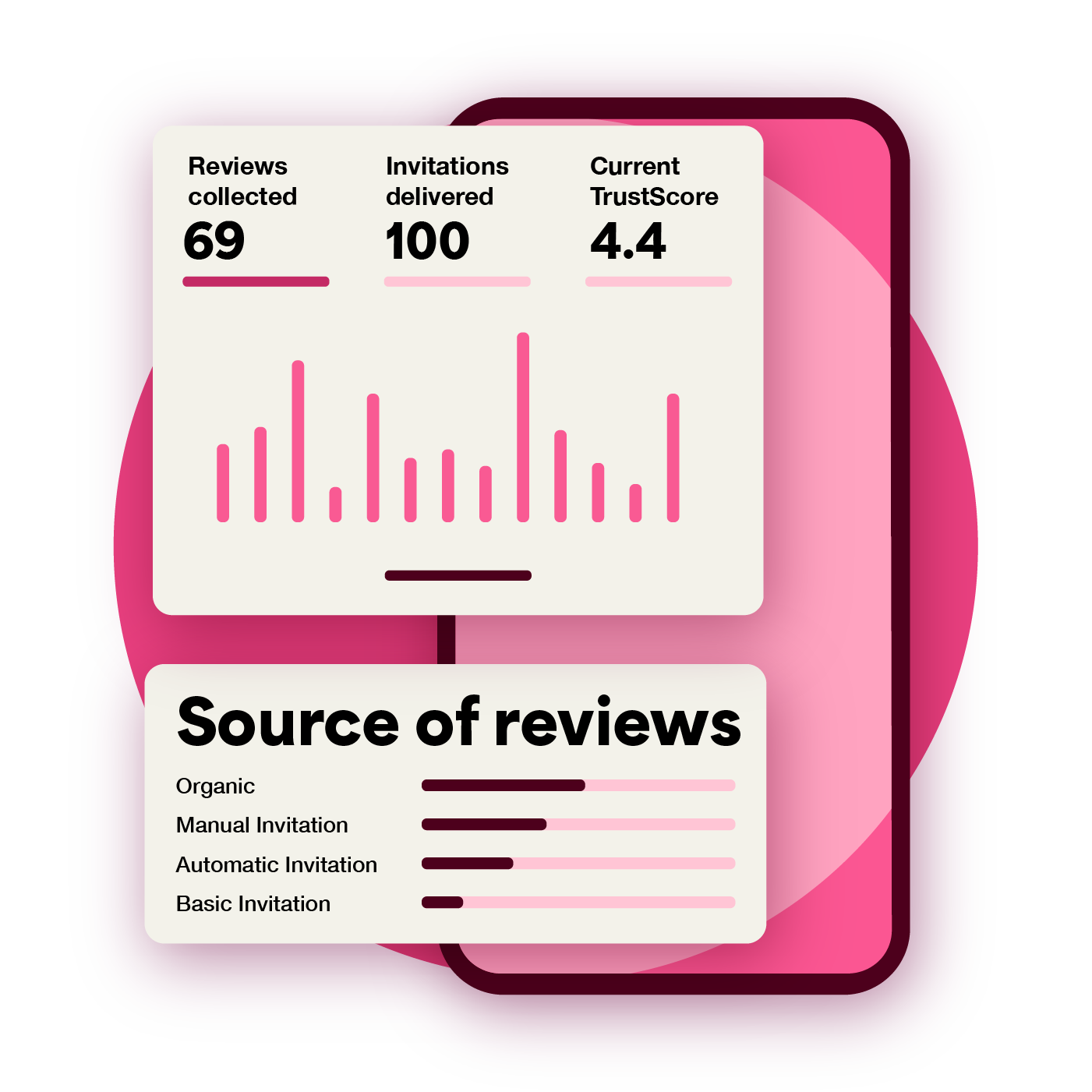
📷 Trustpilot’s business dashboard and analytics workspace for monitoring review performance and reputation signals. Source: official vendor website.
💚 What we like
Strong public company-review network and recognizable trust signals.
Useful dashboarding for service-review and reputation monitoring.
Can complement ecommerce product reviews with broader brand-level feedback.
🟠 What to know
Product-review workflows are not the platform’s only or primary focus.
Advanced business packages can be materially more expensive than app-first review tools.
💡 Why this score
Trustpilot scores well on trust, reach, analytics and scale, but this ranking emphasizes ecommerce product-review performance. Its company-review network is a major strength in reputation management, yet that broader focus makes it a less natural primary product-review system than ecommerce-native leaders above it.
💰 Pricing: Free business account available; paid business packages add advanced invitations, analytics, widgets and product capabilities.
✅ Best fit: Brands that care about public company reputation, third-party trust signals and service feedback as well as ecommerce reviews.
🚫 Less ideal for: Stores looking mainly for low-cost product-review widgets, visual UGC and Shopify-native automation.
🧩 Key capabilities
Company and service review collection
Product review capabilities
Public business profiles and trust signals
Review invitation workflows
Dashboard analytics and reputation monitoring
Widgets, integrations and developer APIs
🔎 Official sources
🏅 10. Feefo
77/100 · 💰 Mid · 🧩 Intermediate · 🏢 Mid-market–Enterprise · ⚙️ Specialist-led
🎯 Best for: Brands that want verified transactional feedback, product reviews and structured customer-insight workflows
⚡ Choose Feefo if verified purchase-linked feedback and review analytics matter more than having the simplest app-store implementation.
Feefo is a verified-feedback and review-management platform that collects product and service reviews from customers after real transactions. It combines review invitations, photo and video feedback, on-site widgets, analytics, exports and broader customer-insight tools. The platform is particularly relevant for established brands that value verified feedback and structured reporting. It is less Shopify-native than the highest-ranked app-first tools, but it offers a credible bridge between review collection, reputation management and enterprise customer insight.

📷 Feefo’s official product-review analytics visual showing product-level ratings and performance monitoring. Source: official vendor website.
💚 What we like
Verified transactional review model supports strong authenticity signals.
Combines product and service feedback with useful analytics.
Good fit for established brands that need structured review operations.
🟠 What to know
Setup and buying motion are heavier than lightweight ecommerce review apps.
The platform is broader than pure product reviews, so smaller stores may pay for unused depth.
💡 Why this score
Feefo earns solid marks for verified feedback, analytics and structured customer-insight workflows. It sits lower because ecommerce-native flexibility, self-service simplicity and value are stronger elsewhere. Its fit improves significantly for established businesses that care about authenticated service and product feedback across a broader customer-experience program.
💰 Pricing: Essentials starts from £149/month plus VAT; Enhanced from £299/month plus VAT; enterprise Plus pricing is custom.
✅ Best fit: Mid-market and enterprise brands that want verified product and service feedback with reporting depth.
🚫 Less ideal for: Small ecommerce stores seeking a simple low-cost product review widget and rapid self-service setup.
🧩 Key capabilities
Verified product and service review collection
Photo and video review content
On-site review widgets
Review analytics and sentiment tools
Data exports, tags and custom questions
Syndication and multi-domain features on higher tiers
🔎 Official sources
🎯 Which tools should you actually shortlist?
Simple Shopify launch: start with Judge.me or Junip.
Visual-first brand: put Loox beside Okendo in the final two.
Growing retention stack: compare Okendo, REVIEWS.io and Stamped.
Multi-platform or complex commerce: prioritize Yotpo Reviews and Okendo.
Retail syndication at scale: test Bazaarvoice against Yotpo and your retailer requirements.
Company reputation plus reviews: compare Trustpilot and Feefo with a product-review specialist.
🧪 Run this test before you buy
Run the same small test with each finalist. Use one representative product, one normal post-purchase flow and a real slice of historical reviews so differences in collection, migration, display and reporting are easy to compare.
Import a sample of existing product reviews and verify ratings, dates, media and reviewer labels survive.
Build one post-purchase request flow and measure how many steps it takes to publish.
Submit a review on mobile with a photo and video.
Test verified-purchase logic and how the platform labels unverified or incentivized feedback.
Moderate a positive, neutral and negative review without hiding legitimate criticism.
Install the main product-page widget and check mobile layout and page performance.
Filter reviews by rating, media and product attributes as a shopper would.
Connect one email or SMS platform and confirm review events are available for segmentation.
Export review data and confirm you can leave the platform without losing your history.
Test the syndication channel that matters most to you, not just the vendor’s longest integration list.
Record the same things for every finalist: setup time, migration quality, submission rate, moderation effort, widget speed, integration depth, syndication coverage and total monthly cost at your real order volume.
🧾 10 questions to ask in every demo
How do you distinguish verified purchases, organic reviews and imported reviews?
What happens to photos, videos and reviewer metadata during migration?
Which review-request channels are native, and which require an integration?
Can we control moderation without suppressing legitimate negative feedback?
Which retailer, search and social channels can receive our reviews through syndication?
What limits apply to orders, requests, stores, languages, widgets or user seats?
How does pricing change as monthly order volume grows?
Can we export all review text, ratings, media references and metadata?
What storefront performance safeguards are built into the widgets?
Which implementation work needs a developer, agency or vendor services team?
❓ Frequently asked questions
What is the difference between product reviews and company reviews?
Product reviews evaluate a specific item, while company reviews describe the overall shopping or service experience. Many ecommerce brands need product reviews first because they help shoppers compare individual products; company reviews are more useful for broader reputation and trust.
Do review platforms verify that a customer actually bought the product?
Most leading platforms can mark reviews tied to known orders as verified, but their rules differ for imported, organic and incentivized reviews. Ask each vendor exactly how verification works and how those labels appear to shoppers.
Should we collect photo and video reviews?
Usually yes when appearance, fit, setup or real-world use matters. Visual customer content can answer questions that star ratings cannot, but only collect it if your moderation workflow and permissions are clear.
Can we move existing reviews to a new provider?
Most platforms support imports or assisted migration. Test the transfer before committing, especially dates, product mapping, verified status, replies, custom attributes and customer media.
Syndication sends eligible reviews to other destinations such as retail partners, Google, the Shop app or social-commerce channels. Coverage varies widely, so confirm the exact destinations you need rather than treating syndication as one generic feature.
Which platform is best for a small Shopify store?
Start with tools that are easy to install and economical at low order volume, then choose based on your actual review-request and widget needs. Judge.me, Junip and Loox are the clearest small-team starting points in this comparison.
🔍 About this research
MarketMaze reviewed the ten platforms assigned to this category using current official product, documentation, integration and pricing materials, then scored them with the fixed 100-point MarketMaze framework. Scores reflect category performance, ecommerce fit, workflow control, implementation, value and scale. Vendor marketing claims were treated as claims unless supported by product documentation or directly observable functionality.
