
MARKETMAZE · ECOMMERCE TOOLS · RESEARCH
10 Best Ecommerce Returns & Exchanges Management Platforms in 2026
Returns software gives shoppers a self-service way to request a return or exchange while giving operators rules, refund controls, labels, routing and analytics. The important buying distinction is what happens after the shopper clicks “return”: some products are primarily software, some are exchange-first conversion tools, and some also run physical drop-off or reverse-logistics networks.
Research checked: September 26, 2026.
New to the category?
A return portal is only the front door. The operating system behind it decides whether an order is eligible, what outcomes are offered, whether a return needs approval, who pays for the label, where the item is routed and when a refund or exchange is released. Return Merchandise Authorization (RMA) is the record used to track that process. For an ecommerce operator, the biggest differences are exchange depth, rule flexibility, carrier or drop-off coverage, fraud controls and how the vendor charges as return volume grows.
🧭 Jump to a tool
🏆 The quick answer
🏆 Best all-rounder
Loop Returns
💸 Best transparent entry pricing
AfterShip Returns
🏢 Best enterprise post-purchase platform
Narvar
📦 Best physical drop-off network
Happy Returns
🌍 Best cross-border returns infrastructure
ZigZag Global
🛍️ Best lower-cost Shopify option
Rich Returns
MarketMaze take
Do not compare this category by portal screenshots alone. Put every vendor through the same policy matrix: exchange, refund, store credit, ineligible item, cross-border order, suspicious customer, split shipment and damaged return. Then price the same monthly return volume. The winning economics often come from routing, exchange retention and return transportation rather than the subscription line on the quote.
📊 Tool comparison & scores
Rank | Tool | Score | Best for | Pricing |
|---|---|---|---|---|
1 | 95/100 | Shopify brands prioritizing exchange conversion, policy automation and mature returns workflows | Essential from $155/month; Advanced from $340/month; Checkout+ software listed as free with return-shipping model | |
2 | 94/100 | Merchants wanting transparent volume pricing plus returns, routing and carrier depth | Essentials from $16/month at 240 returns/year; Premium from $99/month at 1,200 returns/year; Enterprise custom | |
3 | 92/100 | International merchants needing returns software plus global carrier and consolidation infrastructure | Shopify Free $0/month for small UK domestic returns; Silver from $20/month; higher tiers and broader global programs vary | |
4 | 91/100 | Shopify-centric brands wanting configurable exchanges, automation and post-purchase workflows | Premium from $147/month; Pro from $297/month; Enterprise custom | |
5 | 91/100 | Shopify brands that want operational return data, disposition controls and usage-based economics | Usage-based with no subscription fee, about $3.90–$0.25 per return; Enterprise custom | |
6 | 91/100 | Brands interested in shopper-funded return coverage plus return automation and post-purchase tools | Returns software listed as free; customer-funded coverage model can cover return-label costs | |
7 | 91/100 | Large retailers needing returns, fraud controls and broader post-purchase orchestration | Custom quote | |
8 | 90/100 | Brands that value box-free drop-off through a physical Return Bar network | Custom quote | |
9 | 90/100 | Global commerce teams wanting returns tied into cross-border pricing, duties and broader operations | Custom quote | |
10 | 89/100 | Shopify merchants wanting a straightforward branded portal and transparent pricing | Standard $19/month; Professional $39/month; Premium $99/month; Enterprise from $199/month |
🧠 How the scoring works
This ranking uses MarketMaze proprietary scoring.
Dimension | Weight | What matters here |
|---|---|---|
Core job performance | 30% | Eligibility, exchanges, refunds, labels, routing and automation. |
Ecommerce fit | 20% | Commerce-platform depth and practical shopper/merchant workflows. |
Workflow & control | 15% | Rules, approvals, exceptions, fraud controls and operator visibility. |
Integrations & implementation | 15% | Commerce, carriers, warehouses, support tools and application programming interface (API) access. |
Pricing & value | 10% | Published cost, volume economics and what is included. |
Scale & advanced capabilities | 10% | International coverage, governance, analytics and complex operations. |
🤔 Do you even need returns management software?
Probably yes ✅
Returns create meaningful support work, you offer exchanges or store credit, or policy exceptions are being handled manually.
Maybe 🟡
Volume is still moderate but return shipping, refund timing or exchange conversion is starting to matter. Model the economics before adding another app.
Probably not yet ⏳
You have very low return volume, one simple policy and a support team that can process cases cleanly in the commerce platform.

🥇 1. Loop Returns
95/100 · 💰 Mid-range · 🧩 Intermediate · 🏢 SMB–Enterprise · ⚙️ Guided setup
🎯 Best for: Shopify brands prioritizing exchange conversion, policy automation and mature returns workflows
⚡ Choose Loop Returns if shopify brands prioritizing exchange conversion, policy automation and mature returns workflows.
Loop Returns covers the core returns job with a branded shopper flow and merchant-side controls for return outcomes. What matters is how its operating model fits your stack: Shopify-focused guided onboarding with configurable policies, workflows, carriers and destinations. For buyers, the key question is not whether it can create a return label, but how well it handles policy exceptions, exchanges, refund timing and the logistics path after approval.

📷 Official Loop Returns product or documentation imagery showing the returns workflow. Source: official vendor website/documentation.
💚 What we like
Strong coverage of the category’s core return and exchange workflow.
Clearer operational control than managing returns through support tickets and spreadsheets.
Useful path to collect return reasons and turn policy rules into repeatable automation.
🟠 What to know
Implementation quality depends heavily on the commerce, carrier and warehouse systems you connect.
Subscription price alone can understate the real economics because labels, network services, overages or logistics charges may sit outside the software fee.
💡 Why this score
Loop Returns scores 95/100 because it combines strong core returns execution with excellent ecommerce fit. The score also reflects implementation depth, pricing transparency and how far the platform scales beyond a basic return portal rather than rewarding feature count for its own sake.
💰 Pricing
Essential from $155/month; Advanced from $340/month; Checkout+ software listed as free with return-shipping model
✅ Best fit
Growing and enterprise Shopify brands with meaningful return volume.
🚫 Less ideal for
Teams whose return volume is too low to justify dedicated software, or buyers whose main requirement sits outside this product’s operating model.
🧩 Key capabilities
Branded self-service return initiation
Return eligibility and policy rules
Refund, store-credit and exchange outcomes
Return labels, tracking or routing
Merchant-side return processing and status control
Return reasons, reporting and operational analytics
🔎 Official sources
Pricing: https://www.loopreturns.com/pricing/
Documentation / feature: https://help.loopreturns.com/en/articles/1909569

🥈 2. AfterShip Returns
94/100 · 💰 Budget · 🧩 Intermediate · 🏢 SMB–Enterprise · ⚙️ Low-code
🎯 Best for: Merchants wanting transparent volume pricing plus returns, routing and carrier depth
⚡ Choose AfterShip Returns if merchants wanting transparent volume pricing plus returns, routing and carrier depth.
AfterShip Returns covers the core returns job with a branded shopper flow and merchant-side controls for return outcomes. What matters is how its operating model fits your stack: Self-serve entry for smaller stores; more advanced workflows and enterprise integrations scale upward. For buyers, the key question is not whether it can create a return label, but how well it handles policy exceptions, exchanges, refund timing and the logistics path after approval.
)
📷 Official AfterShip Returns product or documentation imagery showing the returns workflow. Source: official vendor website/documentation.
💚 What we like
Strong coverage of the category’s core return and exchange workflow.
Clearer operational control than managing returns through support tickets and spreadsheets.
Useful path to collect return reasons and turn policy rules into repeatable automation.
🟠 What to know
Implementation quality depends heavily on the commerce, carrier and warehouse systems you connect.
Subscription price alone can understate the real economics because labels, network services, overages or logistics charges may sit outside the software fee.
💡 Why this score
AfterShip Returns scores 94/100 because it combines strong core returns execution with excellent ecommerce fit. The score also reflects implementation depth, pricing transparency and how far the platform scales beyond a basic return portal rather than rewarding feature count for its own sake.
💰 Pricing
Essentials from $16/month at 240 returns/year; Premium from $99/month at 1,200 returns/year; Enterprise custom
✅ Best fit
Stores from small merchants through global brands that value carrier and post-purchase ecosystem breadth.
🚫 Less ideal for
Teams whose return volume is too low to justify dedicated software, or buyers whose main requirement sits outside this product’s operating model.
🧩 Key capabilities
Branded self-service return initiation
Return eligibility and policy rules
Refund, store-credit and exchange outcomes
Return labels, tracking or routing
Merchant-side return processing and status control
Return reasons, reporting and operational analytics
🔎 Official sources
Product: https://www.aftership.com/returns
Documentation / feature: https://www.aftership.com/returns/returns-management-portal

🥉 3. ZigZag Global
92/100 · 💰 Free · 🧩 Intermediate · 🏢 SMB–Enterprise · ⚙️ Guided setup
🎯 Best for: International merchants needing returns software plus global carrier and consolidation infrastructure
⚡ Choose ZigZag Global if international merchants needing returns software plus global carrier and consolidation infrastructure.
ZigZag Global covers the core returns job with a branded shopper flow and merchant-side controls for return outcomes. What matters is how its operating model fits your stack: Shopify app or enterprise rollout connected to ZigZag carrier, routing, consolidation and returns hubs. For buyers, the key question is not whether it can create a return label, but how well it handles policy exceptions, exchanges, refund timing and the logistics path after approval.

📷 Official ZigZag Global product or documentation imagery showing the returns workflow. Source: official vendor website/documentation.
💚 What we like
Strong coverage of the category’s core return and exchange workflow.
Clearer operational control than managing returns through support tickets and spreadsheets.
Useful path to collect return reasons and turn policy rules into repeatable automation.
🟠 What to know
Implementation quality depends heavily on the commerce, carrier and warehouse systems you connect.
Subscription price alone can understate the real economics because labels, network services, overages or logistics charges may sit outside the software fee.
💡 Why this score
ZigZag Global scores 92/100 because it combines strong core returns execution with solid ecommerce fit. The score also reflects implementation depth, pricing transparency and how far the platform scales beyond a basic return portal rather than rewarding feature count for its own sake.
💰 Pricing
Shopify Free $0/month for small UK domestic returns; Silver from $20/month; higher tiers and broader global programs vary
✅ Best fit
Cross-border retailers where return transport, customs and consolidation matter as much as the portal.
🚫 Less ideal for
Teams whose return volume is too low to justify dedicated software, or buyers whose main requirement sits outside this product’s operating model.
🧩 Key capabilities
Branded self-service return initiation
Return eligibility and policy rules
Refund, store-credit and exchange outcomes
Return labels, tracking or routing
Merchant-side return processing and status control
Return reasons, reporting and operational analytics
🔎 Official sources
Documentation / feature: https://www.zigzag.global/our-solution

4️⃣ 4. ReturnGO
91/100 · 💰 Mid-range · 🧩 Intermediate · 🏢 SMB–Mid-market · ⚙️ Guided setup
🎯 Best for: Shopify-centric brands wanting configurable exchanges, automation and post-purchase workflows
⚡ Choose ReturnGO if shopify-centric brands wanting configurable exchanges, automation and post-purchase workflows.
ReturnGO covers the core returns job with a branded shopper flow and merchant-side controls for return outcomes. What matters is how its operating model fits your stack: App install plus guided configuration of return reasons, resolutions, policy rules, integrations and portal. For buyers, the key question is not whether it can create a return label, but how well it handles policy exceptions, exchanges, refund timing and the logistics path after approval.
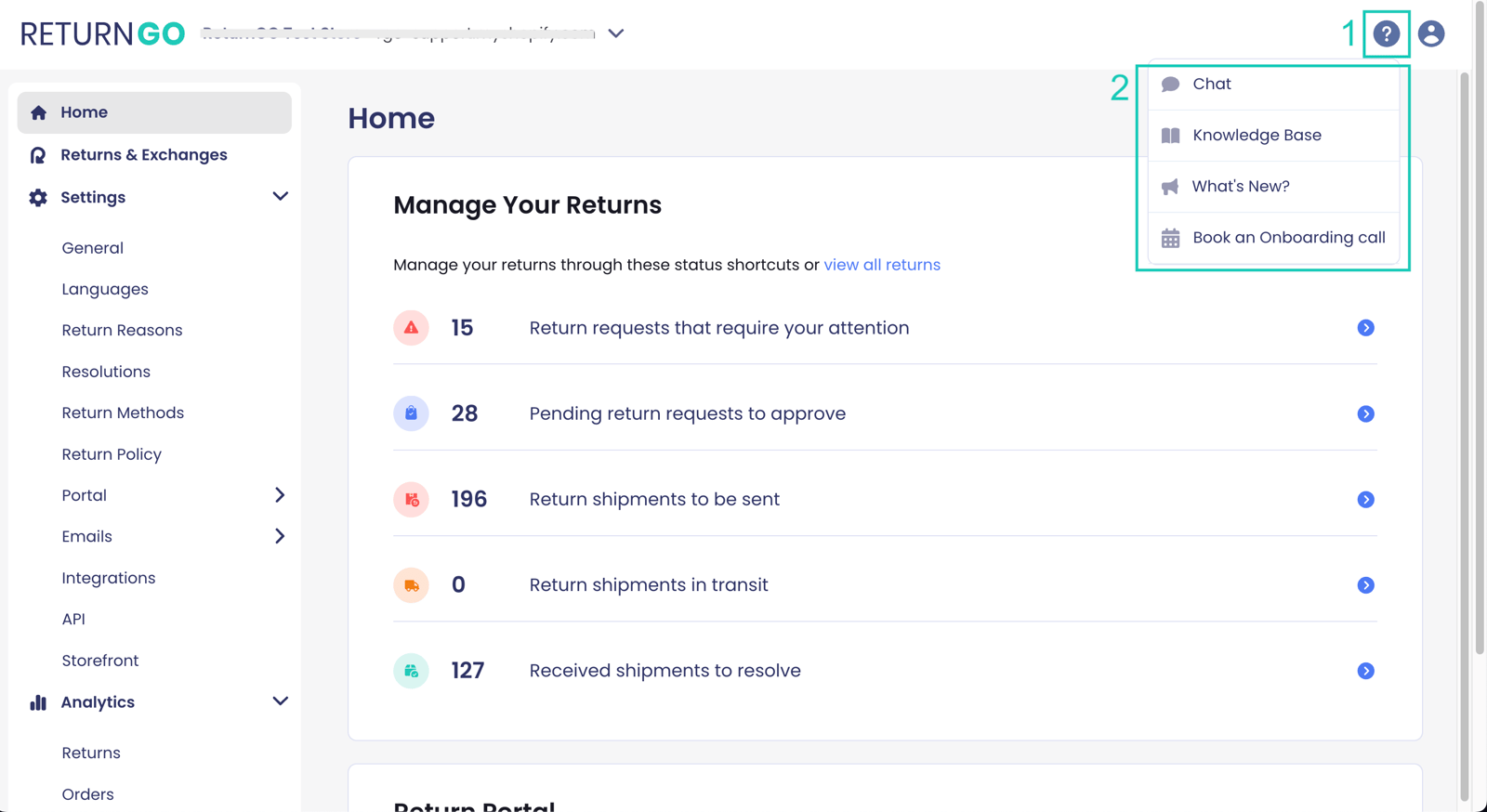
📷 Official ReturnGO product or documentation imagery showing the returns workflow. Source: official vendor website/documentation.
💚 What we like
Strong coverage of the category’s core return and exchange workflow.
Clearer operational control than managing returns through support tickets and spreadsheets.
Useful path to collect return reasons and turn policy rules into repeatable automation.
🟠 What to know
Implementation quality depends heavily on the commerce, carrier and warehouse systems you connect.
Subscription price alone can understate the real economics because labels, network services, overages or logistics charges may sit outside the software fee.
💡 Why this score
ReturnGO scores 91/100 because it combines strong core returns execution with excellent ecommerce fit. The score also reflects implementation depth, pricing transparency and how far the platform scales beyond a basic return portal rather than rewarding feature count for its own sake.
💰 Pricing
Premium from $147/month; Pro from $297/month; Enterprise custom
✅ Best fit
Shopify merchants with more complex exchange, automation and multi-system needs.
🚫 Less ideal for
Teams whose return volume is too low to justify dedicated software, or buyers whose main requirement sits outside this product’s operating model.
🧩 Key capabilities
Branded self-service return initiation
Return eligibility and policy rules
Refund, store-credit and exchange outcomes
Return labels, tracking or routing
Merchant-side return processing and status control
Return reasons, reporting and operational analytics
🔎 Official sources
Product: https://returngo.ai/
Pricing: https://returngo.ai/pricing/
Documentation / feature: https://support.returngo.ai/returngo-setup-settings

5️⃣ 5. ReturnLogic
91/100 · 💰 Usage-based · 🧩 Intermediate · 🏢 SMB–Mid-market · ⚙️ Guided setup
🎯 Best for: Shopify brands that want operational return data, disposition controls and usage-based economics
⚡ Choose ReturnLogic if shopify brands that want operational return data, disposition controls and usage-based economics.
ReturnLogic covers the core returns job with a branded shopper flow and merchant-side controls for return outcomes. What matters is how its operating model fits your stack: Dedicated customer success onboarding with two required onboarding calls before launch. For buyers, the key question is not whether it can create a return label, but how well it handles policy exceptions, exchanges, refund timing and the logistics path after approval.
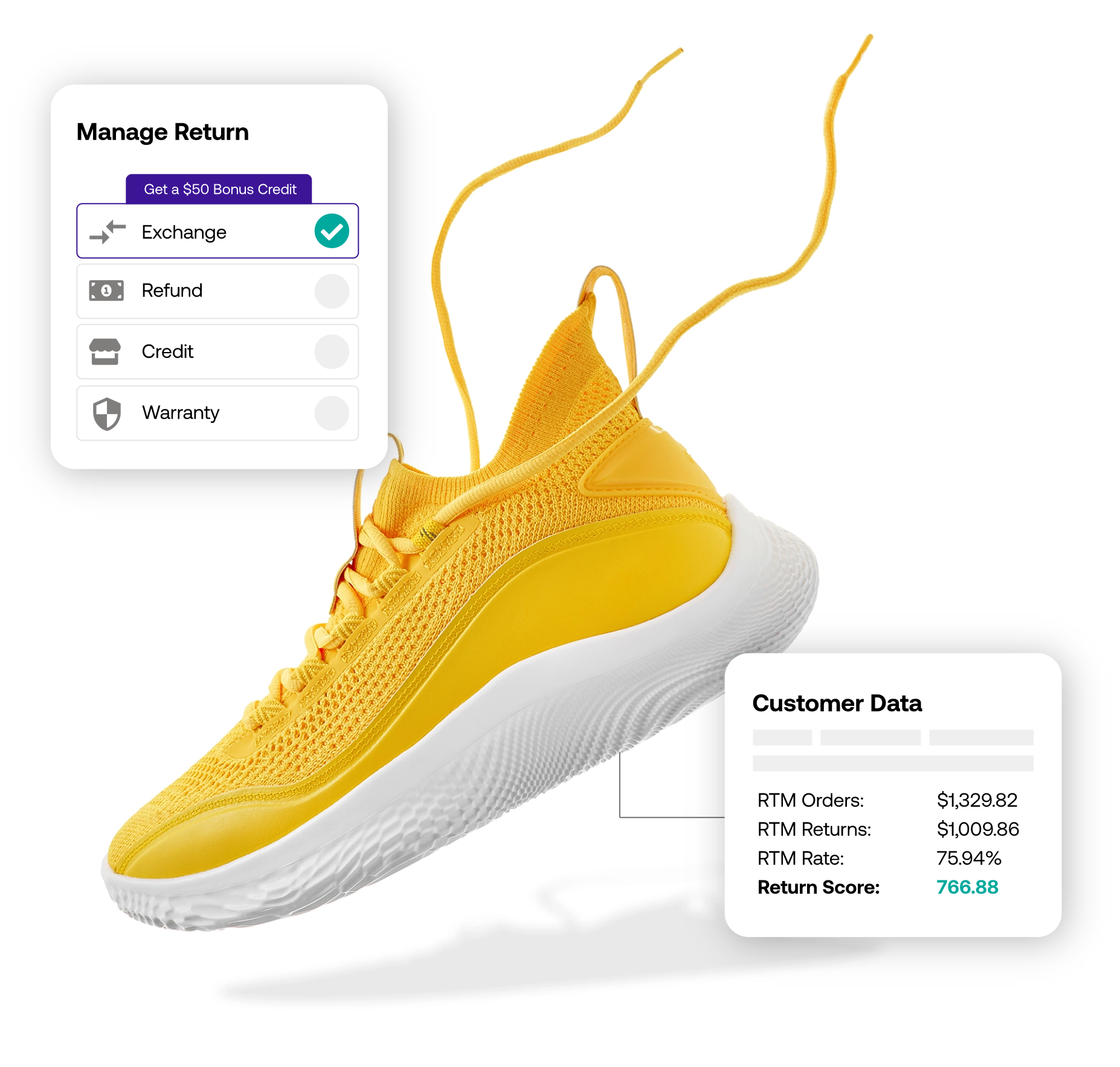
📷 Official ReturnLogic product or documentation imagery showing the returns workflow. Source: official vendor website/documentation.
💚 What we like
Strong coverage of the category’s core return and exchange workflow.
Clearer operational control than managing returns through support tickets and spreadsheets.
Useful path to collect return reasons and turn policy rules into repeatable automation.
🟠 What to know
Implementation quality depends heavily on the commerce, carrier and warehouse systems you connect.
Subscription price alone can understate the real economics because labels, network services, overages or logistics charges may sit outside the software fee.
💡 Why this score
ReturnLogic scores 91/100 because it combines strong core returns execution with excellent ecommerce fit. The score also reflects implementation depth, pricing transparency and how far the platform scales beyond a basic return portal rather than rewarding feature count for its own sake.
💰 Pricing
Usage-based with no subscription fee, about $3.90–$0.25 per return; Enterprise custom
✅ Best fit
Growing Shopify merchants that want deeper returns operations and analytics without fixed platform fees.
🚫 Less ideal for
Teams whose return volume is too low to justify dedicated software, or buyers whose main requirement sits outside this product’s operating model.
🧩 Key capabilities
Branded self-service return initiation
Return eligibility and policy rules
Refund, store-credit and exchange outcomes
Return labels, tracking or routing
Merchant-side return processing and status control
Return reasons, reporting and operational analytics
🔎 Official sources
Product: https://www.returnlogic.com/
Pricing: https://www.returnlogic.com/pricing/
Documentation / feature: https://www.returnlogic.com/how-it-works/

6️⃣ 6. Redo
91/100 · 💰 Free · 🧩 Intermediate · 🏢 SMB–Mid-market · ⚙️ Guided setup
🎯 Best for: Brands interested in shopper-funded return coverage plus return automation and post-purchase tools
⚡ Choose Redo if brands interested in shopper-funded return coverage plus return automation and post-purchase tools.
Redo covers the core returns job with a branded shopper flow and merchant-side controls for return outcomes. What matters is how its operating model fits your stack: White-glove onboarding according to Redo pricing, with configuration across return flows and connected post-purchase products. For buyers, the key question is not whether it can create a return label, but how well it handles policy exceptions, exchanges, refund timing and the logistics path after approval.
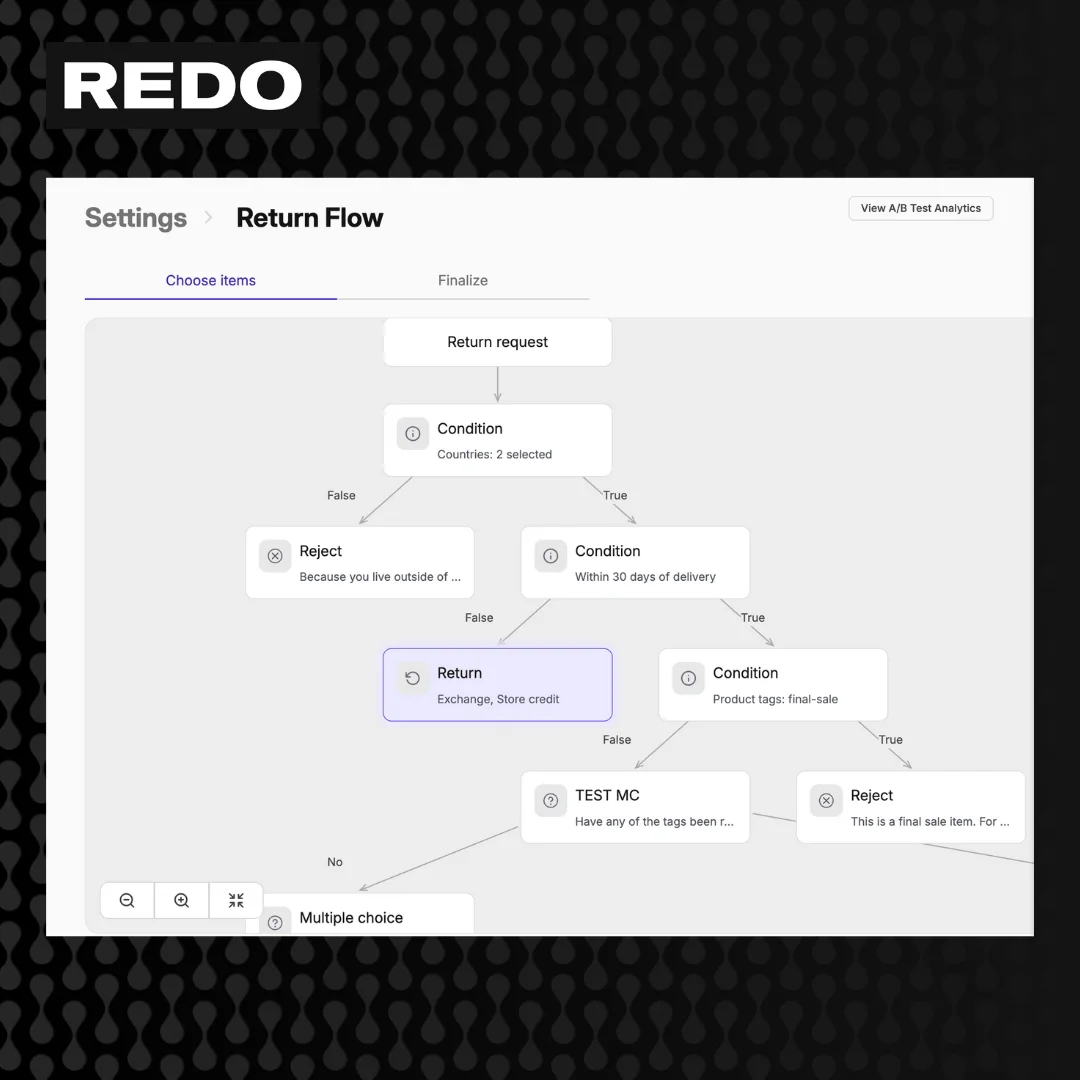
📷 Official Redo product or documentation imagery showing the returns workflow. Source: official vendor website/documentation.
💚 What we like
Strong coverage of the category’s core return and exchange workflow.
Clearer operational control than managing returns through support tickets and spreadsheets.
Useful path to collect return reasons and turn policy rules into repeatable automation.
🟠 What to know
Implementation quality depends heavily on the commerce, carrier and warehouse systems you connect.
Subscription price alone can understate the real economics because labels, network services, overages or logistics charges may sit outside the software fee.
💡 Why this score
Redo scores 91/100 because it combines strong core returns execution with excellent ecommerce fit. The score also reflects implementation depth, pricing transparency and how far the platform scales beyond a basic return portal rather than rewarding feature count for its own sake.
💰 Pricing
Returns software listed as free; customer-funded coverage model can cover return-label costs
✅ Best fit
Growth ecommerce brands comfortable with a customer-funded protection/returns model.
🚫 Less ideal for
Teams whose return volume is too low to justify dedicated software, or buyers whose main requirement sits outside this product’s operating model.
🧩 Key capabilities
Branded self-service return initiation
Return eligibility and policy rules
Refund, store-credit and exchange outcomes
Return labels, tracking or routing
Merchant-side return processing and status control
Return reasons, reporting and operational analytics
🔎 Official sources
Product: https://redo.com/products/returns
Pricing: https://redo.com/pricing
Documentation / feature: https://redo.com/blogs/create-a-hassle-free-return-process-for-your-ecommerce-store

7️⃣ 7. Narvar
91/100 · 💰 Enterprise price · 🧩 Advanced · 🏢 Enterprise · ⚙️ Enterprise implementation
🎯 Best for: Large retailers needing returns, fraud controls and broader post-purchase orchestration
⚡ Choose Narvar if large retailers needing returns, fraud controls and broader post-purchase orchestration.
Narvar covers the core returns job with a branded shopper flow and merchant-side controls for return outcomes. What matters is how its operating model fits your stack: Sales-led enterprise deployment integrated with retailer order, commerce, carrier and customer-service systems. For buyers, the key question is not whether it can create a return label, but how well it handles policy exceptions, exchanges, refund timing and the logistics path after approval.

📷 Official Narvar product or documentation imagery showing the returns workflow. Source: official vendor website/documentation.
💚 What we like
Strong coverage of the category’s core return and exchange workflow.
Clearer operational control than managing returns through support tickets and spreadsheets.
Useful path to collect return reasons and turn policy rules into repeatable automation.
🟠 What to know
Implementation quality depends heavily on the commerce, carrier and warehouse systems you connect.
Subscription price alone can understate the real economics because labels, network services, overages or logistics charges may sit outside the software fee.
💡 Why this score
Narvar scores 91/100 because it combines strong core returns execution with solid ecommerce fit. The score also reflects implementation depth, pricing transparency and how far the platform scales beyond a basic return portal rather than rewarding feature count for its own sake.
💰 Pricing
Custom quote
✅ Best fit
Large omnichannel and global retailers with complex return, fraud and post-purchase operations.
🚫 Less ideal for
Teams whose return volume is too low to justify dedicated software, or buyers whose main requirement sits outside this product’s operating model.
🧩 Key capabilities
Branded self-service return initiation
Return eligibility and policy rules
Refund, store-credit and exchange outcomes
Return labels, tracking or routing
Merchant-side return processing and status control
Return reasons, reporting and operational analytics
🔎 Official sources
Documentation / feature: https://support.narvar.com/hc/en-us/articles/11307520101651-Narvar-Return-Overview
8️⃣ 8. Happy Returns
90/100 · 💰 Enterprise price · 🧩 Intermediate · 🏢 Mid-market–Enterprise · ⚙️ Guided setup
🎯 Best for: Brands that value box-free drop-off through a physical Return Bar network
⚡ Choose Happy Returns if brands that value box-free drop-off through a physical Return Bar network.
Happy Returns covers the core returns job with a branded shopper flow and merchant-side controls for return outcomes. What matters is how its operating model fits your stack: Merchant portal plus integration to the Happy Returns physical return network and carrier workflows. For buyers, the key question is not whether it can create a return label, but how well it handles policy exceptions, exchanges, refund timing and the logistics path after approval.

📷 Official Happy Returns product or documentation imagery showing the returns workflow. Source: official vendor website/documentation.
💚 What we like
Strong coverage of the category’s core return and exchange workflow.
Clearer operational control than managing returns through support tickets and spreadsheets.
Useful path to collect return reasons and turn policy rules into repeatable automation.
🟠 What to know
Implementation quality depends heavily on the commerce, carrier and warehouse systems you connect.
Subscription price alone can understate the real economics because labels, network services, overages or logistics charges may sit outside the software fee.
💡 Why this score
Happy Returns scores 90/100 because it combines strong core returns execution with excellent ecommerce fit. The score also reflects implementation depth, pricing transparency and how far the platform scales beyond a basic return portal rather than rewarding feature count for its own sake.
💰 Pricing
Custom quote
✅ Best fit
Mid-market and enterprise brands where convenient drop-off and consolidation materially change economics.
🚫 Less ideal for
Teams whose return volume is too low to justify dedicated software, or buyers whose main requirement sits outside this product’s operating model.
🧩 Key capabilities
Branded self-service return initiation
Return eligibility and policy rules
Refund, store-credit and exchange outcomes
Return labels, tracking or routing
Merchant-side return processing and status control
Return reasons, reporting and operational analytics
🔎 Official sources
Pricing: https://happyreturns.com/contact
Documentation / feature: https://happyreturns.com/ecommerce-return-exchange-portal
9️⃣ 9. Swap
90/100 · 💰 Custom quote · 🧩 Advanced · 🏢 Mid-market–Enterprise · ⚙️ Guided setup
🎯 Best for: Global commerce teams wanting returns tied into cross-border pricing, duties and broader operations
⚡ Choose Swap if global commerce teams wanting returns tied into cross-border pricing, duties and broader operations.
Swap covers the core returns job with a branded shopper flow and merchant-side controls for return outcomes. What matters is how its operating model fits your stack: Contracted onboarding, usually within 30 days; Shopify can be fast while custom warehouse-management-system connections take longer. For buyers, the key question is not whether it can create a return label, but how well it handles policy exceptions, exchanges, refund timing and the logistics path after approval.

📷 Official Swap product or documentation imagery showing the returns workflow. Source: official vendor website/documentation.
💚 What we like
Strong coverage of the category’s core return and exchange workflow.
Clearer operational control than managing returns through support tickets and spreadsheets.
Useful path to collect return reasons and turn policy rules into repeatable automation.
🟠 What to know
Implementation quality depends heavily on the commerce, carrier and warehouse systems you connect.
Subscription price alone can understate the real economics because labels, network services, overages or logistics charges may sit outside the software fee.
💡 Why this score
Swap scores 90/100 because it combines strong core returns execution with solid ecommerce fit. The score also reflects implementation depth, pricing transparency and how far the platform scales beyond a basic return portal rather than rewarding feature count for its own sake.
💰 Pricing
Custom quote
✅ Best fit
Mid-market and enterprise brands combining returns with international commerce infrastructure.
🚫 Less ideal for
Teams whose return volume is too low to justify dedicated software, or buyers whose main requirement sits outside this product’s operating model.
🧩 Key capabilities
Branded self-service return initiation
Return eligibility and policy rules
Refund, store-credit and exchange outcomes
Return labels, tracking or routing
Merchant-side return processing and status control
Return reasons, reporting and operational analytics
🔎 Official sources
Product: https://www.swap-commerce.com/
Documentation / feature: https://help.swap-commerce.com/en/collections/12055077-returns-v2
🔟 10. Rich Returns
89/100 · 💰 Budget · 🧩 Beginner · 🏢 SMB–Mid-market · ⚙️ Low-code
🎯 Best for: Shopify merchants wanting a straightforward branded portal and transparent pricing
⚡ Choose Rich Returns if shopify merchants wanting a straightforward branded portal and transparent pricing.
Rich Returns covers the core returns job with a branded shopper flow and merchant-side controls for return outcomes. What matters is how its operating model fits your stack: Self-serve Shopify-focused setup with automation, labels and integrations; enterprise API access at higher tiers. For buyers, the key question is not whether it can create a return label, but how well it handles policy exceptions, exchanges, refund timing and the logistics path after approval.

📷 Official Rich Returns product or documentation imagery showing the returns workflow. Source: official vendor website/documentation.
💚 What we like
Strong coverage of the category’s core return and exchange workflow.
Clearer operational control than managing returns through support tickets and spreadsheets.
Useful path to collect return reasons and turn policy rules into repeatable automation.
🟠 What to know
Implementation quality depends heavily on the commerce, carrier and warehouse systems you connect.
Subscription price alone can understate the real economics because labels, network services, overages or logistics charges may sit outside the software fee.
💡 Why this score
Rich Returns scores 89/100 because it combines strong core returns execution with excellent ecommerce fit. The score also reflects implementation depth, pricing transparency and how far the platform scales beyond a basic return portal rather than rewarding feature count for its own sake.
💰 Pricing
Standard $19/month; Professional $39/month; Premium $99/month; Enterprise from $199/month
✅ Best fit
Small and medium-sized Shopify merchants that want predictable monthly plans and common exchange automation.
🚫 Less ideal for
Teams whose return volume is too low to justify dedicated software, or buyers whose main requirement sits outside this product’s operating model.
🧩 Key capabilities
Branded self-service return initiation
Return eligibility and policy rules
Refund, store-credit and exchange outcomes
Return labels, tracking or routing
Merchant-side return processing and status control
Return reasons, reporting and operational analytics
🔎 Official sources
Product: https://www.richreturns.io/
Pricing: https://www.richreturns.io/pricing
Documentation / feature: https://www.richreturns.io/integrations
🎯 Which tools should you actually shortlist?
Start with Loop Returns, AfterShip Returns and ReturnGO if your buying problem is primarily software automation for a Shopify-centric stack.
Add Happy Returns if physical box-free drop-off and consolidation are central to the customer experience or cost model.
Add ZigZag Global when cross-border routing, international carriers and reverse logistics are first-order requirements.
Add Narvar when returns must live inside a broader enterprise post-purchase and fraud program.
Add Redo if a customer-funded return-coverage model is strategically acceptable.
Consider Rich Returns when you want a simpler Shopify implementation with clear monthly tiers; consider ReturnLogic when usage-based economics and return analytics fit better.
🧪 Run this test before you buy
Give every vendor the same ten-order test set rather than watching a canned demo. Include a normal size exchange, a higher-priced exchange, an ineligible final-sale item, a damaged product, a cross-border order, a suspected serial returner, a partial return from a multi-item order, a late return, a return requiring store credit and a return that should be routed somewhere other than the default warehouse.
Import or connect the ten test orders.
Configure the same eligibility window and exceptions.
Run each shopper through the portal.
Test even and uneven exchanges.
Test label creation and one no-label/drop-off route if supported.
Trigger an approval exception and a fraud review.
Process refunds and store credit.
Check warehouse or disposition instructions.
Export the RMA data and return reasons.
Price the exact same monthly return volume including overages and logistics extras.
Record across vendors: shopper clicks, operator touches, time to resolution, exchange options shown, refund timing, label/network cost, exception handling, data exported and total monthly cost at your actual volume.
🧾 10 questions to ask in every demo
Exactly what event counts as a billable return and how do overages work?
Can one policy vary by product, customer, country, channel and return reason?
How do you support uneven exchanges where the replacement costs more or less?
When can a refund, store credit or exchange be released automatically?
What fraud and abuse signals can alter eligibility or require review?
Which carriers, drop-off methods and international return lanes are native versus partner-based?
How do returns flow into our warehouse management system, enterprise resource planning system and helpdesk?
What data can we export through files or an application programming interface, and who owns it?
What work is required to migrate policies and open returns from another platform?
If we leave, what happens to shopper portals, historical return data, labels and in-flight returns?
❓ Frequently asked questions
What does ecommerce returns management software do?
It lets shoppers initiate returns or exchanges and lets merchants automate eligibility, approvals, labels, routing, refund timing, store credit, exchange orders and reporting.
What is the difference between a return portal and a return network?
A portal is software for initiating and managing a return. A return network adds physical drop-off locations, consolidation or logistics services. The software and network can be sold together, but they solve different parts of the workflow.
What is an RMA?
Return Merchandise Authorization (RMA) is the record that identifies and tracks an approved or requested return through its lifecycle.
How much does returns software cost?
The category ranges from free or low-cost Shopify plans to usage-based pricing and enterprise custom quotes. Always model software fees together with per-return charges, labels, carrier costs, network fees and any shopper-funded coverage.
How difficult is implementation?
A basic Shopify portal can be configured quickly, while enterprise implementations can involve order systems, warehouse systems, carriers, tax logic, identity, fraud controls and custom APIs. Test the full operating flow, not just installation time.
Should exchanges be the main buying criterion?
They matter because they can retain revenue, but a strong exchange flow cannot compensate for weak eligibility rules, poor routing or difficult warehouse reconciliation. Score the full return lifecycle.
Do I need a physical drop-off network?
Not necessarily. It is most useful when shopper convenience and consolidated reverse logistics materially improve your economics. Software-only portals can be sufficient when mail-in returns already work well.
🔍 About this research
MarketMaze checked assigned vendors against current first-party product, pricing and documentation pages on September 26, 2026. Scores use the fixed six-dimension MarketMaze model and do not blend third-party review ratings. Product screenshots are first-party vendor or vendor-documentation imagery selected to show a real returns workflow rather than stock photography.
