
MARKETMAZE · ECOMMERCE TOOLS · RESEARCH
10 Best Product Information & Catalog Management Software (2026)
Product information management software gives ecommerce teams one reliable place to structure, enrich and distribute product content. We compared 10 tools on catalog modeling, assets, localization, workflows, integrations, value and the ability to keep channel-ready information consistent at scale.
Updated 26 September 2026 · Pricing and product claims checked against official vendor sources.
👋 New to this category? Product information management (PIM) software is a central system for the facts and content that describe what you sell. Think titles, specifications, variants, translations and product relationships. Digital asset management (DAM) covers product images, video and other media. Syndication means sending approved product content to commerce platforms, retailers or marketplaces. A PIM becomes useful when the same product must be maintained by several people, adapted for several markets, or published to many destinations without every channel becoming its own version of the truth.
🧭 Jump to a tool
🏆 The quick answer
🏆 Best overall
Akeneo
🌱 Best for getting started
Plytix
💸 Best value
Akeneo
🏢 Best for larger teams / enterprise
Salsify
🧠 Best for advanced or technical users
Pimcore
📦 Best for retailer syndication
Syndigo
MarketMaze take: Start with the operating problem, not the feature count. A first-time PIM buyer may value transparent pricing and fast setup more than enterprise governance, while a global brand can care far more about localization, approvals and syndication. Use the ranking to identify strong all-rounders, then use the product sections to narrow the field to two or three tools that match your catalog complexity, team structure and channel mix.
📊 Tool comparison & scores
Rank | Tool | Score | Best for | Pricing |
|---|---|---|---|---|
🥇 1 | 94/100 | Mid-market and enterprise teams managing complex, multilingual catalogs across many channels | Growth starts at $0 annually | |
🥈 2 | 93/100 | Enterprise brands that want PIM, workflow and commerce syndication in one operating platform | Custom quote | |
🥉 3 | 92/100 | Complex product organizations that need rigorous modeling, enrichment workflows and controlled channel releases | Custom quote across configurable Foundation, Core, Professional and Enterprise plans. | |
🏅 4 | 90/100 | Enterprise suppliers and brands that need PIM plus strong retailer and marketplace syndication | Custom quote | |
🏅 5 | 89/100 | Smaller and mid-sized product teams that want a practical PIM with transparent entry pricing | Standard $0/month | |
🏅 6 | 88/100 | Technical teams that want highly configurable product data infrastructure and broad extensibility | Professional on-premises $9,900/year | |
🏅 7 | 86/100 | Growing brands that want cloud PIM with practical catalog workflows and commerce connections | Custom quote across Scale, Premium, Enterprise and Enterprise Plus plans. | |
🏅 8 | 85/100 | Mid-market teams with sizable catalogs that want structured PIM and asset workflows with published tiers | Regular $36,000/year | |
🏅 9 | 84/100 | Composable-commerce teams that prioritize APIs, flexible models and headless product-data architecture | Custom usage-based quote based on factors such as users, SKUs and languages | |
🏅 10 | 82/100 | Brands that want PIM and digital asset management together with channel-ready product templates | Custom quote |
🧠 How the scoring works
This ranking uses MarketMaze proprietary scoring.
Dimension | Weight | What we look for |
|---|---|---|
Core job performance | 30% | Attribute modeling, variants, assets, localization, enrichment and reliable catalog control. |
Ecommerce fit | 20% | How naturally the PIM supports brands, retailers, marketplaces and multichannel product teams. |
Workflow & control | 15% | Permissions, approvals, bulk work, quality checks and practical day-to-day enrichment. |
Integrations & implementation | 15% | APIs, connectors, import/export options and realistic effort to fit the commerce stack. |
Pricing & value | 10% | Price transparency, entry accessibility and capability delivered for the intended buyer. |
Scale & advanced capabilities | 10% | Enterprise catalogs, regions, governance, syndication and demanding product-data operating models. |
🤔 Do you even need product information management software?
Probably yes ✅
You probably do if product information lives across spreadsheets, commerce platforms and shared drives, several teams edit the same attributes, or every new channel creates duplicate cleanup work. PIM becomes valuable when consistency and controlled enrichment are now recurring operational problems.
Maybe 🟡
Maybe, if the catalog is growing but one team still owns most edits. Test whether a lighter PIM can reduce manual handoffs before committing to enterprise software. The trigger is usually repeated rework across variants, languages, assets or channel-specific fields.
Probably not yet ⏳
Probably not yet if you have a small catalog, one primary storefront and a single person maintaining product content accurately. Your commerce platform plus disciplined templates may be enough until duplication, localization, governance or multichannel publishing becomes a measurable burden.

🥇 1. Akeneo
94/100 · 💰 Free · 🧩 Intermediate · 🏢 Mid-market–Enterprise · ⚙️ Specialist-led
🎯 Best for: Mid-market and enterprise teams managing complex, multilingual catalogs across many channels
⚡ Choose Akeneo if you need strong product modeling, governance and activation without giving up a dedicated PIM core.
Akeneo Product Cloud combines product information management with supplier onboarding, digital asset management, activation and analytics. Its PIM is strongest when a catalog has complex families, variants, locales and approval paths that need a governed source of truth. The platform also supports channel-ready syndication and a broad app ecosystem, so ecommerce teams can connect product data to commerce and marketplace workflows without turning the PIM into inventory or order software.

📷 Akeneo PIM product-editing workspace with structured attributes and enrichment fields. Source: official vendor documentation.
💚 What we like
- Flexible families, variants and locales handle complex catalogs without forcing teams into a rigid product structure.
- Governance, completeness and permissions give distributed teams clear ownership over enrichment and approval work.
- Activation capabilities and the app ecosystem extend clean product data into retailers, marketplaces and commerce platforms.
🟠 What to know
- The most capable commercial packages are sales-led, so full enterprise costs require a vendor quote.
- A serious rollout usually needs deliberate data-model design, migration work and stakeholder ownership across product teams.
💡 Why this score: Akeneo scores highest because it combines mature PIM fundamentals, strong ecommerce fit and broad activation options in one product-focused platform. The main deduction is buying complexity at higher tiers, where pricing is not public and implementation can become a structured transformation project.
💰 Pricing: Growth starts at $0 annually; Advanced and Premium are custom quote. Community Edition is also available.
✅ Best fit: Brands, manufacturers, retailers and distributors with meaningful catalog complexity, multiple locales or channels, and a need for governed enrichment workflows.
🚫 Less ideal for: Very small catalogs that can still be managed reliably inside a commerce platform or a well-governed spreadsheet.
🧩 Key capabilities
Attribute modeling
Variants & families
Localization
DAM & CDN
Approval workflows
Channel activation
🔎 Official sources: Product · Pricing · Documentation

🥈 2. Salsify
93/100 · 💰 Enterprise price · 🧩 Advanced · 🏢 Enterprise · ⚙️ Enterprise implementation
🎯 Best for: Enterprise brands that want PIM, workflow and commerce syndication in one operating platform
⚡ Choose Salsify if you need a central product record tightly connected to retailer, marketplace and digital-shelf distribution workflows.
Salsify combines product information management with workflow automation, digital assets and a large syndication footprint. Teams can maintain a central source of product content, create channel- or region-specific versions and move approved information into commerce destinations. That makes it especially relevant for large brands selling through many retailers and marketplaces, where the hard problem is not only storing attributes but keeping each destination supplied with the right version of the content.
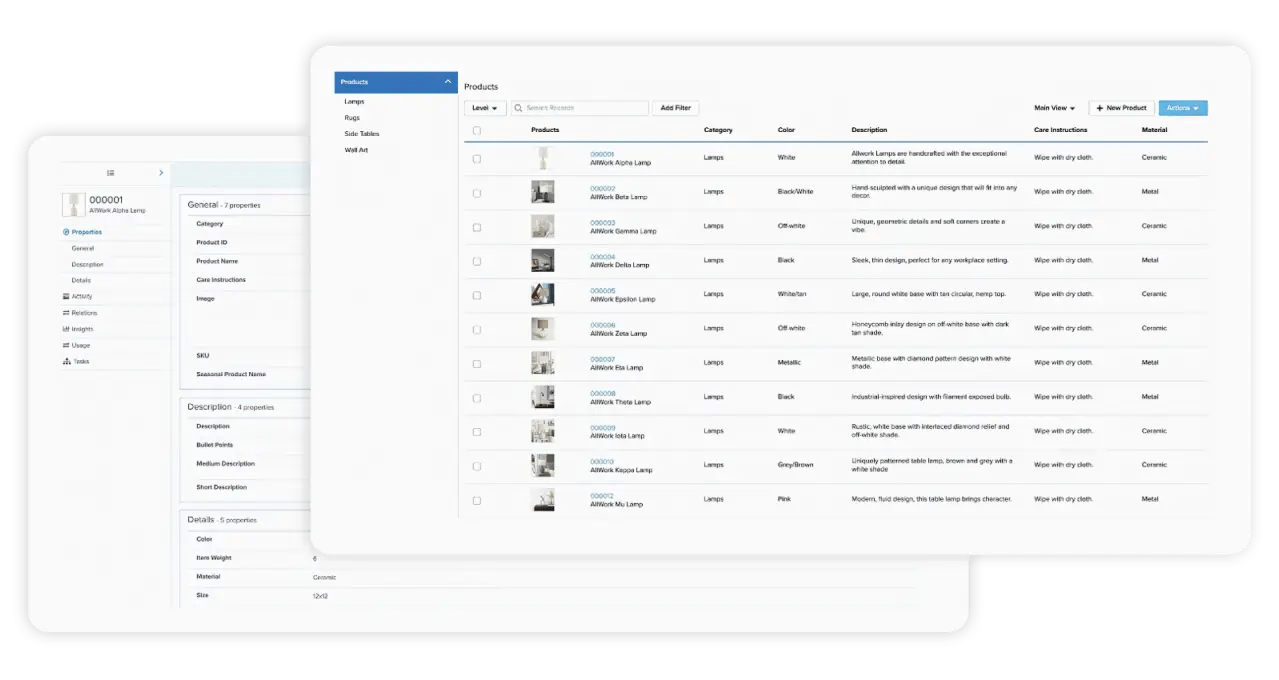
📷 Salsify PIM showing a product list alongside detailed product properties. Source: official vendor website.
💚 What we like
- PIM and syndication sit in the same platform, reducing handoffs between catalog management and retailer delivery.
- Channel-specific product records support brands that must adapt content for different retailers, markets and regional requirements.
- Enterprise workflows, integrations and application programming interfaces support complex operating models and larger product organizations.
🟠 What to know
- Salsify does not publish standard PIM subscription prices, so budget comparison requires a sales process.
- The breadth of the platform can be excessive for smaller teams that only need straightforward catalog centralization.
💡 Why this score: Salsify is exceptionally strong for enterprise commerce because product data, workflow and syndication are closely connected. It trails Akeneo slightly on overall score because smaller buyers face a heavier buying and implementation model, while public pricing is not available for direct value comparison.
💰 Pricing: Custom quote; Salsify does not publish standard PIM subscription prices.
✅ Best fit: Large brands and retailers managing many channels, retailer requirements, regional product versions and cross-functional content operations at enterprise scale, especially where syndication is a core operating need.
🚫 Less ideal for: Smaller ecommerce teams that mainly need a simple product database and do not require enterprise syndication or governance.
🧩 Key capabilities
Central product records
Channel versions
Workflow automation
Digital asset management
Retailer syndication
Enterprise integrations
🔎 Official sources: Product · Pricing · Documentation

🥉 3. inriver
92/100 · 💰 Enterprise price · 🧩 Advanced · 🏢 Mid-market–Enterprise · ⚙️ Enterprise implementation
🎯 Best for: Complex product organizations that need rigorous modeling, enrichment workflows and controlled channel releases
⚡ Choose inriver if you want enterprise-grade PIM with strong governance and release workflows around a complex product data model.
inriver is an enterprise product information management platform built around structured product data, enrichment and controlled release to channels. Its model supports relationships, resources, variants and market-specific information, while workflow features help larger teams coordinate what is ready to publish. For ecommerce operators, the appeal is control: product information can be governed centrally, enriched by multiple contributors and then released to downstream destinations with a clearer process than ad hoc exports and spreadsheets.
📷 inriver dashboard used to organize product-information work and team activity. Source: official vendor documentation.
💚 What we like
- Flexible product relationships and data modeling work well for catalogs with many dependencies, variants and reusable resources.
- Workflow and release controls help larger organizations coordinate enrichment across product, marketing and regional teams.
- Syndication and integration options support distributing governed product information into a broader ecommerce technology stack.
🟠 What to know
- Plans are configurable and pricing is not published, so commercial comparison requires a tailored sales conversation.
- The platform is designed for substantial product operations and can be more implementation-heavy than lighter PIM tools.
💡 Why this score: inriver scores strongly on core PIM depth, workflow control and enterprise scale. Its lower value score reflects quote-based pricing and a heavier implementation model, not a lack of capability. It is best evaluated by teams with enough catalog complexity to benefit from the added governance.
💰 Pricing: Custom quote across configurable Foundation, Core, Professional and Enterprise plans.
✅ Best fit: Mid-market and enterprise product organizations with complex relationships, multiple contributors, regional catalogs and formal release or governance requirements across many markets and channels.
🚫 Less ideal for: Small teams looking for a self-serve PIM they can configure quickly without specialist implementation support.
🧩 Key capabilities
Flexible data model
Product relationships
Enrichment workflows
Digital assets
Channel release
Syndication
🔎 Official sources: Product · Pricing · Documentation

🏅 4. Syndigo
90/100 · 💰 Enterprise price · 🧩 Advanced · 🏢 Enterprise · ⚙️ Enterprise implementation
🎯 Best for: Enterprise suppliers and brands that need PIM plus strong retailer and marketplace syndication
⚡ Choose Syndigo if retailer requirements and multichannel distribution are as important to you as central product-data management.
Syndigo combines product information management with content syndication and a large commerce network. Its PIM centralizes attributes, assets and enrichment work, while validation, mapping and destination-specific processes help prepare content for retailers and marketplaces. For suppliers and brands that sell through many trading partners, that connection between governed data and outbound distribution is the differentiator. Teams can manage product content once, then adapt and deliver it against channel requirements from the same broader platform.

📷 Syndigo product workspace with an item index and product-data export controls. Source: official vendor community.
💚 What we like
- Strong syndication capabilities reduce the gap between maintaining product information and meeting retailer-specific content requirements.
- Validation, mapping and workflow tools help teams catch incomplete or misaligned product data before distribution.
- The platform supports product information, digital assets and destination delivery within one enterprise commerce environment.
🟠 What to know
- Pricing is sales-led, so buyers need a scoped quote to compare total cost across channels and modules.
- Organizations focused only on internal catalog management may not need the breadth of Syndigo’s network and syndication layer.
💡 Why this score: Syndigo earns a high score because it pairs solid PIM capability with unusually strong ecommerce distribution and retailer connectivity. It gives up points on value transparency and simplicity: its biggest advantages appear when channel syndication is central to the buying case, not merely an optional feature.
💰 Pricing: Custom quote; PIM pricing is not publicly listed.
✅ Best fit: Enterprise brands, manufacturers and suppliers with many retailer or marketplace destinations, significant channel-compliance requirements and a need to connect governed product data directly to syndication.
🚫 Less ideal for: Teams that need a lightweight internal PIM but have limited retailer syndication or enterprise integration requirements.
🧩 Key capabilities
Product data management
Asset management
Data validation
Attribute mapping
Retailer syndication
Multilingual content
🔎 Official sources: Product · Pricing · Documentation

🏅 5. Plytix
89/100 · 💰 Free · 🧩 Beginner · 🏢 SMB–Mid-market · ⚙️ No-code
🎯 Best for: Smaller and mid-sized product teams that want a practical PIM with transparent entry pricing
⚡ Choose Plytix if you want a fast, approachable PIM with public pricing and collaboration that does not penalize extra seats.
Plytix is a cloud PIM aimed at product teams that want to centralize information without an enterprise-scale rollout. It combines structured product data, digital assets, relationships, bulk editing and output tools, with unlimited users on its published plans. The free Standard plan lowers the barrier to testing the operating model, while Pro adds much higher catalog and application programming interface limits. That makes Plytix particularly useful for growing ecommerce teams moving beyond spreadsheets for the first time.
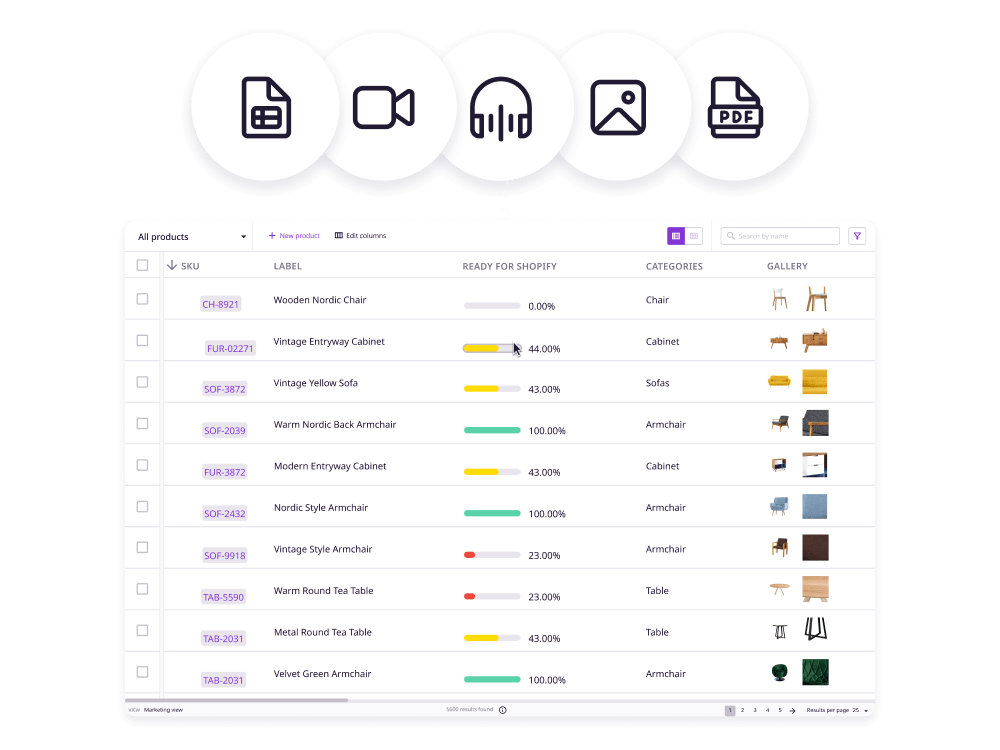
📷 Plytix PIM showing centralized product information across configurable tabs. Source: official vendor website.
💚 What we like
- A free plan and published Pro pricing make the initial business case easier to evaluate than sales-led alternatives.
- Unlimited seats encourage product, ecommerce and marketing teams to work from the same catalog without per-user friction.
- The interface and no-code setup are approachable for teams graduating from spreadsheets or disconnected commerce-platform fields.
🟠 What to know
- Advanced enterprise governance and scale are less extensive than in the highest-end PIM platforms on this list.
- Feeds, brand portals and product data sheets can require paid add-ons beyond the core PIM subscription.
💡 Why this score: Plytix scores especially well on value and accessibility while still covering the PIM fundamentals most growing ecommerce teams need. It ranks below the enterprise leaders because its scale and advanced governance are lighter, but that trade-off is often desirable for first-time PIM buyers.
💰 Pricing: Standard $0/month; Pro $499/month; Enterprise custom. Optional feeds/templates and Brand Portals are $300/month each; Product Data Sheets are $200/month.
✅ Best fit: Small and mid-sized ecommerce teams that need centralized product data, assets and collaboration without a long enterprise implementation or specialist-heavy rollout.
🚫 Less ideal for: Large global enterprises that require the deepest governance, retailer syndication networks or highly customized data infrastructure.
🧩 Key capabilities
Product centralization
Digital assets
Bulk editing
Product relationships
Brand portals
Output feeds
🔎 Official sources: Product · Pricing · Documentation

🏅 6. Pimcore
88/100 · 💰 Premium · 🧩 Advanced · 🏢 Mid-market–Enterprise · ⚙️ Developer-led
🎯 Best for: Technical teams that want highly configurable product data infrastructure and broad extensibility
⚡ Choose Pimcore if you have developer capacity and want a flexible PIM foundation that can be deeply adapted to your data model.
Pimcore is a configurable data and experience platform whose PIM can model complex product structures, relationships, assets and business rules. It is unusually extensible and sits comfortably in developer-led architectures where product information must connect to many custom systems. That flexibility is the reason to shortlist it, but it also changes the buying profile: Pimcore is less of a plug-and-play ecommerce PIM and more of a platform for teams willing to design, integrate and operate a tailored solution.
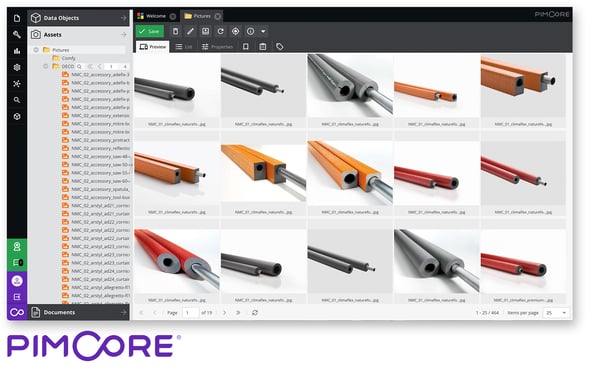
📷 Pimcore product-data and asset interface used in an official customer case study. Source: official vendor website.
💚 What we like
- The data model is highly configurable, making Pimcore suitable for unusual product structures and complex enterprise information domains.
- Strong application programming interfaces and developer tooling support custom integrations and composable commerce architectures.
- Product information and digital assets can be managed within a broader data and experience platform when consolidation matters.
🟠 What to know
- Developer involvement is a realistic requirement for many implementations, especially when using Pimcore’s flexibility to its full extent.
- The broader platform can be more technology than a straightforward ecommerce team needs for basic catalog centralization.
💡 Why this score: Pimcore scores highly on core flexibility, integrations and scale, but its technical operating model lowers workflow accessibility for nontechnical teams. Its value is strongest when a buyer actually needs custom data infrastructure; simpler catalogs can get to value faster with a more packaged PIM.
💰 Pricing: Professional on-premises $9,900/year; Enterprise $29,900/year; PaaS is custom priced.
✅ Best fit: Technically capable mid-market and enterprise teams with complex schemas, custom integration requirements or a broader data-platform strategy that justifies developer-led implementation.
🚫 Less ideal for: First-time PIM buyers that want mostly no-code administration, fast rollout and limited reliance on developers or implementation partners.
🧩 Key capabilities
Custom data models
Product relationships
Digital assets
Workflow rules
Headless APIs
Extensible platform
🔎 Official sources: Product · Pricing · Documentation

🏅 7. Sales Layer
86/100 · 💰 Enterprise price · 🧩 Intermediate · 🏢 SMB–Mid-market · ⚙️ Specialist-led
🎯 Best for: Growing brands that want cloud PIM with practical catalog workflows and commerce connections
⚡ Choose Sales Layer if you want a packaged cloud PIM that balances catalog control, collaboration and ecommerce integrations without deep custom development.
Sales Layer is a cloud PIM focused on centralizing catalogs, improving product-data quality and distributing information to sales channels. It provides collaborative enrichment, automation, quality controls and connectors intended to reduce manual catalog work. Compared with developer-heavy platforms, the value proposition is a more packaged operating model for product and ecommerce teams. It is a sensible shortlist option for growing organizations that need more structure than spreadsheets but do not want to build a custom product-data platform.

📷 Sales Layer interface illustrating centralized product information and catalog management. Source: official vendor website.
💚 What we like
- The cloud PIM is packaged around day-to-day catalog work rather than requiring teams to assemble a custom platform.
- Quality, enrichment and automation features help product teams reduce repetitive cleanup across large sets of item information.
- Commerce connectors and an application programming interface make it practical to move governed data into downstream systems.
🟠 What to know
- Current plans are quote-based, limiting upfront cost comparison against vendors with published subscriptions.
- Very large enterprises may need to validate governance depth, customization and scale against the top enterprise-focused alternatives.
💡 Why this score: Sales Layer earns a strong mid-pack score by balancing core PIM capabilities, ecommerce fit and manageable implementation. It loses points mainly on pricing transparency and ultimate enterprise depth, but remains attractive for teams that want structured catalog operations without turning PIM into a developer project.
💰 Pricing: Custom quote across Scale, Premium, Enterprise and Enterprise Plus plans.
✅ Best fit: Growing brands, distributors and ecommerce teams that need a structured cloud PIM with collaboration, quality controls, channel connections and guided implementation support.
🚫 Less ideal for: Organizations that require either a free self-serve entry point or the deepest enterprise syndication and governance stack.
🧩 Key capabilities
Catalog centralization
Data quality
Bulk enrichment
Workflow automation
Commerce connectors
API access
🔎 Official sources: Product · Pricing · Documentation

🏅 8. Pimberly
85/100 · 💰 Enterprise price · 🧩 Intermediate · 🏢 Mid-market–Enterprise · ⚙️ Specialist-led
🎯 Best for: Mid-market teams with sizable catalogs that want structured PIM and asset workflows with published tiers
⚡ Choose Pimberly if you need a substantial cloud PIM and want clearer published package thresholds than most enterprise competitors provide.
Pimberly combines product information management, digital assets and workflow tools for organizations managing substantial catalogs. It supports structured enrichment, imports, transformations and channel-ready outputs while keeping product media alongside core information. A notable buying difference is that Pimberly publishes annual package prices and catalog limits for several tiers, giving buyers more budget visibility than many enterprise PIM vendors. The platform is best suited to teams with enough catalog scale to justify its relatively high starting price.
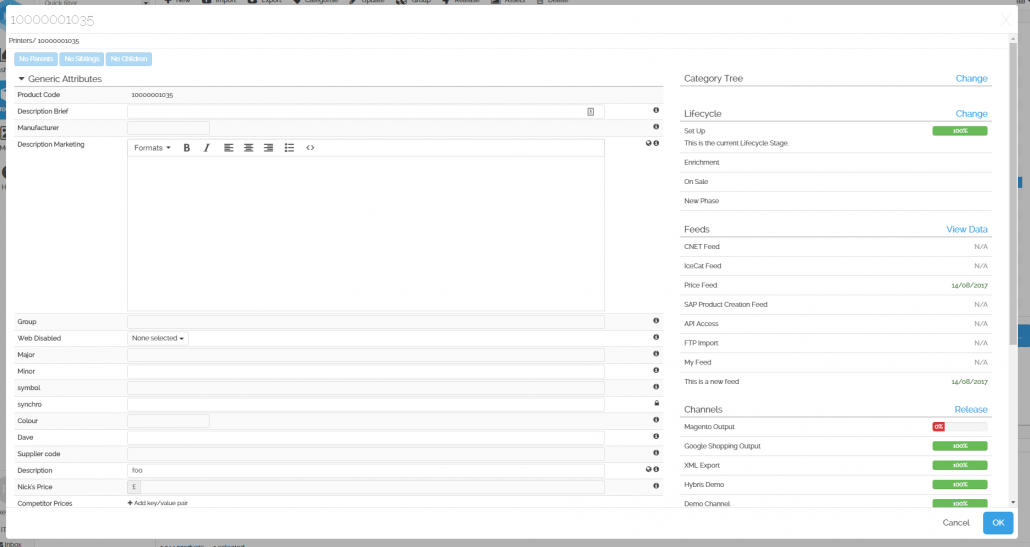
📷 Pimberly PIM dashboard showing product records and catalog-management controls. Source: official vendor website.
💚 What we like
- Published annual package pricing gives buyers more commercial visibility than many enterprise PIM competitors offer publicly.
- Product data and digital assets are managed together, reducing the need to maintain separate catalog and media processes.
- Workflow and automation features suit teams processing frequent updates across larger catalogs and multiple output channels.
🟠 What to know
- The $36,000 annual entry point is difficult to justify for small catalogs or first-time PIM experimentation.
- Buyers should map SKU, user and storage needs carefully because published packages scale across those limits.
💡 Why this score: Pimberly scores well for practical PIM depth, workflows and catalog scale, with extra credit for unusually transparent enterprise pricing. Its value score is constrained by the high entry cost, so it makes most sense once product volume and operational complexity are already substantial.
💰 Pricing: Regular $36,000/year; Pro $60,000/year; Corporate $90,000/year; Enterprise custom.
✅ Best fit: Mid-market and enterprise teams with large catalogs, multiple content contributors and enough operational complexity to justify a higher annual platform cost.
🚫 Less ideal for: Smaller ecommerce brands that want a low-cost entry tier or need to prove PIM value before a major annual commitment.
🧩 Key capabilities
Product information
Digital assets
Data imports
Workflow automation
Catalog transformations
Channel outputs
🔎 Official sources: Product · Pricing · Documentation

🏅 9. Bluestone PIM
84/100 · 💰 Enterprise price · 🧩 Advanced · 🏢 Mid-market–Enterprise · ⚙️ Developer-led
🎯 Best for: Composable-commerce teams that prioritize APIs, flexible models and headless product-data architecture
⚡ Choose Bluestone PIM if your architecture is API-first and you want PIM to behave like a composable service rather than a closed suite.
Bluestone PIM is an application programming interface-first product information management platform aimed at composable commerce architectures. It provides flexible product modeling, hierarchies, variants, assets, localization, quality controls and workflow tools, while emphasizing integration through a large set of APIs. That approach is attractive when PIM must fit into a modular technology stack rather than dictate it. The trade-off is a more technical buying and implementation profile than simpler cloud PIMs designed around self-service setup.
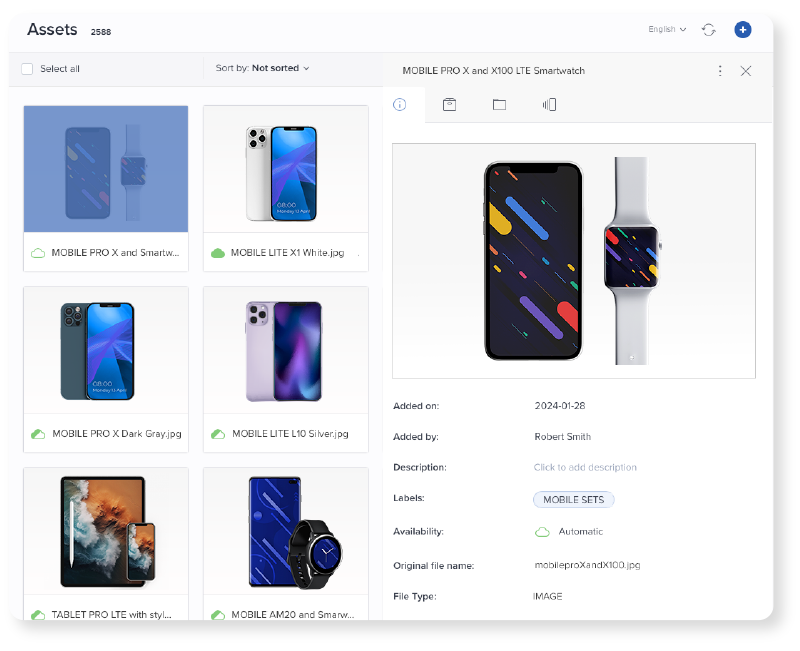
📷 Bluestone PIM interface showing structured product-data management in the platform. Source: official vendor website.
💚 What we like
- API-first architecture fits teams that want PIM integrated into a broader composable commerce and data stack.
- Flexible hierarchies, variants and contextual product information support catalogs that do not fit simple flat schemas.
- Quality controls, tasks and localization features give product teams governance without sacrificing architectural openness.
🟠 What to know
- Pricing is usage-based and custom, so buyers need a detailed quote tied to users, SKUs, languages and other factors.
- Technical architecture is a central selling point, which also means less technical teams may need implementation support.
💡 Why this score: Bluestone scores strongly on flexibility, integrations and advanced architecture. It ranks lower overall because value is difficult to compare without public package prices, and its developer-oriented model is not the easiest route for typical first-time PIM buyers. For composable teams, those trade-offs can be acceptable.
💰 Pricing: Custom usage-based quote based on factors such as users, SKUs and languages; contracts are typically 3–12 months.
✅ Best fit: Mid-market and enterprise teams building composable commerce stacks with strong development resources, complex product-data requirements and a preference for API-first architecture.
🚫 Less ideal for: Small teams that want a low-code or no-code PIM with public pricing and minimal integration work.
🧩 Key capabilities
API-first architecture
Flexible hierarchies
Variant modeling
Asset management
Localization contexts
Data quality rules
🔎 Official sources: Product · Pricing · Documentation

🏅 10. Catsy
82/100 · 💰 Enterprise price · 🧩 Intermediate · 🏢 SMB–Mid-market · ⚙️ Specialist-led
🎯 Best for: Brands that want PIM and digital asset management together with channel-ready product templates
⚡ Choose Catsy if you want product information and digital assets managed together with hands-on onboarding and channel-specific outputs.
Catsy combines product information management and digital asset management in one platform, with tools for centralized records, validation, bulk editing, channel templates and syndication. It is positioned for brands that want product data and media governed together rather than across separate systems. The workflow is more packaged than developer-first PIMs, and Catsy emphasizes white-glove onboarding. Its main comparison limitation is commercial transparency: package names are public, but recurring subscription amounts are not.

📷 Catsy PIM showing a centralized product record with structured content fields. Source: official vendor website.
💚 What we like
- PIM and digital asset management sit together, giving teams one place for structured information and product media.
- Channel templates and syndication tools help convert a central product record into destination-specific ecommerce outputs.
- Validation, history and bulk editing provide useful operational controls without requiring a developer-led platform design.
🟠 What to know
- Subscription amounts are not publicly listed even though Catsy publishes plan packaging and feature differences.
- Enterprise buyers should validate scale, governance and integration depth against larger PIM suites during a proof of concept.
💡 Why this score: Catsy covers the essential PIM workflow well and adds practical digital asset management and channel-output capabilities. It ranks tenth because the assigned field is strong and several competitors provide deeper enterprise scale or more transparent entry pricing. Its integrated PIM-plus-DAM model remains a credible shortlist case.
💰 Pricing: Custom quote; Essential, Multi-Store and Enterprise plan packaging is public, but recurring subscription amounts are not.
✅ Best fit: Small and mid-market brands that want product information, assets, validation and channel templates managed in one supported platform with hands-on onboarding.
🚫 Less ideal for: Buyers that require public subscription pricing, highly composable architecture or the broadest enterprise retailer-syndication network.
🧩 Key capabilities
PIM + DAM
Bulk editing
Data validation
Channel templates
Content syndication
Product portals
🔎 Official sources: Product · Pricing · Documentation
🎯 Which tools should you actually shortlist?
If this is your first PIM and budget visibility matters, start with Plytix and Akeneo. Both let you test a structured product-data workflow without starting from a traditional enterprise-only buying process.
For a growing mid-market catalog with several contributors and channels, compare Akeneo, Sales Layer and Pimberly. The key difference is how much governance, implementation support and catalog scale you actually need.
For enterprise brands selling through many retailers, put Salsify, Syndigo and inriver on the first demo list. They combine stronger governance with the distribution or release controls complex organizations tend to need.
If your architecture team wants maximum flexibility, compare Pimcore and Bluestone PIM. Both reward technical ownership, but Pimcore is broader while Bluestone is especially oriented around composable, API-first product data.
If retailer syndication is the central problem, begin with Syndigo and Salsify rather than treating outbound channel delivery as an afterthought. Validate destination coverage against your real retailer list.
If you want product information and digital assets operated together in a more packaged workflow, Catsy and Pimberly deserve a look alongside Plytix before moving to a heavier enterprise stack.
🧪 Run this test before you buy
Do not choose a PIM from a polished demo built around clean sample data. Give every shortlisted vendor the same messy mini-catalog and make them perform the same operating tasks. Use real variants, incomplete attributes, duplicated assets, translations and at least two channel requirements. The goal is to see how quickly your team can turn imperfect source data into approved, channel-ready product information without relying on hidden manual work.
Import the same 100-product sample with missing fields, inconsistent units and duplicate values; record how much cleanup is required before enrichment starts.
Model one product family with three variants, shared attributes and variant-specific fields; check whether inheritance and relationships remain understandable to a nontechnical operator.
Add images, documents and one video to several products; test search, reuse, version control and how assets stay linked when product records change.
Create English, German and French versions of ten products; compare translation workflow, locale fallbacks, field visibility and the effort to spot untranslated content.
Build a completeness or quality rule for one channel; intentionally break five records and see whether the system clearly explains what must be fixed.
Run an approval workflow across product, ecommerce and legal users; test permissions, comments, rework and whether the audit trail answers who changed what.
Bulk-update 50 products with a new attribute value and a formula or transformation; record steps, safeguards, preview options and rollback behavior.
Map the same ten products to two destinations with different required fields; test how the PIM handles channel-specific overrides without duplicating the source record.
Connect or simulate one real downstream commerce integration; measure how product updates, errors and retries are surfaced to the team responsible for the catalog.
Export the full sample catalog, relationships and assets; verify data portability, field naming and how difficult it would be to leave the platform later.
📏 Record the same things for every vendor: time to configure, operator clicks, manual fixes, error visibility, permission behavior, update latency, implementation dependencies and the total cost of the exact modules you tested.
🧾 10 questions to ask in every demo
Which parts of this workflow are included in the quoted PIM price, and which require separate modules, add-ons or services?
What drives price increases over time: SKUs, channels, locales, users, storage, API volume, syndication destinations or another usage metric?
Who is expected to design our initial product model, migrations, validation rules and integrations, and what work typically stays with the customer?
Which ecommerce platforms, enterprise resource planning systems and marketplaces have maintained native connectors versus partner-built or custom integrations?
How do you handle channel-specific attributes, overrides and transformations without creating duplicate master product records?
What workflow, role and approval controls are available, and can we audit changes by user, field and timestamp?
How are failed imports, exports or syndication jobs surfaced, retried and assigned to the person responsible for fixing them?
What are the practical limits for catalog size, variants, assets, locales, API throughput and bulk operations on the package you are quoting?
What onboarding, support response and customer-success services are included after launch, and which services carry additional fees?
If we leave, can we export product data, relationships, taxonomy, translations and assets in usable formats without professional-services assistance?
❓ Frequently asked questions
What is product information management software?
Product information management, or PIM, software centralizes the descriptive data used to sell products: attributes, specifications, variants, relationships, localized copy and channel-ready content. It gives product, ecommerce and marketing teams one governed source of truth instead of maintaining parallel spreadsheets and storefront fields. Most PIMs also add enrichment workflows, validation and exports or integrations so approved information can move into commerce platforms, retailer portals and marketplaces.
What is the difference between PIM, DAM and product feed software?
A PIM manages structured product information such as attributes, variants, descriptions and relationships. Digital asset management, or DAM, manages files such as product photography, videos and documents. Product feed software transforms and distributes channel feeds, often for advertising or marketplaces. Many modern PIMs include some DAM and syndication features, but buyers should still check where each product is strongest rather than assuming the three categories are interchangeable.
What is the best PIM for Shopify and growing ecommerce brands?
For a growing Shopify-based brand, the best starting point depends on catalog complexity rather than Shopify alone. Plytix is attractive when you want a lower-friction first PIM with public pricing and unlimited users. Akeneo is stronger when you expect more complex modeling, localization or governance. Catsy is worth comparing when product information and digital assets need to be managed together. Always test the exact connector and product fields your store uses.
How much does PIM software cost?
Pricing ranges from free entry tiers to enterprise contracts worth tens of thousands of dollars per year. Plytix publishes a $0 Standard plan and a $499-per-month Pro plan. Pimberly publishes packages from $36,000 per year, while Pimcore lists Professional at $9,900 per year and Enterprise at $29,900 per year. Several enterprise vendors, including Salsify, inriver, Syndigo and Catsy, use custom quotes.
How hard is a PIM to implement, and when do you need one?
Implementation difficulty depends more on your data model and operating process than on the software interface. A smaller team can configure a lightweight PIM relatively quickly if product data is already clean and ownership is clear. Enterprise rollouts often involve taxonomy design, migration, integrations, permissions and workflow changes. You usually need PIM when repeated catalog inconsistencies, localization work or channel-specific rework are consuming measurable time and creating publishing risk.
What should a PIM product data model include?
A useful PIM data model should reflect how products are actually sold and maintained. It normally defines product families, required attributes, units, categories or taxonomy, variant relationships, localized fields, asset links and channel-specific requirements. The goal is not to reproduce every field from every downstream system. Keep a governed master model, then use mappings and transformations to prepare the subsets each storefront, retailer or marketplace needs.
🔍 About this research
MarketMaze researches and scores each tool using its proprietary scoring methodology. Product details and pricing are checked against official vendor sources. Screenshots are from vendor websites, documentation, official demos, or MarketMaze product captures and are used to illustrate the products being reviewed.
Last research check: 26 September 2026.
