
10 Best Customer Loyalty, Rewards & Referral Platforms (2026)
Customer loyalty software ranges from lightweight points apps to enterprise incentive engines. We compared 10 platforms across loyalty mechanics, ecommerce fit, implementation, integrations, pricing and scale to help merchants separate everyday rewards tools from referral specialists and enterprise infrastructure.
Updated 26 September 2026 · Pricing and product claims checked against official vendor sources.
👋 New to this category? Loyalty platforms help merchants reward repeat behavior with points, tiers, perks and member experiences, while referral platforms turn existing customers into an acquisition channel. Some products do both; others specialize. The right comparison starts with your program economics: what shoppers must do, what rewards cost, where the experience appears and how fraud or point liabilities are controlled. For omnichannel retailers, also check whether online and in-store activity resolves to the same customer and reward balance.
🧭 Jump to a tool
🏆 The quick answer
🏆 Best overall | Smile.io |
🌱 Best for getting started | Growave |
💵 Best value | Smile.io |
🏢 Best larger/enterprise | Antavo |
🧠 Best advanced/technical | Talon.One |
🗣️ Best referral-first | ReferralCandy |
MarketMaze take: MarketMaze’s shortlist starts with your program type. Smile.io is the broadest default for ecommerce teams, while LoyaltyLion and Yotpo add more depth for established retention programs. Antavo and Talon.One fit enterprise architecture rather than app-store simplicity. Growave is compelling when loyalty sits inside a broader Shopify engagement bundle. ReferralCandy and Friendbuy are strongest when refer-a-friend acquisition is the main job.
📊 Tool comparison & scores
Rank | Tool | Score | Best for | Pricing |
|---|---|---|---|---|
1 | Smile.io | 94/100 | Shopify brands wanting an accessible loyalty engine that can grow from points to VIP tiers | Free |
2 | LoyaltyLion | 92/100 | Growing Shopify brands that want richer loyalty personalization, segmentation and lifecycle integrations around repeat purchase | Classic $199/month for 500 monthly orders |
3 | Yotpo Loyalty & Referrals | 91/100 | Established ecommerce brands wanting configurable loyalty, referrals and implementation support inside a mature commerce ecosystem | Free plan available |
4 | Rivo | 90/100 | Shopify brands wanting modern loyalty, referrals and customer-account experiences tightly connected to the Shopify stack | Self-serve loyalty plans are available from $49/month |
5 | Antavo | 89/100 | Global enterprises designing complex loyalty programs across markets, channels, brands and non-transactional engagement models | Custom quote |
6 | Growave | 88/100 | Shopify merchants seeking loyalty plus reviews, wishlist and referral features in a value-oriented retention bundle | Entry $15/month |
7 | Talon.One | 87/100 | Enterprise teams needing API-driven loyalty and promotion decisioning across channels, products and complex incentive rules | Custom quote |
8 | Friendbuy | 86/100 | Larger brands running referral programs where attribution, reward logic, experimentation and fraud controls matter deeply | Custom quote |
9 | Marsello | 85/100 | Omnichannel retailers wanting one loyalty program connected across ecommerce, point of sale and customer marketing | Loyalty Launch starts at $60/month per site |
10 | ReferralCandy | 84/100 | Ecommerce brands that primarily need a straightforward, measurable refer-a-friend program with automated rewards | Basic $39/month + 10.5% success fee |
🧠 How the scoring works
This ranking uses MarketMaze proprietary scoring.
Dimension | Weight | What we assess |
|---|---|---|
Core job performance | 30% | Depth and quality of points, rewards, referrals, tiers and program operations. |
Ecommerce fit | 20% | How naturally the product fits merchant workflows, commerce platforms and customer journeys. |
Workflow & control | 15% | Program flexibility, segmentation, rule control, reporting and day-to-day operator usability. |
Integrations & implementation | 15% | Integration breadth, APIs, onboarding effort and practicality of getting the program live. |
Pricing & value | 10% | Price transparency and expected value relative to feature depth and target customer. |
Scale & advanced capabilities | 10% | Enterprise controls, extensibility, omnichannel readiness and ability to support complex programs. |
🤔 Do you even need customer loyalty software?
Probably yes ✅
You have repeat purchase potential, enough order volume to measure cohort behavior, and a clear reward budget. Loyalty software can help formalize repeat-purchase incentives, referrals and member experiences while giving the team reporting and operational controls.
Maybe 🟡
You have returning customers but limited evidence that a formal program will improve retention. Start with one simple points or referral mechanic, model reward cost, and compare repeat purchase behavior before expanding into tiers, gamification or paid membership.
Probably not yet ⏳
You are still solving product-market fit, purchase frequency is naturally very low, or margins cannot absorb meaningful rewards. Fix the core customer experience first; adding points to a weak proposition rarely creates durable loyalty on its own.

1. Smile.io
94/100 · 💰 Free · 🧩 Beginner · 🏢 All sizes · ⚙️ No-code
🎯 Best for: Shopify brands wanting an accessible loyalty engine that can grow from points to VIP tiers.
⚡ Choose Smile.io if ... you want fast setup, clear loyalty mechanics and a credible path from free to enterprise.
Smile.io combines points, referral rewards and VIP tiers in a Shopify-focused product that is easy to launch without a heavy implementation project. It covers the standard loyalty playbook well, then adds stronger controls as plans rise, including embeds, advanced events, unlimited integrations, APIs and enterprise reporting. Its broad merchant fit and unusually clear public pricing make it a practical benchmark for both first-time programs and mature loyalty teams.
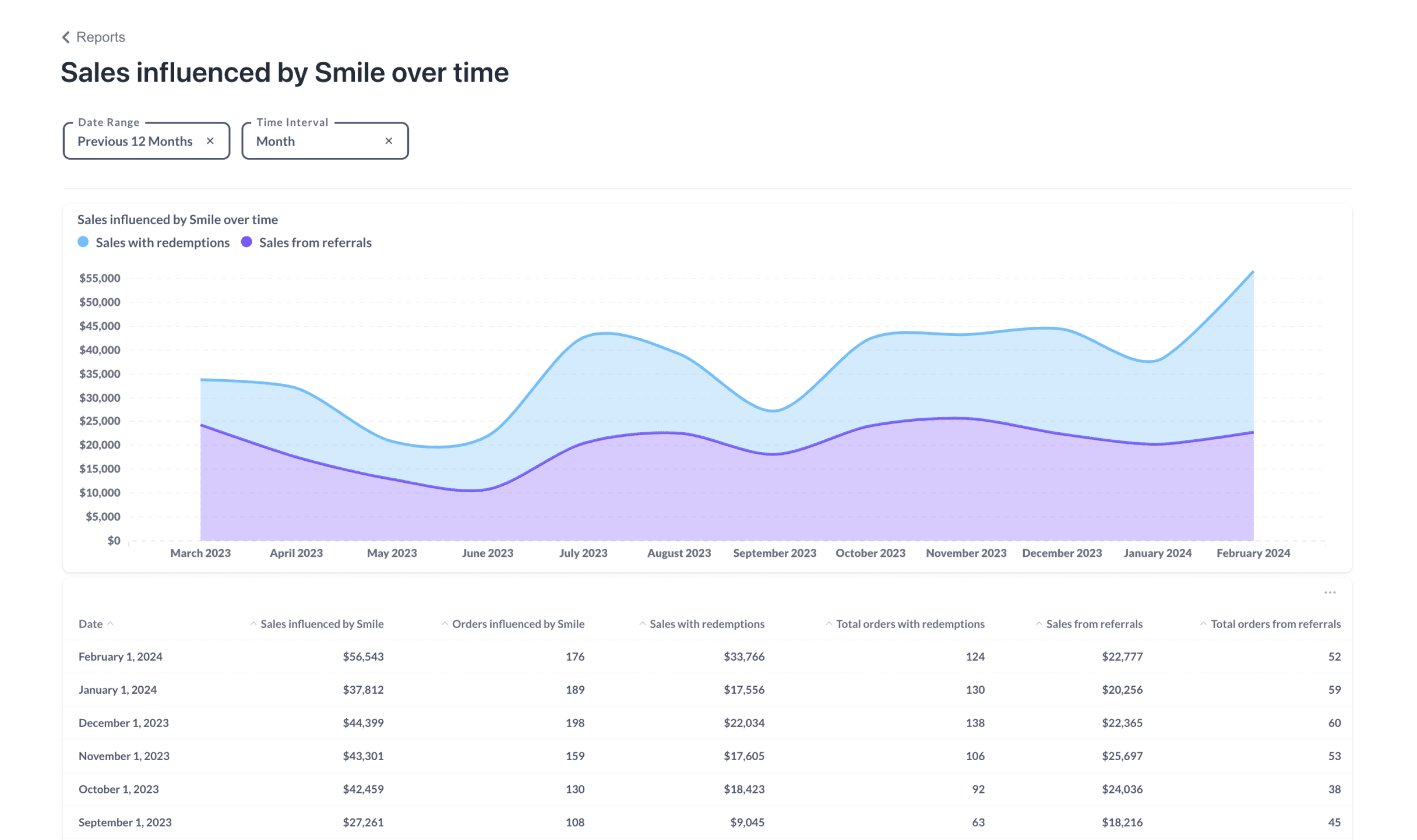
📷 Smile.io analytics for sales influenced by loyalty. Source: official Smile.io website.
💚 What we like
Simple points, referral and VIP mechanics cover the core ecommerce loyalty jobs without unnecessary complexity.
Public plan ladder makes cost and capability trade-offs unusually easy to understand before a sales call.
Higher tiers add APIs, embedded loyalty, benchmarking and integrations without forcing every merchant into enterprise implementation.
🟠 What to know
Order-based plan thresholds can push fast-growing stores into materially higher monthly spend as volume increases.
The product is strongest for mainstream ecommerce loyalty rather than highly custom multi-brand or multi-market program architecture.
💡 Why this score: Smile.io scores highest because it combines strong core loyalty mechanics, excellent ecommerce fit, clear self-serve onboarding and transparent value. It gives smaller merchants a realistic entry point while still offering APIs, advanced integrations and enterprise controls as programs become more sophisticated.
💰 Pricing: Free; Essential $15/month; Standard $79/month; Growth $199/month; Plus $999/month billed annually; Enterprise custom quote.
✅ Best fit: Best for Shopify merchants from smaller stores through established brands that want a proven points, referrals and VIP stack with manageable implementation.
🚫 Less ideal for: Less ideal for enterprises needing deeply bespoke cross-brand loyalty economics, highly specialized promotion decisioning or complex legacy-system orchestration.
🧩 Key capabilities
Points programs
Referral rewards
VIP tiers
Bonus events
Embedded loyalty
APIs & integrations
🔎 Official sources: Product · Pricing · Documentation

2. LoyaltyLion
92/100 · 💰 Mid · 🧩 Intermediate · 🏢 Mid-market–Enterprise · ⚙️ Specialist-led
🎯 Best for: Growing Shopify brands that want richer loyalty personalization, segmentation and lifecycle integrations around repeat purchase.
⚡ Choose LoyaltyLion if ... loyalty is a major retention channel and you want deeper optimization than a basic points app.
LoyaltyLion is a Shopify-first loyalty platform built for brands that want to connect rewards with lifecycle marketing and customer value. The platform supports points, referrals, VIP tiers, multilingual experiences, Shopify POS and a broad integration ecosystem. Its higher plans add more sophisticated personalization and automation options, while the entry plan starts well above lightweight apps. That makes LoyaltyLion particularly relevant once loyalty has a meaningful revenue and retention mandate.
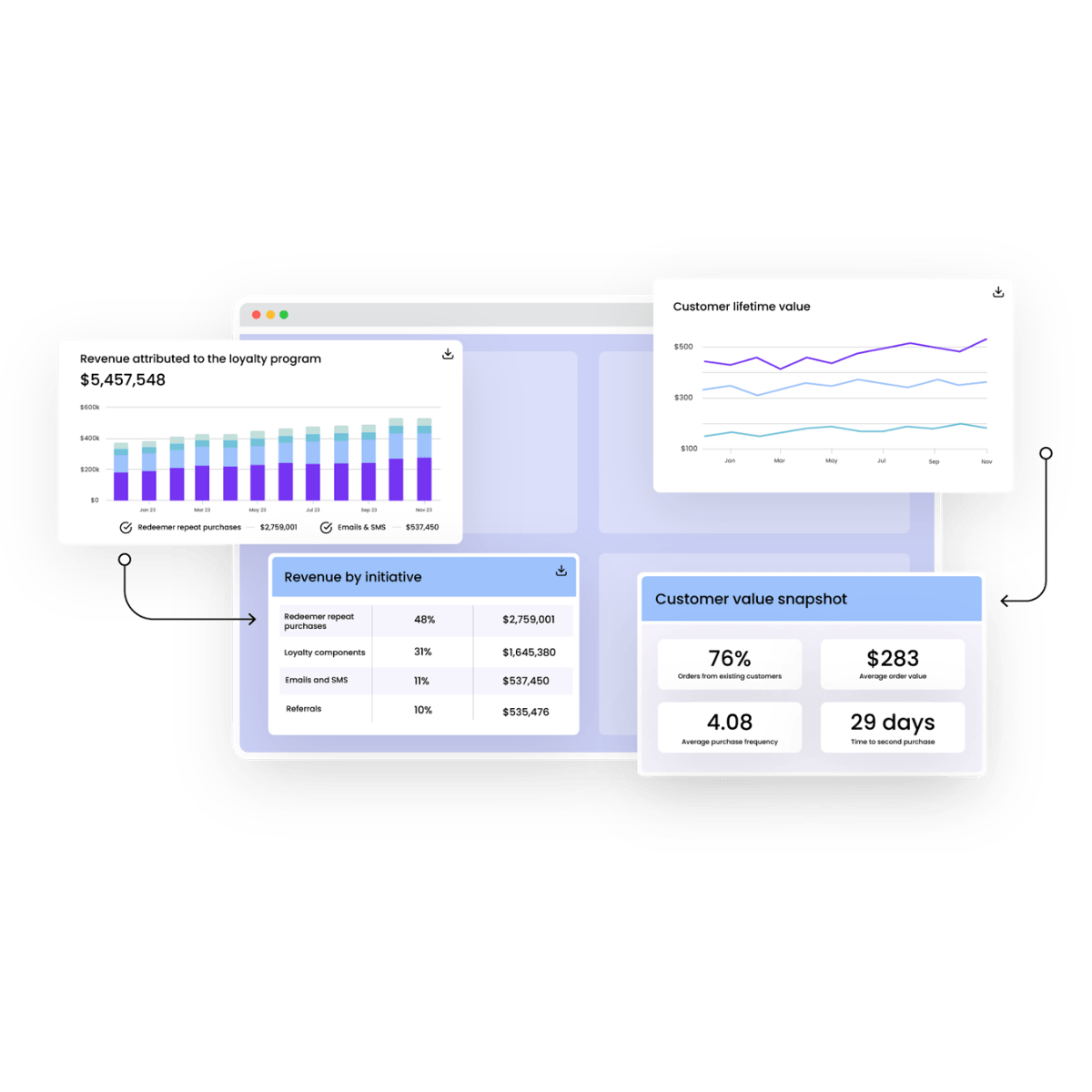
📷 LoyaltyLion analytics dashboard for loyalty performance. Source: official LoyaltyLion website.
💚 What we like
Strong Shopify specialization connects loyalty activity with ecommerce merchandising, lifecycle messaging and point-of-sale experiences.
VIP tiers, referrals and advanced reward placement support programs that need more than a simple earn-and-burn widget.
A large integration ecosystem helps loyalty signals flow into the broader retention stack instead of staying isolated.
🟠 What to know
The Classic plan starts at $199 per month, so very small stores may find cheaper tools more proportionate.
Advanced and Plus pricing is quote-based, making total cost less transparent before a vendor conversation.
💡 Why this score: LoyaltyLion scores strongly on core loyalty depth, Shopify fit and integrations. It is especially capable for brands treating loyalty as an active lifecycle channel, although the higher entry price and sales-led advanced tiers reduce its pricing score versus more accessible self-serve alternatives.
💰 Pricing: Classic $199/month for 500 monthly orders; Advanced and Plus are custom quote.
✅ Best fit: Best for established Shopify and Shopify Plus teams that want loyalty data connected to email, customer segmentation, merchandising and in-store experiences.
🚫 Less ideal for: Less ideal for early-stage stores that only need a simple points widget and prioritize the lowest monthly software cost.
🧩 Key capabilities
Points & rewards
Referral programs
VIP tiers
Shopify POS
Lifecycle integrations
Multilingual loyalty

3. Yotpo Loyalty & Referrals
91/100 · 💰 Mid · 🧩 Intermediate · 🏢 Mid-market–Enterprise · ⚙️ Specialist-led
🎯 Best for: Established ecommerce brands wanting configurable loyalty, referrals and implementation support inside a mature commerce ecosystem.
⚡ Choose Yotpo Loyalty & Referrals if ... you need broad program controls plus implementation support and enterprise-grade integrations.
Yotpo Loyalty & Referrals supports points, VIP tiers, referral programs, custom campaigns and loyalty experiences across the shopper journey. The platform emphasizes flexible program design, technical partnerships and dedicated implementation support, making it suitable for larger ecommerce teams that want a vendor involved in migration and launch. Public pricing offers a usable entry point, while Premium and Enterprise move to custom quotes as program complexity and order volume increase.

📷 Yotpo loyalty interface showing a configurable way to earn points. Source: official Yotpo website.
💚 What we like
Flexible earning, redemption, referral and tier mechanics support more differentiated program design than entry-level loyalty apps.
Dedicated implementation support is useful for brands migrating programs or coordinating loyalty across a larger commerce stack.
A broad partner ecosystem connects loyalty data with commerce, marketing and customer experience tools used by larger teams.
🟠 What to know
Premium and Enterprise pricing requires a quote, so cost benchmarking becomes harder once brands outgrow the public Pro tier.
Implementation support is valuable, but it also signals a heavier buying motion than self-serve tools for straightforward programs.
💡 Why this score: Yotpo scores highly for feature breadth, ecommerce relevance, integrations and scale. Its loyalty product can support sophisticated programs and larger implementations, but pricing transparency falls away above Pro and the platform is heavier than simpler Shopify-native options for smaller teams.
💰 Pricing: Free plan available; Pro starts at $199/month including the first 500 monthly orders; Premium and Enterprise custom quote.
✅ Best fit: Best for mid-market and enterprise ecommerce brands that need configurable loyalty programs, migration support and integrations across a broader retention stack.
🚫 Less ideal for: Less ideal for small merchants that want the fastest self-serve launch with minimal implementation involvement and predictable low monthly cost.
🧩 Key capabilities
Points & rewards
VIP tiers
Referral campaigns
Custom earning rules
Loyalty analytics
Partner integrations
🔎 Official sources: Product · Pricing · Documentation

4. Rivo
90/100 · 💰 Mid · 🧩 Intermediate · 🏢 SMB–Mid-market · ⚙️ Specialist-led
🎯 Best for: Shopify brands wanting modern loyalty, referrals and customer-account experiences tightly connected to the Shopify stack.
⚡ Choose Rivo if ... your retention strategy is Shopify-centric and brand control matters as much as standard loyalty mechanics.
Rivo is built specifically for Shopify and Shopify Plus, with loyalty, referrals, customer accounts, memberships, cashback and related retention tools designed around the platform. Loyalty programs can include points, VIP tiers, custom earning rules, POS participation and developer extensions. Rivo has recently broadened its positioning into a larger retention platform, so buyers should separate the loyalty product from newer account and cashback modules when comparing scope and price.

📷 Rivo admin interface for configuring loyalty redemption. Source: official Rivo website/help content.
💚 What we like
Deep Shopify focus gives the product strong fit with checkout, customer accounts, point of sale and native workflows.
Loyalty and referrals can sit alongside accounts, memberships, cashback and store-credit experiences in one retention platform.
Developer tools, webhooks and integrations provide more extensibility than a purely no-code loyalty widget.
🟠 What to know
Rivo now sells a broader retention platform, so the exact module mix and commercial package needs careful confirmation.
Some advanced implementations will benefit from specialist support rather than the completely self-serve setup smaller apps emphasize.
💡 Why this score: Rivo scores especially well on ecommerce fit because its product is purpose-built around Shopify and Shopify Plus. It also combines strong loyalty mechanics with accounts and retention extensions. Pricing and packaging are less straightforward than the simplest self-serve competitors, which moderates the overall score.
💰 Pricing: Self-serve loyalty plans are available from $49/month; Plus $499/month; broader retention-stack packages start higher and custom pricing is available.
✅ Best fit: Best for Shopify-centric growth brands that want branded loyalty and referral experiences plus the option to consolidate other retention surfaces over time.
🚫 Less ideal for: Less ideal for merchants outside Shopify or organizations seeking a platform-agnostic loyalty engine across many commerce and legacy environments.
🧩 Key capabilities
Points & VIP tiers
Referral programs
Shopify checkout
Customer accounts
Cashback & credit
Developer toolkit
🔎 Official sources: Product · Pricing · Documentation

5. Antavo
89/100 · 💰 Enterprise price · 🧩 Advanced · 🏢 Enterprise · ⚙️ Enterprise implementation
🎯 Best for: Global enterprises designing complex loyalty programs across markets, channels, brands and non-transactional engagement models.
⚡ Choose Antavo if ... loyalty is strategic infrastructure and program flexibility matters more than self-serve simplicity.
Antavo is an enterprise loyalty platform for complex programs that span channels, markets and customer behaviors. It supports points economies, tiers, rewards, gamification, campaigns, workflows, referrals, wallets and extensive data integration. The product is API-first but also provides a management interface for loyalty teams after implementation. Antavo is strongest where program design is a strategic capability rather than a simple Shopify app decision, with pricing and delivery handled through a sales-led enterprise process.
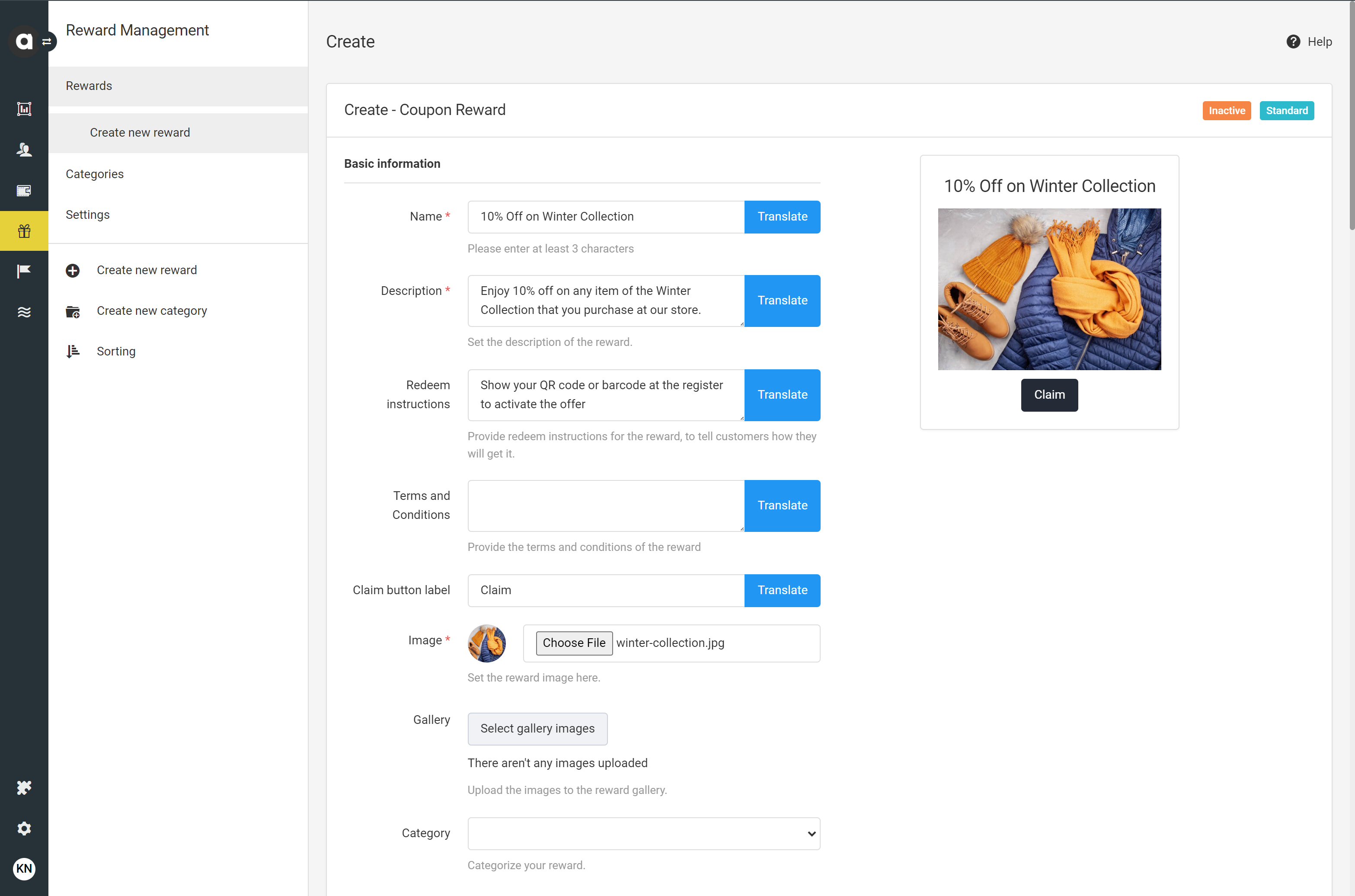
📷 Antavo Management UI for configuring reward settings. Source: official Antavo documentation.
💚 What we like
Extensive loyalty building blocks support transactional, experiential and gamified programs across complex customer journeys.
API-first architecture and integrations make Antavo suitable for loyalty programs spanning commerce, customer data and physical channels.
Marketers can manage day-to-day program operations in the Management UI after the heavier integration work is complete.
🟠 What to know
Pricing is custom and enterprise-oriented, so teams need a sales process before they can model total software cost.
Implementation can require technical resources and partner involvement, which is disproportionate for straightforward single-store loyalty programs.
💡 Why this score: Antavo scores highly for core loyalty depth, workflow control and enterprise scale. Its flexibility is a major advantage for sophisticated programs, but the custom commercial model and implementation burden reduce pricing and accessibility scores compared with self-serve ecommerce apps.
💰 Pricing: Custom quote; packaging is positioned for enterprise loyalty programs and pricing varies with customer activity and implementation scope.
✅ Best fit: Best for large retailers and global brands that need complex loyalty logic, omnichannel participation, multi-market governance and flexible integration architecture.
🚫 Less ideal for: Less ideal for small Shopify stores that want to install a points and referral program in hours without technical implementation.
🧩 Key capabilities
Points economy
Tier management
Gamification
Workflow automation
Omnichannel loyalty
Loyalty APIs
🔎 Official sources: Product · Pricing · Documentation

6. Growave
88/100 · 💰 Budget · 🧩 Intermediate · 🏢 SMB–Mid-market · ⚙️ No-code
🎯 Best for: Shopify merchants seeking loyalty plus reviews, wishlist and referral features in a value-oriented retention bundle.
⚡ Choose Growave if ... you want loyalty without buying separate apps for reviews, wishlists and adjacent engagement features.
Growave packages loyalty and rewards with referrals, reviews, wishlists and other retention features for Shopify merchants. The loyalty product covers points, VIP programs, referral incentives, store credit and Shopify POS, while higher plans add account extensions, headless tooling, business-to-business points and broader integrations. Its main advantage is economic: merchants can consolidate several common ecommerce engagement apps under one vendor rather than paying for each capability separately.
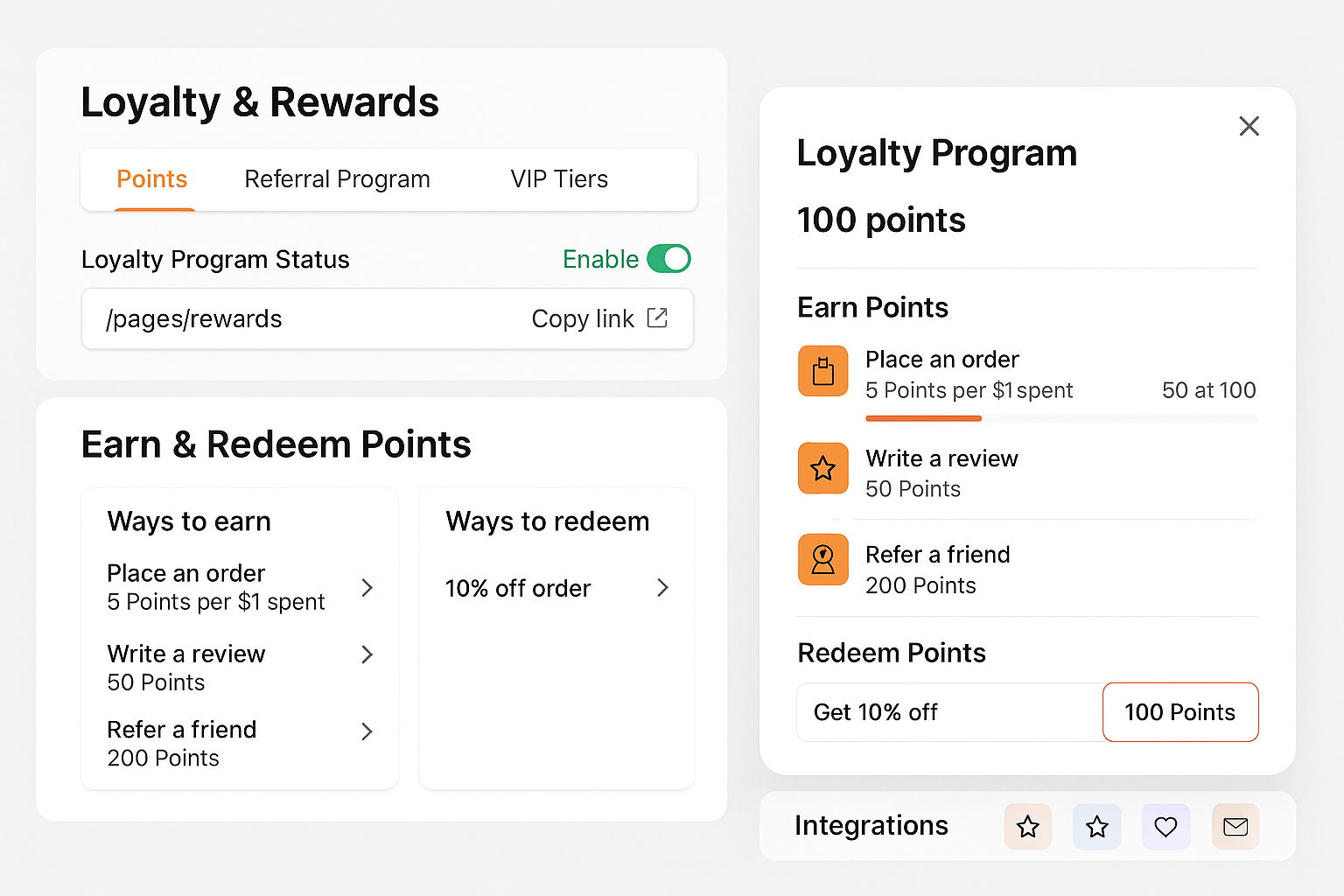
📷 Growave loyalty and rewards interface. Source: official Growave website.
💚 What we like
Bundling loyalty, referrals, reviews and wishlist capabilities can lower stack cost for Shopify merchants consolidating multiple apps.
Public pricing spans entry-level through unlimited plans, giving buyers a clear path as order volume and requirements grow.
Higher plans add Shopify POS, headless tooling, business-to-business points and broader integrations for more complex merchants.
🟠 What to know
The broad bundle can be unnecessary for teams that already have preferred review or wishlist tools in place.
Order-based overage charges on several plans mean merchants should model growth rather than compare only the headline subscription fee.
💡 Why this score: Growave earns a strong value score because it combines core loyalty functionality with adjacent ecommerce engagement tools at transparent prices. Its Shopify fit is excellent, though dedicated enterprise loyalty platforms offer deeper governance, orchestration and cross-market architecture for the most complex programs.
💰 Pricing: Entry $15/month; Growth $199/month; Plus $499/month; Unlimited $999/month, with order allowances and overages on applicable plans.
✅ Best fit: Best for Shopify SMB and mid-market brands that want a broad retention toolkit and can benefit from consolidating loyalty with reviews and wishlist.
🚫 Less ideal for: Less ideal for enterprises requiring platform-neutral loyalty infrastructure or brands that already standardized on separate specialist engagement tools.
🧩 Key capabilities
Points & rewards
VIP programs
Referrals
Store credit
Shopify POS
Headless APIs
🔎 Official sources: Product · Pricing · Documentation

7. Talon.One
87/100 · 💰 Enterprise price · 🧩 Advanced · 🏢 Enterprise · ⚙️ Enterprise implementation
🎯 Best for: Enterprise teams needing API-driven loyalty and promotion decisioning across channels, products and complex incentive rules.
⚡ Choose Talon.One if ... loyalty must share one flexible incentive engine with promotions, pricing and real-time decisioning.
Talon.One is an enterprise incentives platform that combines loyalty management with promotion and offer decisioning. Teams can build dynamic point logic, tiers, member pricing, rewards and personalized incentives using extensive APIs and rule controls. It is especially compelling when loyalty cannot be separated from real-time promotion logic across ecommerce, apps and physical channels. The trade-off is obvious: Talon.One is infrastructure for sophisticated teams, not a plug-and-play referral widget for small stores.
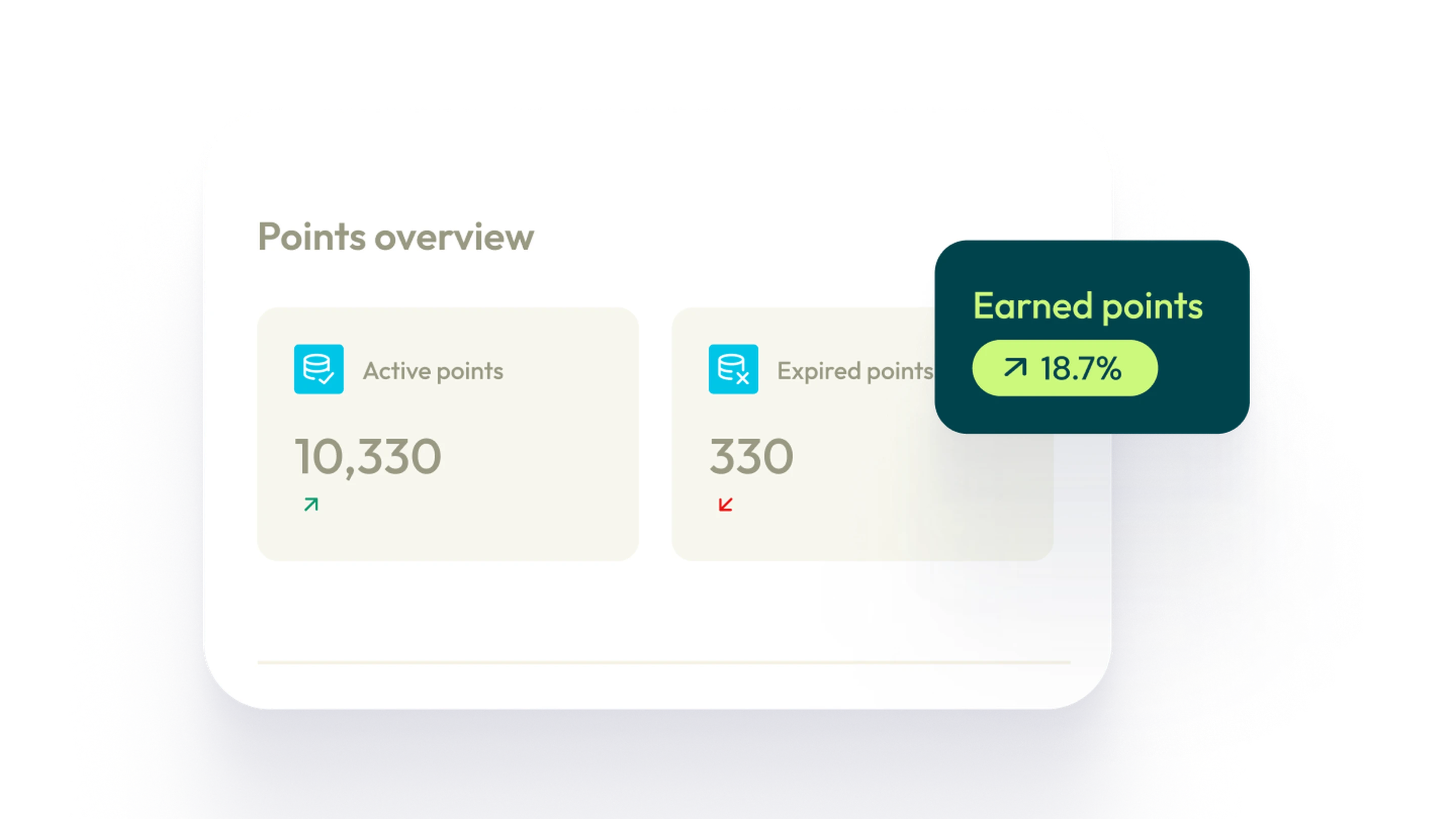
📷 Talon.One loyalty points overview inside the product interface. Source: official Talon.One website.
💚 What we like
One incentive engine can coordinate loyalty, promotions and personalized offers instead of splitting logic across disconnected tools.
API depth and rule controls support sophisticated real-time decisions across ecommerce, mobile, in-store and other customer touchpoints.
Enterprise packaging includes staging, onboarding, security and support options suited to large-scale operational requirements.
🟠 What to know
All pricing is quote-based, so value depends heavily on scale, use cases and the commercial package negotiated.
Implementation is technical and architecture-heavy compared with Shopify loyalty apps, making it excessive for basic programs.
💡 Why this score: Talon.One scores exceptionally on workflow control, implementation flexibility and scale, with strong core loyalty capabilities. Its lower ecommerce-specialist and value scores reflect the fact that it is broader enterprise incentives infrastructure with custom pricing, not a lightweight merchant app.
💰 Pricing: Custom quote; Starter, Professional and Enterprise packages are priced individually based on data volume and operational requirements.
✅ Best fit: Best for enterprises that need loyalty, promotions and personalized incentives to operate through one API-driven decisioning layer across multiple channels.
🚫 Less ideal for: Less ideal for smaller ecommerce teams that mainly need points, referrals and VIP tiers with a quick no-code launch.
🧩 Key capabilities
Loyalty wallets
Dynamic tiers
Promotion rules
Real-time decisioning
170+ API endpoints
Omnichannel incentives
🔎 Official sources: Product · Pricing · Documentation
8. Friendbuy
86/100 · 💰 Enterprise price · 🧩 Advanced · 🏢 Mid-market–Enterprise · ⚙️ Enterprise implementation
🎯 Best for: Larger brands running referral programs where attribution, reward logic, experimentation and fraud controls matter deeply.
⚡ Choose Friendbuy if ... customer acquisition through referrals is a strategic channel, not merely an add-on to points.
Friendbuy is a referral and loyalty platform with particularly deep support for owned referral programs. It covers advocate and friend incentives, tiered rewards, attribution, experimentation, integrations and operational controls, with white-glove onboarding for larger teams. Friendbuy also supports loyalty and influencer use cases, but its differentiation in this comparison is referral sophistication. Pricing is sales-led, so it makes the most sense when referral volume and program economics justify enterprise-grade tooling and implementation.

📷 Friendbuy referral analytics dashboard. Source: official Friendbuy help documentation.
💚 What we like
Referral tooling goes well beyond simple sharing links with configurable incentives, tiered rewards, attribution and experimentation controls.
Integrations and APIs support referral programs embedded into larger ecommerce, subscription and lifecycle marketing stacks.
White-glove onboarding and program support fit teams treating referrals as a meaningful paid-acquisition alternative.
🟠 What to know
There is no public self-serve price list, so buyers need a demo process to establish total cost.
The platform can be more than a small merchant needs when referral is only a minor feature inside a broader loyalty strategy.
💡 Why this score: Friendbuy scores strongly on referral performance, workflow control and integrations. Its specialist depth is valuable for serious acquisition programs, while custom pricing and an enterprise-oriented buying motion lower its value and simplicity scores compared with lightweight referral apps.
💰 Pricing: Custom quote; Friendbuy uses a sales-led commercial model rather than publishing standard monthly plan prices.
✅ Best fit: Best for mid-market and enterprise brands that need measurable referral acquisition, controlled reward logic, strong integrations and structured program optimization support.
🚫 Less ideal for: Less ideal for small merchants seeking a low-cost referral add-on with instant self-serve pricing and minimal implementation.
🧩 Key capabilities
Referral attribution
Tiered rewards
A/B testing
Fraud controls
API & webhooks
Loyalty integrations
🔎 Official sources: Product · Pricing / demo · Documentation

9. Marsello
85/100 · 💰 Budget · 🧩 Intermediate · 🏢 SMB–Mid-market · ⚙️ Low-code
🎯 Best for: Omnichannel retailers wanting one loyalty program connected across ecommerce, point of sale and customer marketing.
⚡ Choose Marsello if ... your loyalty challenge starts with joining in-store and online customer behavior into one program.
Marsello combines loyalty, referrals, email, SMS and customer marketing with a strong emphasis on omnichannel retail. It connects ecommerce and point-of-sale activity to customer profiles so merchants can run points, rewards, VIP-style experiences and targeted campaigns across channels. The pricing is accessible relative to enterprise loyalty infrastructure, while the product goes beyond a pure loyalty widget by including marketing automation and analytics. That makes Marsello especially relevant for retailers operating both stores and ecommerce.
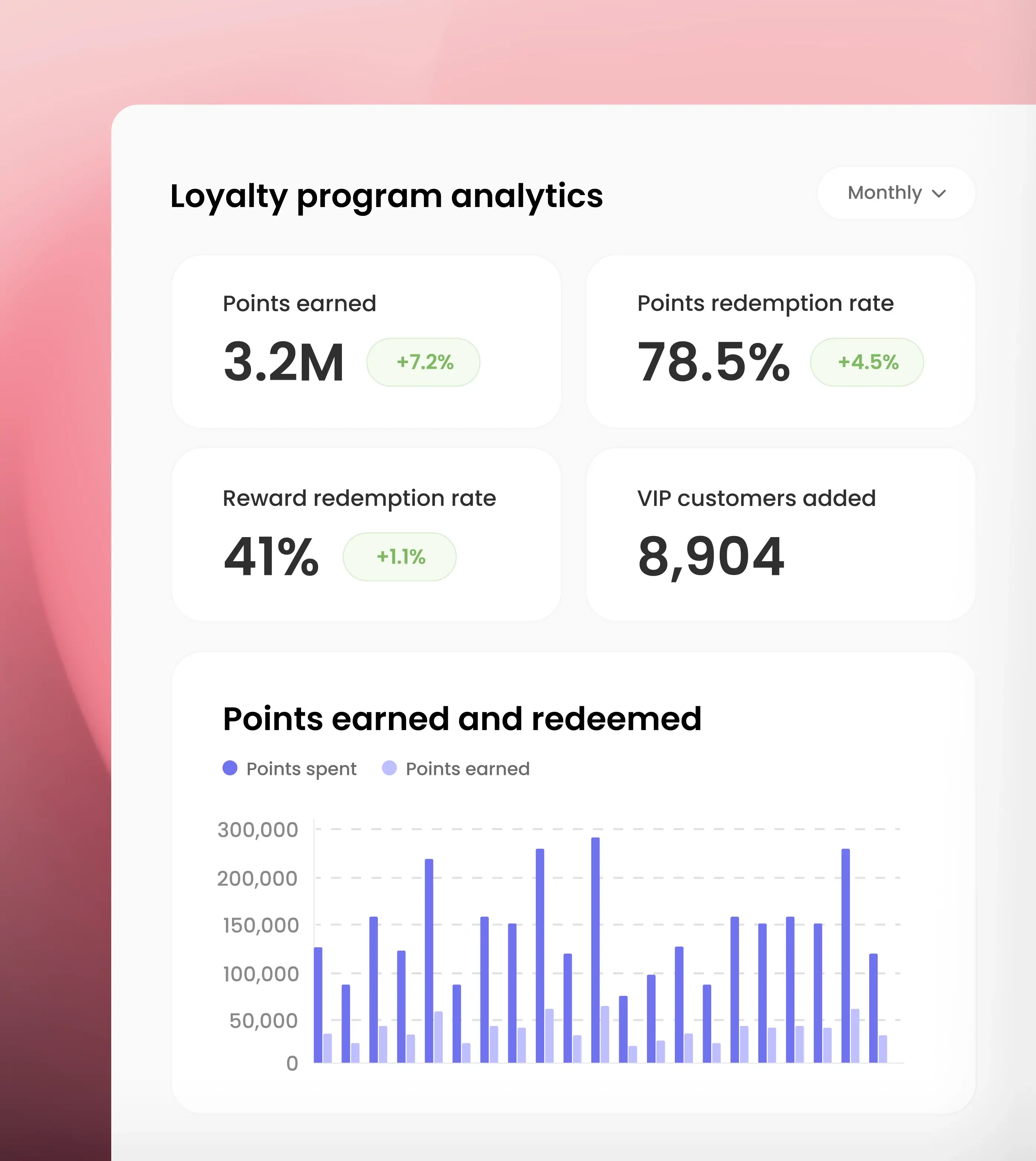
📷 Marsello loyalty program analytics interface. Source: official Marsello website.
💚 What we like
Strong omnichannel orientation connects in-store and ecommerce purchases to the same loyalty and customer profiles.
Loyalty sits alongside email, SMS, automation and reporting, which can simplify the stack for smaller retail teams.
Public pricing is comparatively approachable for merchants that need more than a basic ecommerce-only rewards app.
🟠 What to know
The combined marketing suite can overlap with existing email or SMS platforms in more mature ecommerce stacks.
Merchants should confirm point-of-sale and ecommerce connector coverage before assuming every location or platform will sync equally.
💡 Why this score: Marsello scores well for omnichannel retail fit, integrations and value. Its combined loyalty and marketing model is attractive for SMB and mid-market retailers, though specialist loyalty vendors provide deeper program architecture and enterprise governance for highly complex global programs.
💰 Pricing: Loyalty Launch starts at $60/month per site; Loyalty Accelerate starts at $120/month per site, with stated fair-use order thresholds.
✅ Best fit: Best for retail and hospitality brands that need loyalty to follow customers across physical locations and ecommerce while supporting targeted marketing.
🚫 Less ideal for: Less ideal for global enterprises that want a standalone loyalty engine with extensive custom rule orchestration and multi-brand governance.
🧩 Key capabilities
Points & rewards
Referrals
Omnichannel profiles
POS integrations
Email & SMS
Loyalty analytics
🔎 Official sources: Product · Pricing · Integrations

10. ReferralCandy
84/100 · 💰 Budget · 🧩 Beginner · 🏢 SMB–Mid-market · ⚙️ No-code
🎯 Best for: Ecommerce brands that primarily need a straightforward, measurable refer-a-friend program with automated rewards.
⚡ Choose ReferralCandy if ... referral acquisition is the core job and you value fast launch over broader loyalty architecture.
ReferralCandy is a focused ecommerce referral platform for turning customer recommendations into tracked acquisition. It supports referral links and codes, advocate and friend rewards, payout automation, fraud controls, integrations and reporting across Shopify and other commerce platforms. Its setup is comparatively simple, with public pricing and a trial. ReferralCandy is less of a full loyalty operating system than many tools here, but that focus is a strength when the buyer mainly wants refer-a-friend performance.
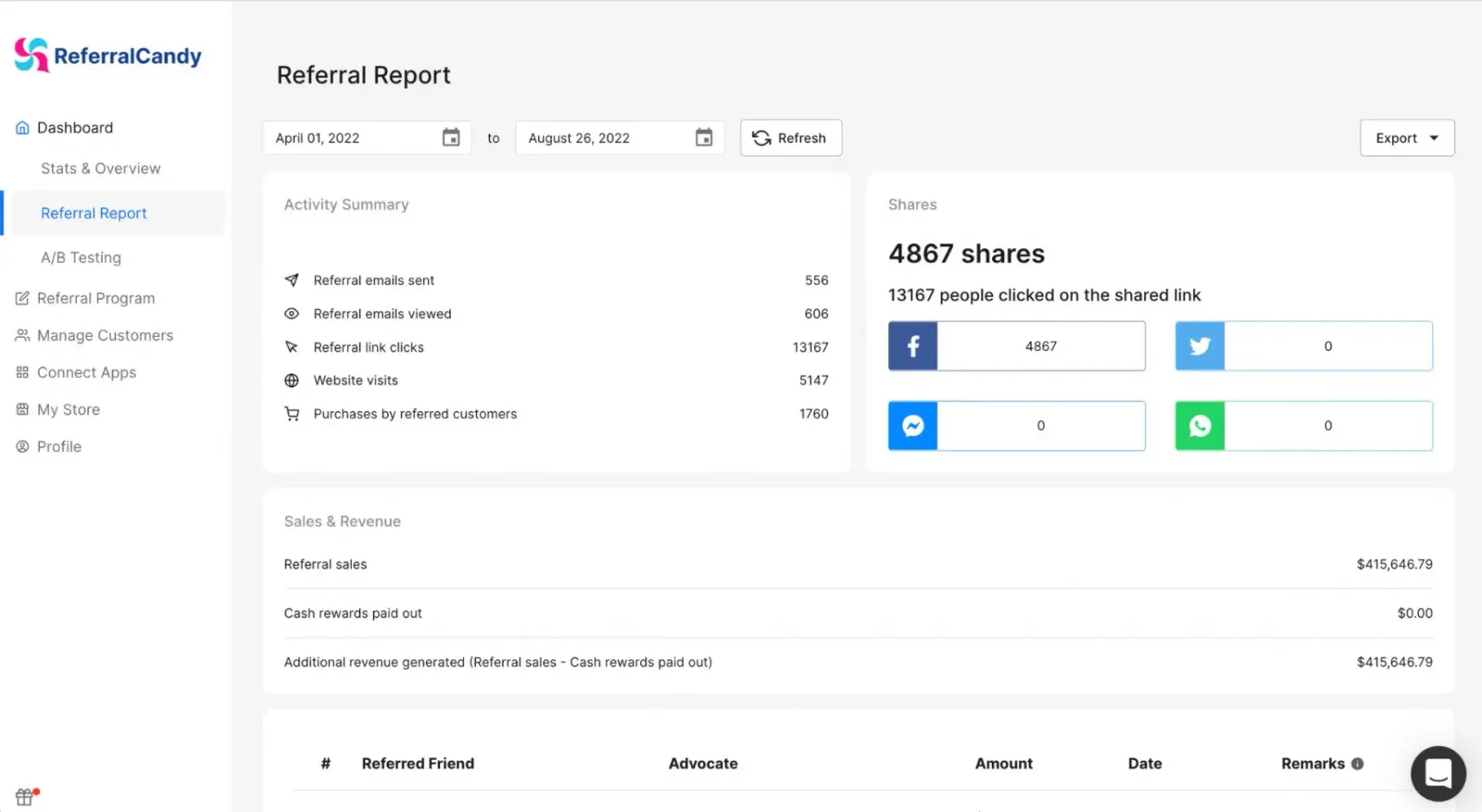
📷 ReferralCandy referral reporting dashboard. Source: official ReferralCandy website.
💚 What we like
Referral-first design keeps setup and day-to-day management simpler than broader enterprise loyalty platforms.
Public pricing makes it easier to estimate fixed software cost plus the success fee before committing.
Built-in tracking, rewards and fraud controls cover the operational work that makes referral programs difficult to run manually.
🟠 What to know
Success fees add variable cost on top of the subscription, so merchants should model economics at expected referral volume.
It is not the strongest choice for complex points, tier, gamification or multi-brand loyalty programs beyond referral acquisition.
💡 Why this score: ReferralCandy scores well on ecommerce fit, referral performance and ease of adoption. Its public pricing and focused workflow are strengths, but it ranks lower on advanced loyalty breadth and enterprise scale because full points-and-tier program architecture is not its primary job.
💰 Pricing: Basic $39/month + 10.5% success fee; Grow $79 + 3.5%; Scale $249 + 1.5%; Enterprise $799 + 0.25%; 7-day trial.
✅ Best fit: Best for ecommerce brands that want referrals to become a measurable acquisition channel without implementing a broader loyalty platform or heavier enterprise infrastructure.
🚫 Less ideal for: Less ideal for teams that need sophisticated points economics, extensive VIP logic or enterprise-grade loyalty orchestration across many brands.
🧩 Key capabilities
Referral links
Coupon rewards
Cash rewards
Fraud controls
Referral analytics
API integrations
🔎 Official sources: Product · Pricing · Documentation
🎯 Which tools should you actually shortlist?
Smile.io if you want the safest all-round ecommerce starting point with transparent plans, fast setup and room to add VIP tiers, integrations and APIs later.
LoyaltyLion if loyalty is already an important Shopify retention channel and you want deeper program optimization, lifecycle integrations and more sophisticated reward placement.
Antavo if you are designing a strategic enterprise loyalty program across markets, channels or brands and need extensive orchestration rather than a simple app.
Talon.One if loyalty must share decisioning with promotions and personalized offers, and your technical team can support an API-driven enterprise implementation.
Growave if you want loyalty, referrals, reviews and wishlist features consolidated into one Shopify engagement package with relatively transparent public pricing.
ReferralCandy or Friendbuy if referrals are the primary job: choose ReferralCandy for simpler self-serve economics, and Friendbuy for deeper enterprise referral control.
🧪 Run this test before you buy
Run the same small loyalty and referral scenario in every serious contender. Use one earning rule, one redemption, one referral offer and one lifecycle integration. The goal is not to build your final program; it is to expose setup friction, hidden dependencies, reward economics and reporting quality before procurement or migration locks you in.
Create a purchase-based points rule and change its earning rate after launch.
Build one non-purchase earning action such as a birthday, review or profile-completion event.
Configure a reward with a minimum spend and confirm how exclusions are handled.
Create a VIP tier and test how qualification, expiry and downgrades work.
Launch a referral offer with separate advocate and friend incentives.
Test the referral flow across mobile, desktop and a private browsing session.
Send loyalty or referral data into your main email or customer-engagement platform.
Simulate a refund or cancelled order and confirm points or rewards reverse correctly.
Check what fraud, duplicate-account and self-referral controls are available by default.
Export program performance and verify you can reconcile rewards, redemptions and revenue.
📏 Record the same things for every vendor: time to configure, developer work, shopper friction, reward cost, edge cases, reporting gaps and the total price at your current and expected order volume.
🧾 10 questions to ask in every demo
How is pricing calculated when monthly orders, members or reward volume increases?
What happens to points and rewards when an order is refunded, partially returned or cancelled?
Which referral fraud signals are built in, and which controls require manual review?
Can we run one balance across ecommerce and point of sale, and how is identity matched?
Which program changes can marketers make without developer support after launch?
How do tiers qualify, expire and downgrade, and can we configure those rules ourselves?
Which integrations are native, which use middleware, and which require custom API work?
Can we export raw member, transaction and reward data into our warehouse?
What implementation resources do you provide for migration from an existing loyalty program?
Which limits, overages, service fees or success fees are not included in the headline subscription price?
❓ Frequently asked questions
What is the difference between loyalty and referral software?
Loyalty software is mainly designed to increase repeat engagement through points, tiers, perks, store credit or member experiences. Referral software is designed to acquire new customers by rewarding advocates and referred friends. Many platforms combine both, but specialist referral tools usually offer deeper attribution, reward controls and fraud protection, while dedicated loyalty engines provide richer tier, points and omnichannel program logic.
How should ecommerce brands compare loyalty pricing?
Start with your current monthly order volume, expected growth, active member base and reward economics. Then add platform fees, order overages, implementation work, success fees and any paid integrations. A low monthly subscription can become expensive if reward costs or percentage-based referral fees scale quickly. Compare total annual program cost against the repeat revenue or acquisition value the program needs to generate.
Do loyalty programs work for every ecommerce business?
No. Loyalty works best when customers have a realistic reason to purchase again and the margin structure can fund rewards without training shoppers to wait for discounts. Brands with naturally low repeat frequency may benefit more from referrals, memberships or experiential benefits. Before buying software, model the behavior you want to change and confirm that the reward has enough value to influence it economically.
What should we test before migrating an existing program?
Test point balances, tier status, referral attribution, reward expiry, refunds, customer identity and lifecycle integrations using a representative sample of members. Confirm exactly how historical data is imported and how edge cases are handled. A migration plan should also include customer communication, a freeze window, reconciliation and rollback steps. The biggest risk is not the interface; it is losing trust in balances or benefits.
How important are fraud controls in referral programs?
They become important as soon as rewards have meaningful cash, discount or store-credit value. At minimum, check self-referral detection, duplicate identities, velocity rules, reward delays and manual review options. High-value programs may need additional identity or transaction signals. Fraud controls should reduce abuse without making legitimate customers wait unnecessarily, so evaluate both protection and operational workload during testing.
Should a Shopify brand choose a Shopify-native tool or an enterprise loyalty platform?
A Shopify-focused tool is usually faster to launch and easier for a smaller team to operate because checkout, customer accounts and common ecommerce integrations are already aligned. Enterprise platforms make more sense when the program spans multiple brands, countries, channels or legacy systems, or when incentive logic must be centralized through APIs. The right choice follows architecture and program complexity, not company prestige.
🔍 About this research
MarketMaze compares ecommerce software using current official vendor sources, product documentation and public pricing wherever available. We score products against a fixed 100-point model covering core job performance, ecommerce fit, workflow and control, integrations and implementation, pricing and value, and scale and advanced capabilities. Scores are editorial judgments based on documented product capabilities rather than third-party review ratings. Last research check: 26 September 2026.
