
MARKETMAZE · ECOMMERCE TOOLS · RESEARCH
10 Best Ecommerce Fraud Prevention & Chargeback Management Tools (2026)
Fraud prevention and chargeback tools protect two different points in the payment lifecycle. Pre-payment systems decide whether an order should proceed; post-payment systems prevent, organize or fight disputes after a transaction has already happened.
Updated 26 September 2026 · Pricing and product claims checked against official vendor sources.
New to the category? Small and medium-sized business (SMB) teams often start with processor-native controls; larger merchants add specialist layers. Start with four concepts. Fraud screening evaluates an order before fulfillment. A false decline is a legitimate purchase that gets blocked, so fraud loss cannot be optimized in isolation from conversion. A chargeback is a cardholder dispute that reverses a payment after the sale. Representment is the evidence-based process of contesting that dispute. Finally, a liability guarantee means the vendor may reimburse defined fraud losses when you follow its decision. A merchant with stolen-card fraud at checkout needs a different primary tool from one losing hours every week assembling dispute evidence.
🧭 Jump to a tool
🏆 The quick answer
Guaranteed ecommerce fraud decisions with strong approval optimization.
Chargeback-guaranteed decisions and granular approval controls.
Fraud, payments, abuse and disputes around shared identity intelligence.
Checkout through returns, claims and chargebacks for commerce brands.
Clear success-based recovery economics and automated representment.
Low-friction fraud controls when Stripe is already your payment stack.
MarketMaze take. First decide whether you are buying a pre-payment decision engine, a liability guarantee, post-payment dispute automation, or some combination. Then force vendors through the same transaction set and compare four outcomes together: fraud losses, legitimate approvals, review workload and net chargeback recovery. A lower fraud rate achieved by declining good customers is not a win, and a high dispute win rate can still be uneconomic after alert fees, dispute fees and success fees.
📊 Tool comparison & scores
Rank | Tool | Score | Best for | Pricing |
|---|---|---|---|---|
1 | 93/100 | Large ecommerce teams prioritizing approval rates with a financial fraud-liability guarantee | Custom quote | |
2 | 92/100 | Enterprise merchants wanting chargeback-guaranteed fraud decisions and deep ecommerce optimization controls | Custom quote | |
3 | 91/100 | Global enterprises needing fraud, payments, abuse and dispute intelligence across the customer journey | Custom quote | |
4 | 89/100 | Ecommerce brands wanting checkout fraud plus post-purchase abuse and chargeback workflows in one risk layer | Pricing calculator; vendor-specific quote | |
5 | 88/100 | Merchants wanting automated post-payment chargeback recovery with clear pay-for-performance economics | 25% per recovered chargeback; $29 per deflected alert | |
6 | 87/100 | Larger merchants optimizing net dispute recovery across processors with automated evidence and prevention controls | Custom quote | |
7 | 86/100 | Digital businesses needing configurable real-time payment risk, analyst investigation and network context | Custom quote | |
8 | 85/100 | Risk teams wanting transparent signal enrichment, rules and fraud scoring with published entry pricing | Starter $699/month for 2,500 fraud checks; Premium custom | |
9 | 84/100 | Stripe-centric merchants wanting integrated fraud screening and rules without adding a separate risk stack | Transparent usage pricing varies by Radar configuration and region | |
10 | 81/100 | Enterprise merchants needing managed chargeback prevention, representment, alerts and cross-network dispute operations | Custom quote |
🧠 How the scoring works
This ranking uses MarketMaze proprietary scoring.
Each tool is scored on the same six dimensions, but the evidence is interpreted against this category boundary: pre-payment fraud screening and post-payment dispute management are different jobs.
Dimension | Weight | What we test |
|---|---|---|
Core job performance | 30% | Quality of the primary fraud or dispute workflow |
Ecommerce fit | 20% | Commerce workflows, false-decline awareness and processor/platform relevance |
Workflow & control | 15% | Rules, analyst controls, evidence and operational visibility |
Integrations & implementation | 15% | Integration depth and deployment effort |
Pricing & value | 10% | Pricing clarity and economics relative to the job |
Scale & advanced capabilities | 10% | Enterprise scale, breadth and advanced controls |
🤔 Do you even need fraud prevention or chargeback software?
Probably yes ✅
You have material fraud losses, false declines, manual reviews, recurring chargebacks or card-network ratio pressure.
Maybe 🟡
Your processor already provides baseline controls, but you lack visibility into approval quality or dispute economics.
Probably not yet ⏳
Fraud and disputes are rare, review takes little time and your payment provider’s built-in controls are sufficient.

🥇 1. Signifyd
Score: 93/100 · 💰 Enterprise price · 🧩 Advanced · 🏢 Enterprise · ⚙️ Enterprise implementation
🎯 Best for: Large ecommerce teams prioritizing approval rates with a financial fraud-liability guarantee.
⚡ Choose Signifyd if you want fraud decisions tied directly to a guarantee rather than a score your team must interpret.
Signifyd is built around guaranteed fraud decisioning for ecommerce merchants. It combines automated order decisions with network intelligence, workflow controls and financial protection for covered fraudulent chargebacks. The operational appeal is straightforward: let more legitimate orders through while shifting defined fraud liability away from the merchant. It is strongest when fraud, false declines and manual review are material revenue problems and the business is comfortable with a sales-led enterprise implementation.
Signifyd Console order detail view, from Signifyd’s official support documentation.
💚 What we like
Guaranteed decisions align the vendor’s economics with approving legitimate orders, not merely flagging risk.
Commerce-focused controls connect fraud prevention to approval rate, manual review and downstream chargeback exposure.
Broad platform integrations and guided implementation suit complex ecommerce stacks and multi-market operations.
🟠 What to know
Pricing is sales-led, so model total economics against approval uplift, guarantee scope and excluded loss types.
Guarantee terms matter more than the headline: validate which reason codes, abuse patterns and workflows are actually covered.
💡 Why this score: The 93 reflects exceptional ecommerce fit, guaranteed fraud protection and mature operating controls. We held back value points because public pricing is unavailable, and because the commercial case depends heavily on negotiated liability scope and merchant-specific economics.
💰 Pricing: Custom quote
✅ Best fit: High-volume merchants where fraud losses, false declines and review labor are large enough to justify enterprise pricing and implementation.
🚫 Less ideal for: Small merchants wanting a self-serve, low-cost fraud add-on with transparent monthly pricing and minimal commercial negotiation.
🧩 Key capabilities
Guaranteed fraud decisions
Chargeback liability shift
Approval optimization
Decision Center policies
Order intelligence
Platform integrations
🔎 Official sources: Product · Pricing · Documentation / integration
🥈 2. Riskified
Score: 92/100 · 💰 Enterprise price · 🧩 Advanced · 🏢 Enterprise · ⚙️ Enterprise implementation
🎯 Best for: Enterprise merchants wanting chargeback-guaranteed fraud decisions and deep ecommerce optimization controls.
⚡ Choose Riskified if guaranteed checkout decisions and granular approval optimization matter more than self-serve pricing.
Riskified combines ecommerce fraud decisioning with a chargeback-guarantee model and a control layer for analyzing approval behavior. It is designed for merchants that want the vendor to make or support real-time approve-or-decline decisions while absorbing defined fraud liability. The platform is particularly relevant when false declines are a board-level revenue issue, not just a fraud-team metric. Expect a consultative sales process, integration work and contract detail around guarantee coverage.
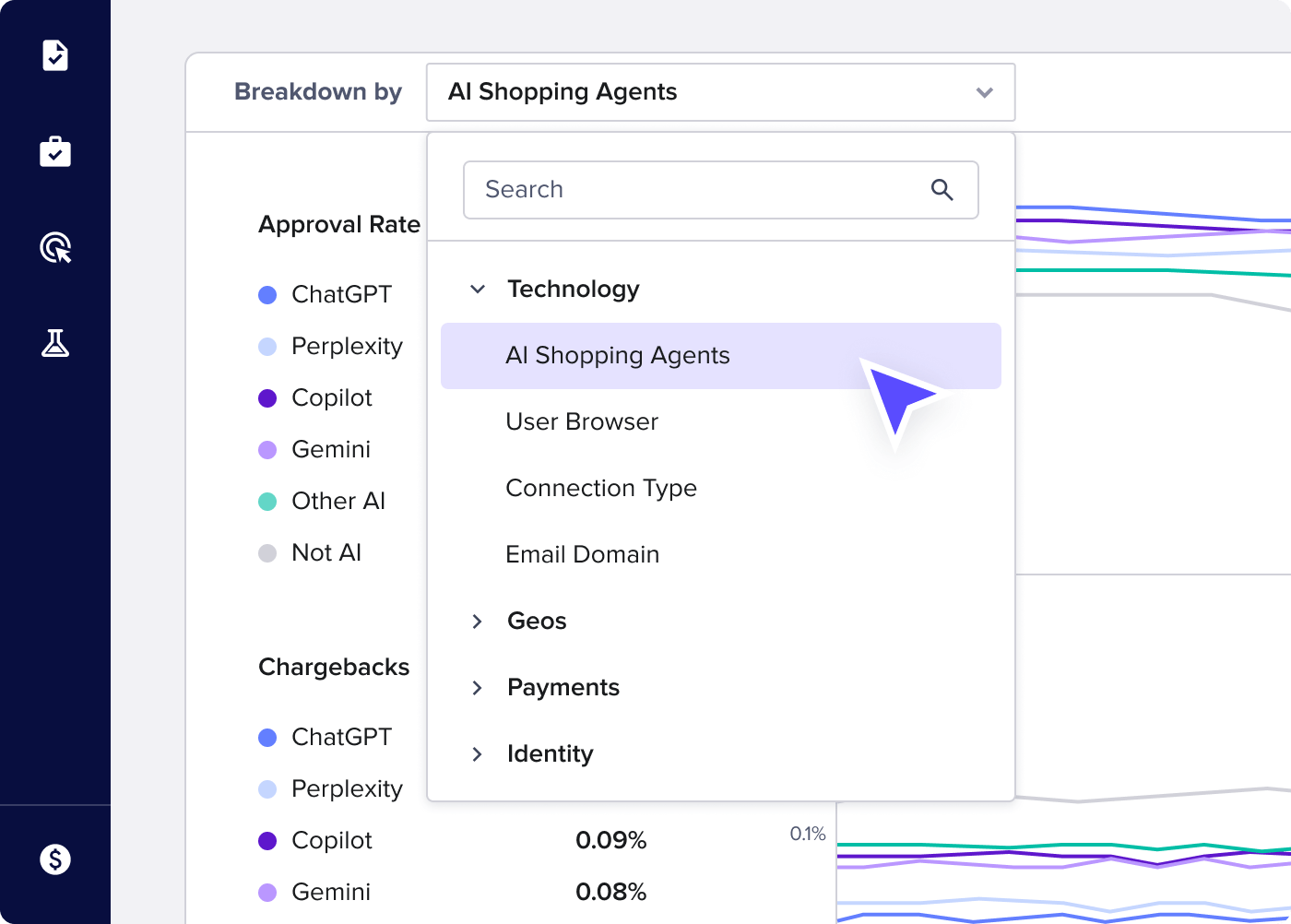
Riskified Control Center analytics breaking down approval and chargeback behavior.
💚 What we like
Chargeback Guarantee connects real-time decisions with defined financial liability for covered fraud.
Control Center analysis helps teams inspect approval, decline and chargeback patterns by useful merchant segments.
Strong ecommerce orientation makes conversion impact and false-decline control central to the operating model.
🟠 What to know
Pricing is not publicly numeric, so compare the commercial model against avoided losses and recovered approvals.
Contract details around eligibility, exclusions and operational requirements can materially change the effective value of the guarantee.
💡 Why this score: Riskified scores 92 because its guaranteed decisioning and ecommerce specialization are exceptionally strong, with mature controls for large merchants. It trails Signifyd narrowly on our implementation/value balance, not on basic fraud capability.
💰 Pricing: Custom quote
✅ Best fit: Large retailers, marketplaces and digital businesses with enough transaction volume to optimize approval rates and justify a guided deployment.
🚫 Less ideal for: Small teams that need published pricing, fast self-service setup or a lightweight rule engine without enterprise contracting.
🧩 Key capabilities
Chargeback Guarantee
Real-time decisioning
Approval optimization
Control Center analytics
Policy controls
Enterprise integrations
🔎 Official sources: Product · Pricing · Documentation / integration

🥉 3. Forter
Score: 91/100 · 💰 Enterprise price · 🧩 Advanced · 🏢 Enterprise · ⚙️ Enterprise implementation
🎯 Best for: Global enterprises needing fraud, payments, abuse and dispute intelligence across the customer journey.
⚡ Choose Forter if fraud decisions need to connect with payment optimization, account protection and post-purchase abuse controls.
Forter takes a broad commerce-risk view rather than limiting the job to stolen-card screening. Fraud Management sits alongside payment optimization, account protection, abuse prevention and dispute management, with identity intelligence shared across those decisions. That breadth is valuable for large merchants dealing with cross-channel risk and fragmented point solutions. The trade-off is enterprise complexity: the strongest use case is a sophisticated team that can exploit the wider platform rather than buying one narrow fraud switch.

Forter Data Studio feature imagery showing merchant performance dashboards.
💚 What we like
Shared identity intelligence can connect checkout fraud with account, abuse, payment and dispute signals.
Data Studio gives fraud and payment teams configurable analytics across approval, chargeback and authorization performance.
Enterprise product breadth supports merchants trying to consolidate several adjacent risk workflows.
🟠 What to know
Sales-led pricing makes a clean apples-to-apples cost comparison difficult before a commercial process.
Breadth can be unnecessary if the only requirement is basic card fraud screening for one ecommerce storefront.
💡 Why this score: The 91 rewards Forter’s breadth, enterprise scale and ability to connect fraud with payment and abuse decisions. We score value lower because pricing is opaque and implementation demands are more appropriate for mature risk organizations.
💰 Pricing: Custom quote
✅ Best fit: Global retailers and marketplaces with dedicated fraud or payments teams, multiple risk surfaces and enough scale to use broader commerce intelligence.
🚫 Less ideal for: Lean merchants seeking a simple plug-in, transparent price and one narrow checkout-fraud workflow.
🧩 Key capabilities
Fraud Management
Identity intelligence
Payment optimization
Account protection
Abuse prevention
Dispute management
🔎 Official sources: Product · Pricing · Documentation / integration

4. Wyllo (formerly NoFraud)
Score: 89/100 · 💰 Enterprise price · 🧩 Intermediate · 🏢 Mid-market–Enterprise · ⚙️ Low-code
🎯 Best for: Ecommerce brands wanting checkout fraud plus post-purchase abuse and chargeback workflows in one risk layer.
⚡ Choose Wyllo (formerly NoFraud) if you want a commerce-specific risk platform that reaches beyond checkout into returns, claims and disputes.
Wyllo is the March 2026 rebrand of NoFraud, expanded with post-purchase risk capabilities after integrating Yofi. The platform now spans payment fraud, bot and reseller detection, returns and claims abuse, customer-experience support and chargeback management. That makes it unusually relevant for brands whose losses move between checkout and post-purchase workflows. It also offers ecommerce-platform installation paths and a two-week trial, giving mid-market teams a more approachable starting point than many enterprise-only vendors.
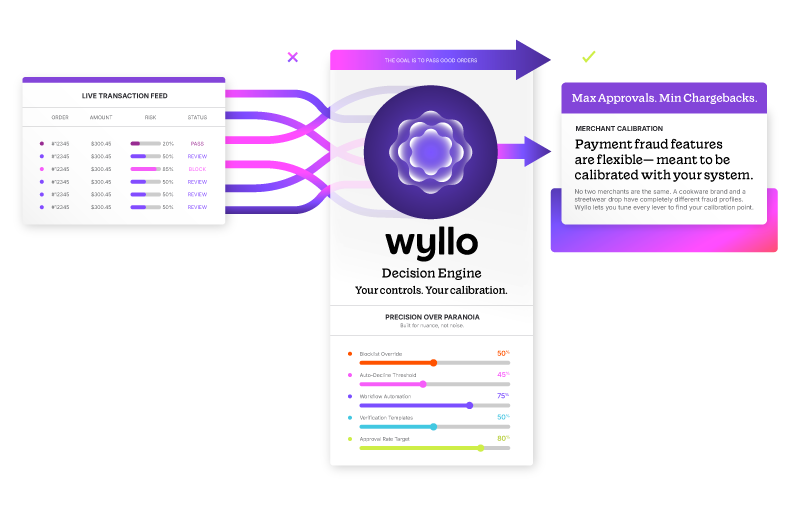
Wyllo payment-fraud decisioning flow with live transaction feed and merchant calibration controls.
💚 What we like
Unifies payment fraud with returns, claims, abuse and chargeback workflows around customer-level risk intelligence.
Ecommerce platform integrations and a two-week trial lower the evaluation barrier for growing brands.
Human-backed fraud review adds operational support when automated decisions need escalation.
🟠 What to know
The broader Wyllo positioning is new, so buyers should verify which modules and workflows are included in their quote.
Pricing is calculator/quote driven rather than a single public package, making total cost merchant-specific.
💡 Why this score: Wyllo scores 89 for unusually strong ecommerce fit and coverage from checkout through post-purchase risk. We discount value and scale slightly versus the largest enterprise platforms because package economics and the newer combined platform require buyer-specific validation.
💰 Pricing: Pricing calculator; vendor-specific quote
✅ Best fit: Mid-market and growth ecommerce brands dealing with fraud plus returns, claims or policy abuse across Shopify, BigCommerce or custom stacks.
🚫 Less ideal for: Buyers wanting a pure generic fraud application programming interface (API) or a standalone dispute tool with simple success-fee pricing.
🧩 Key capabilities
Payment fraud protection
Return fraud detection
Claim abuse controls
Bot detection
Chargeback management
Human review
🔎 Official sources: Product · Pricing · Documentation / integration

5. Chargeflow
Score: 88/100 · 💰 Mid · 🧩 Beginner · 🏢 SMB–Mid-market · ⚙️ No-code
🎯 Best for: Merchants wanting automated post-payment chargeback recovery with clear pay-for-performance economics.
⚡ Choose Chargeflow if your pain starts after the dispute arrives and you want automation without a large fixed software contract.
Chargeflow is primarily a post-payment dispute product, not a replacement for checkout fraud decisioning. Its core automation collects evidence, builds dispute responses and submits cases, while Alerts can deflect some disputes before they become chargebacks. The commercial model is unusually easy to model: recovery automation is priced as a percentage of recovered chargebacks, while deflected alerts have a per-event fee. That makes it attractive for ecommerce teams that want to remove representment work without building a specialist dispute operation.
Chargeflow dashboard for automated chargeback recovery and performance tracking.
💚 What we like
Success-based recovery pricing makes spend directly visible against money actually won back.
Automation covers evidence collection, case building and submission rather than just organizing dispute tickets.
More than 100 supported integrations reduce data-gathering friction across processors, commerce platforms and support tools.
🟠 What to know
It does not replace a pre-payment fraud engine, so checkout screening may still require another product.
Success fees can become material at very high recovery volumes; model net recovered revenue, not win rate alone.
💡 Why this score: Chargeflow earns 88 for excellent workflow automation, ecommerce fit and transparent recovery economics. Core-job scoring is lower than the leading fraud suites because it solves post-payment disputes rather than the full pre-payment fraud decision.
💰 Pricing: 25% per recovered chargeback; $29 per deflected alert
✅ Best fit: Ecommerce and software merchants with recurring dispute volume that want automated representment and alerts without staffing a large chargeback team.
🚫 Less ideal for: Teams whose primary problem is stopping fraudulent orders before payment authorization rather than recovering disputes afterward.
🧩 Key capabilities
Automated representment
Evidence collection
Chargeback alerts
Auto-refunds
100+ integrations
Recovery analytics
🔎 Official sources: Product · Pricing · Documentation / integration
6. Justt
Score: 87/100 · 💰 Enterprise price · 🧩 Intermediate · 🏢 Mid-market–Enterprise · ⚙️ Specialist-led
🎯 Best for: Larger merchants optimizing net dispute recovery across processors with automated evidence and prevention controls.
⚡ Choose Justt if you want chargeback recovery, prevention and analytics managed as one post-payment operating system.
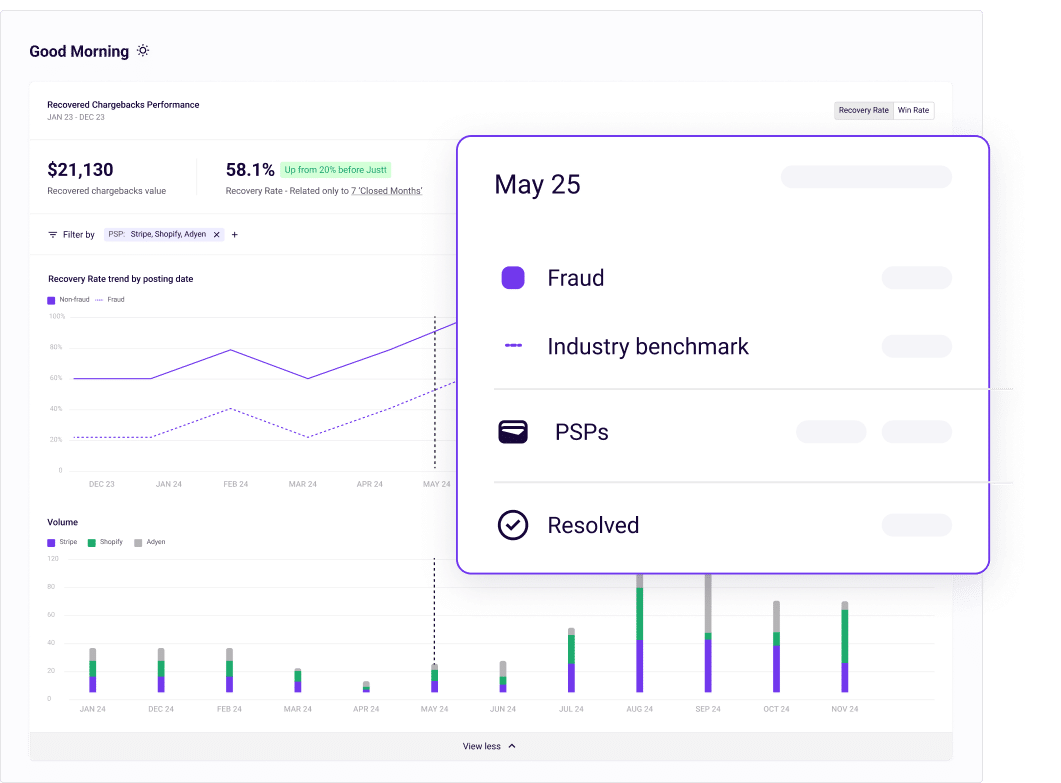
Justt focuses on the economics and operations of chargebacks after payment. Its platform automates evidence creation and representment, adds prevention and alert workflows, and centralizes performance analytics across payment service providers. The important buying lens is net recovery, not simply gross win rate: evidence quality, alert cost, dispute fees and which cases are worth fighting all change the answer. Justt is strongest where chargebacks are a material finance and operations workload rather than an occasional support task.
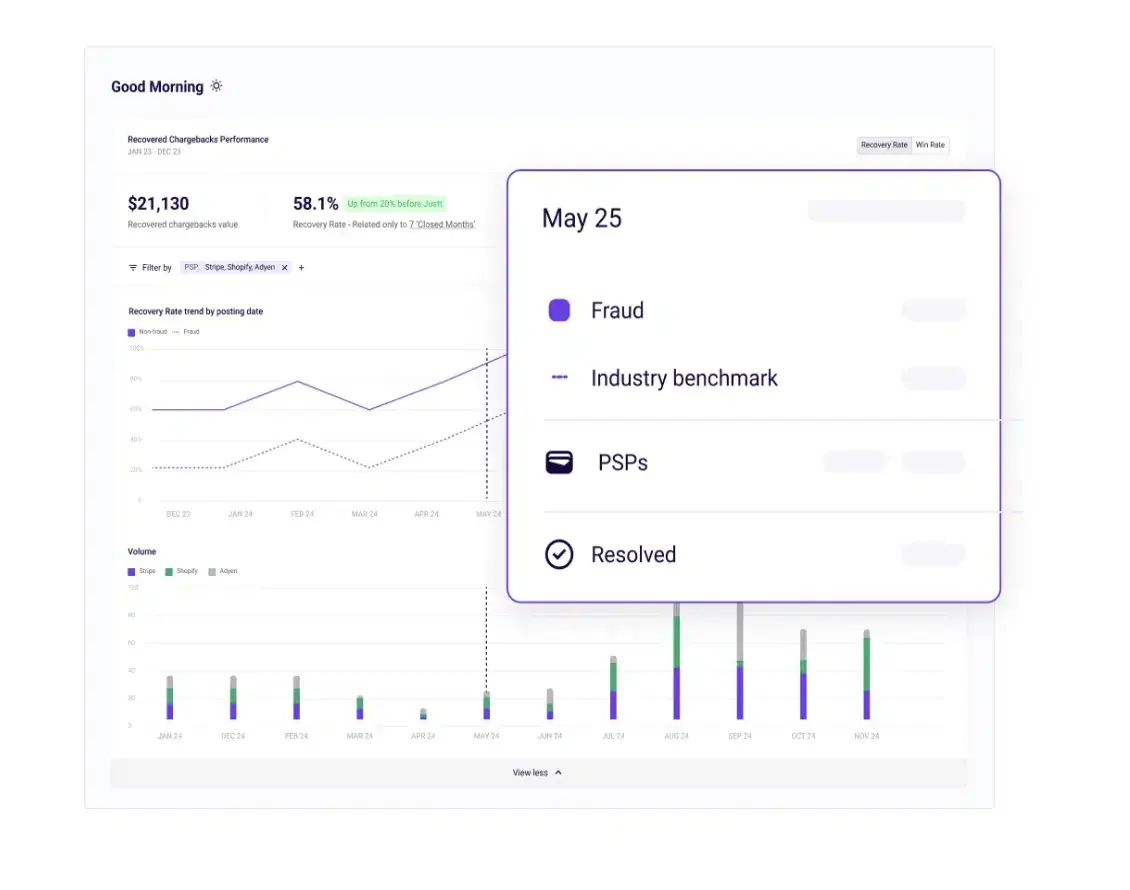
Justt chargeback analytics dashboard showing recovered value, recovery rate and dispute performance.
💚 What we like
Automated evidence creation and dynamic arguments target the repetitive work that makes representment expensive.
Central analytics helps teams compare recovery performance and understand chargebacks across payment service providers.
Prevention plus recovery supports ratio management without assuming every dispute should be refunded or fought.
🟠 What to know
Public numeric pricing is not provided, so buyers need a quote and should model economics on net recovered revenue.
This is primarily post-payment chargeback infrastructure, not a full checkout fraud decision engine.
💡 Why this score: Justt scores 87 because it combines strong dispute automation, prevention and analytics with enterprise coverage. Value is scored lower than transparent success-fee options because pricing is quote based, while core-job scope is post-payment rather than end-to-end fraud screening.
💰 Pricing: Custom quote
✅ Best fit: High-volume merchants with meaningful chargeback operations, multiple payment providers and a need to improve recovery economics and forecasting.
🚫 Less ideal for: Small merchants with low dispute volume or teams looking primarily for real-time checkout fraud screening.
🧩 Key capabilities
Evidence automation
Dynamic arguments
Chargeback prevention
Alerts workflows
Recovery analytics
Payment-provider integrations
🔎 Official sources: Product · Pricing · Documentation / integration

7. Sift
Score: 86/100 · 💰 Enterprise price · 🧩 Advanced · 🏢 Mid-market–Enterprise · ⚙️ Developer-led
🎯 Best for: Digital businesses needing configurable real-time payment risk, analyst investigation and network context.
⚡ Choose Sift if your fraud team wants flexible policies, explainability and investigation tools rather than outsourced guaranteed decisions.
Sift Payment Protection is a configurable fraud platform for teams that want to own risk policy and analyst workflows. It scores payment activity in real time, supports automated decisions, exposes investigation context and lets teams test policy thresholds before changes go live. Sift is broader than ecommerce alone, which can be an advantage for marketplaces and complex digital products. The trade-off is that teams need enough fraud expertise and engineering capacity to get value from the control surface.
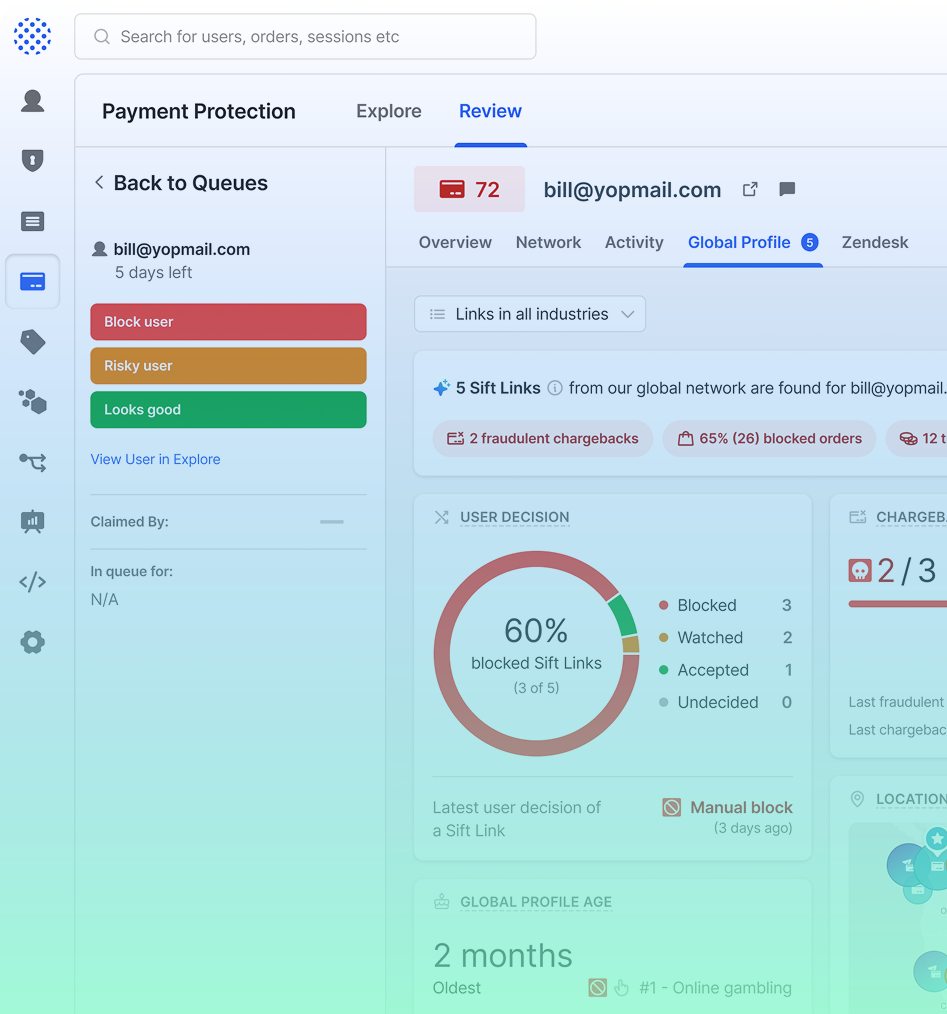
Sift Payment Protection review interface with risk score, network context and user decisions.
💚 What we like
Real-time payment scoring combines automation with detailed analyst context instead of a single opaque outcome.
Policy and threshold testing lets teams validate workflow changes against historical traffic before production rollout.
Network and user-level investigation views are useful when fraud spans accounts, orders and payment events.
🟠 What to know
Pricing is sales-led with no public package, which makes early-stage value comparisons harder.
The product rewards sophisticated risk operations; smaller merchants may not need its policy and investigation depth.
💡 Why this score: Sift scores 86 for strong real-time fraud performance, analyst control and scalable decisioning. We discount pricing/value because public pricing is unavailable and implementation is more technical than commerce-native plug-ins or managed guarantee products.
💰 Pricing: Custom quote
✅ Best fit: Marketplaces, subscription businesses and larger merchants with dedicated fraud analysts who want configurable risk controls and investigative depth.
🚫 Less ideal for: Small stores wanting a guaranteed ship-or-don’t-ship decision with minimal fraud expertise or technical setup.
🧩 Key capabilities
Real-time risk scoring
Automated policies
Workflow simulation
Score explainability
Network visualization
Dispute-data ingestion
🔎 Official sources: Product · Pricing · Documentation / integration
8. SEON
Score: 85/100 · 💰 Premium · 🧩 Intermediate · 🏢 Mid-market · ⚙️ Low-code
🎯 Best for: Risk teams wanting transparent signal enrichment, rules and fraud scoring with published entry pricing.
⚡ Choose SEON if you want to inspect and tune fraud signals yourself instead of outsourcing the approve-or-decline decision.
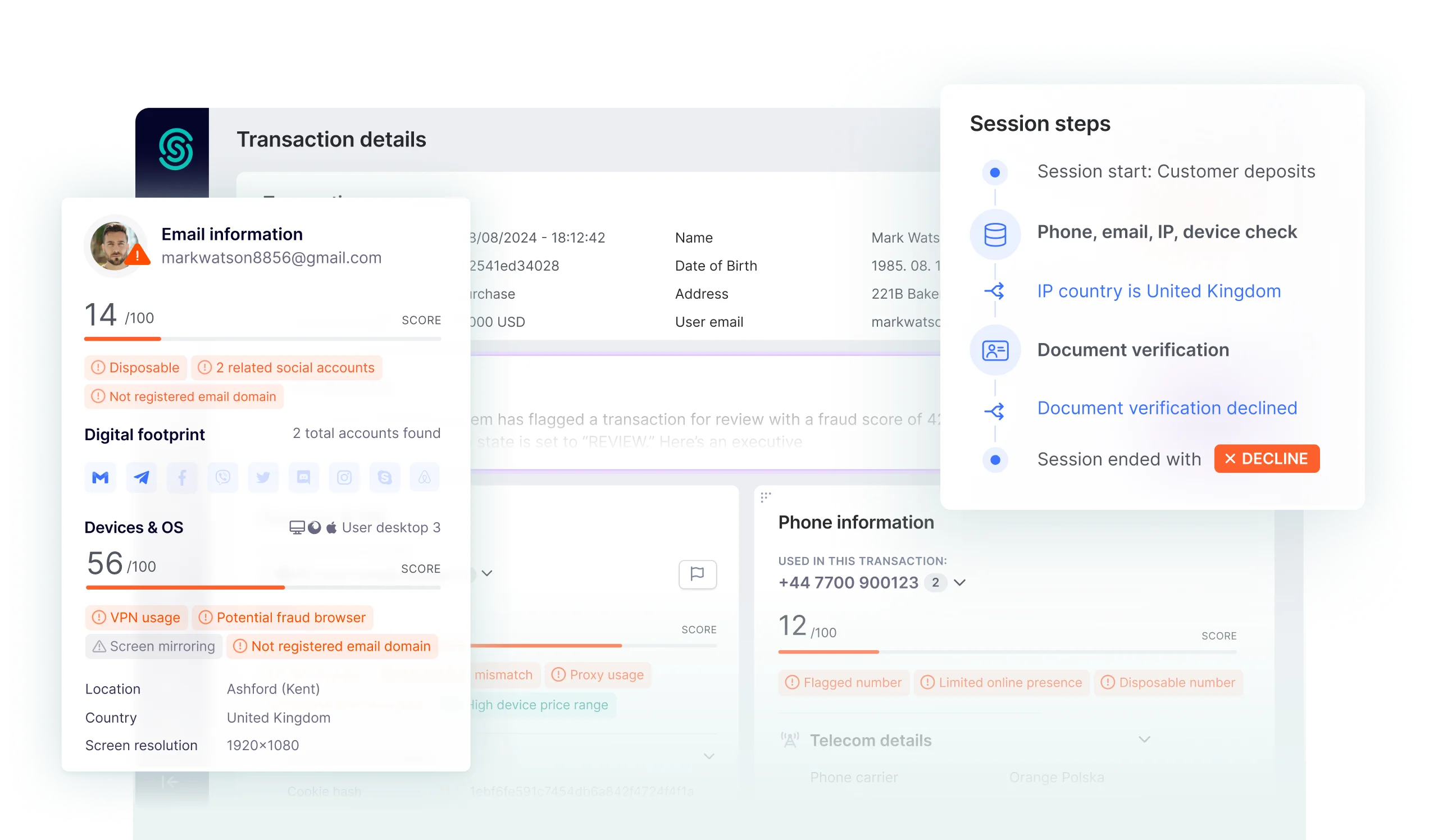
SEON is an API-first fraud platform centered on digital-footprint, device, behavioral and transaction signals. Teams can combine those signals with custom rules and workflows to score and investigate users or transactions. Unlike most enterprise fraud vendors here, SEON publishes a Starter plan at $699 per month for 2,500 fraud checks, while Premium is custom. That transparency helps smaller risk teams evaluate it, although getting the most from SEON still requires owning policy, thresholds and investigation logic.
SEON fraud-prevention interface combining transaction, digital-footprint, device and workflow signals.
💚 What we like
Published Starter pricing gives buyers a concrete entry point before an enterprise sales process.
Rich email, phone, IP and device signals make the product useful for identity and transaction investigations.
Custom rules and case-management options support teams that want to own fraud policy and analyst workflows.
🟠 What to know
Starter limits of 2,500 checks and 50 custom rules may push growing teams toward custom Premium pricing.
Unlike a guaranteed-decision vendor, your team remains responsible for policy choices and the economics of false declines.
💡 Why this score: SEON earns 85 for transparent entry pricing, broad signal coverage and strong workflow control. It scores below the top commerce-focused guarantee products on ecommerce specialization and liability shift, but above many enterprise tools on pricing clarity.
💰 Pricing: Starter $699/month for 2,500 fraud checks; Premium custom
✅ Best fit: Mid-market risk teams, marketplaces and fintech-style commerce businesses that need configurable fraud signals, rules and investigations.
🚫 Less ideal for: Merchants wanting outsourced fraud liability and guaranteed checkout decisions with little internal risk ownership.
🧩 Key capabilities
Digital footprint
Device intelligence
Machine-learning scoring
Custom rules
Case management
Shopify integration
🔎 Official sources: Product · Pricing · Documentation / integration
9. Stripe Radar
Score: 84/100 · 💰 Budget · 🧩 Beginner · 🏢 SMB–Mid-market · ⚙️ Low-code
🎯 Best for: Stripe-centric merchants wanting integrated fraud screening and rules without adding a separate risk stack.
⚡ Choose Stripe Radar if your payments already run on Stripe and implementation simplicity matters more than vendor independence.
Stripe Radar brings machine-learning fraud detection, rules, reviews and fraud analytics into the Stripe payments workflow. Its biggest advantage is operational simplicity for businesses already using Stripe: risk signals sit next to the underlying payment data and rules can be managed in the same environment. Stripe also now positions Radar for broader processor coverage, but its natural fit remains Stripe-centric commerce. It is less comprehensive than specialist guarantee platforms when merchants need liability transfer or complex managed fraud operations.
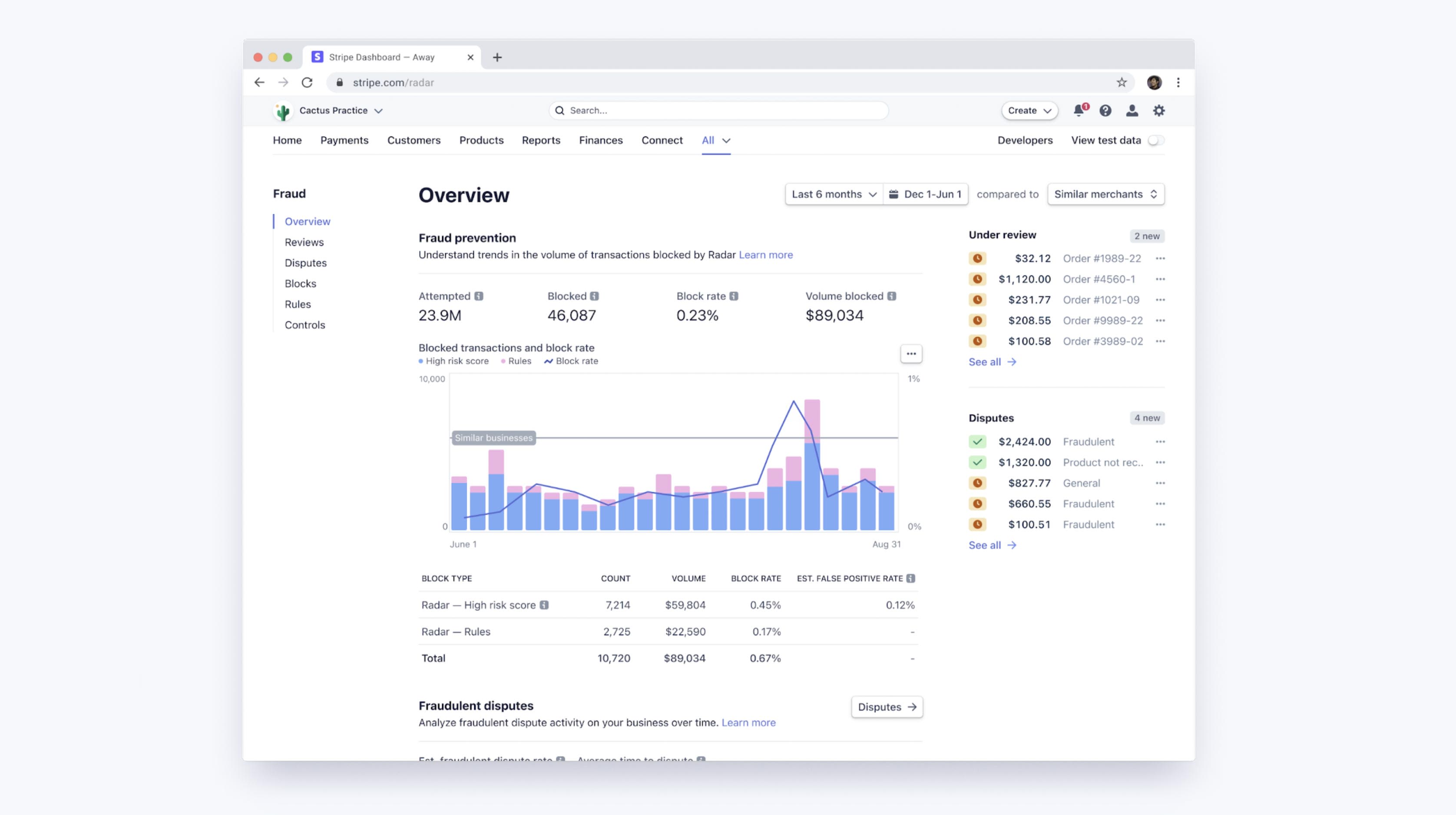
Stripe Radar fraud overview dashboard with blocked volume, disputes, reviews and rules.
💚 What we like
Tight payment-data integration reduces setup and gives rules direct access to Stripe transaction context.
A familiar dashboard combines fraud trends, reviews, disputes and blocking behavior in one operational view.
Transparent usage pricing is easier to test and forecast than enterprise quote-only platforms.
🟠 What to know
The product does not provide the same guaranteed fraud-liability model as Signifyd or Riskified.
Teams with complex multi-processor or post-purchase abuse needs should test coverage beyond standard Stripe payment fraud.
💡 Why this score: Stripe Radar scores 84 because it is exceptionally easy and cost-efficient for Stripe users, with strong ecommerce payment fit. It trails specialist leaders on liability transfer, post-purchase breadth and advanced managed fraud operations.
💰 Pricing: Transparent usage pricing varies by Radar configuration and region
✅ Best fit: Small and mid-market ecommerce teams already on Stripe that need strong baseline fraud controls with minimal additional integration.
🚫 Less ideal for: Large merchants seeking a vendor-agnostic guaranteed-decision platform spanning fraud, abuse and complex chargeback liability.
🧩 Key capabilities
Machine-learning scoring
Custom rules
Manual reviews
Fraud analytics
Dispute visibility
Stripe integration
🔎 Official sources: Product · Pricing · Documentation / integration
10. Chargebacks911
Score: 81/100 · 💰 Enterprise price · 🧩 Intermediate · 🏢 Mid-market–Enterprise · ⚙️ Specialist-led
🎯 Best for: Enterprise merchants needing managed chargeback prevention, representment, alerts and cross-network dispute operations.
⚡ Choose Chargebacks911 if chargeback operations are complex enough to justify a managed, consultative prevention-and-recovery program.
Chargebacks911 is a managed chargeback specialist covering prevention, alerts, inquiry resolution, representment and analytics. It is aimed at merchants whose dispute problem spans multiple card-network tools and operational workflows, not teams looking for a lightweight app. The company emphasizes combining alerts, transaction-data sharing and reporting under one service model. Buyers should focus on total net recovery, prevention cost, response ownership and commercial terms because pricing is not publicly numeric and implementations are typically consultative.
Chargebacks911 dispute-intelligence dashboard imagery for chargeback analytics and prevention.
💚 What we like
Combines alerts, prevention, representment and analytics instead of treating recovery as an isolated workflow.
Managed operating model can offload specialist chargeback work from internal payments and finance teams.
Coverage across network tools is useful for merchants juggling multiple prevention and dispute channels.
🟠 What to know
Pricing is custom, making it harder to compare net economics before a detailed sales and data review.
Managed breadth can be excessive for merchants with low dispute volume or a single straightforward processor workflow.
💡 Why this score: Chargebacks911 scores 81 for broad chargeback operations and managed expertise, but value is constrained by opaque pricing and a heavier service model. It also sits firmly post-payment, so it should not be compared directly with checkout fraud decision engines.
💰 Pricing: Custom quote
✅ Best fit: Enterprise merchants with high dispute volume, multiple prevention channels and a preference for managed chargeback operations.
🚫 Less ideal for: Small businesses wanting transparent self-serve pricing or a real-time pre-payment fraud screening engine.
🧩 Key capabilities
Chargeback alerts
Inquiry resolution
Representment
Source detection
Dispute analytics
Managed services
🔎 Official sources: Product · Pricing · Documentation / feature
🎯 Which tools should you actually shortlist?
If false declines and fraud liability are the core problem: compare Signifyd and Riskified head-to-head on the same order sample and contract terms.
If risk spans checkout, accounts, abuse and payments: put Forter and Wyllo on the list, then verify which modules are actually included.
If you already run a skilled internal fraud team: test Sift and SEON for policy control, explainability and investigation workflows.
If Stripe is already your payment backbone: benchmark Radar first because integration cost may outweigh modest feature differences elsewhere.
If the main pain is representment workload: compare Chargeflow and Justt on net recovered revenue, evidence quality and processor coverage.
If disputes span many networks and require managed operations: include Chargebacks911 and define exactly which work stays with your team.
🧪 Run this test before you buy
Use one representative week or month of historical transactions and disputes. Give every vendor the same data, the same operational constraints and the same definition of a good outcome. For pre-payment products, measure legitimate approvals as aggressively as fraud loss. For dispute tools, measure net recovered money after every fee and staff hour.
Build a blind sample containing confirmed fraud, legitimate approvals, legitimate declines and ambiguous review cases.
Include high-value orders, cross-border orders, first-time buyers and repeat trusted customers.
Ask pre-payment vendors to replay decisions and expose the reason, confidence and next action for every order.
Measure false-positive rate separately from raw fraud-catch rate.
Test manual-review queues with your real staffing level and peak-season volume.
For guarantee products, map each historical loss to covered, excluded or conditionally covered liability.
For dispute tools, run real reason codes through evidence collection and representment workflows.
Include one processor outage, missing-data case or integration failure and document the fallback behavior.
Calculate net economics after software fees, success fees, alert fees, dispute fees and recovered approvals.
Export decisions, cases, rules and reporting data to verify how painful an eventual vendor exit would be.
📏 Record the same things for every vendor: fraud dollars stopped, legitimate revenue approved, false declines, manual-review minutes, covered versus excluded losses, disputes prevented, net dollars recovered, all fees, implementation hours and data you can export.
🧾 10 questions to ask in every demo
Which loss types are you actually deciding or recovering, and which sit outside your product?
How do you measure false declines and prove that lower fraud loss is not coming from blocking good customers?
If you provide a guarantee, exactly which chargeback reason codes, abuse cases and operational conditions are excluded?
What data must we send at checkout, fulfillment and post-purchase stages, and what happens when fields are missing?
Which ecommerce platforms, payment service providers, acquirers and card-network programs are native integrations versus custom work?
How long does implementation take, who owns it and what engineering work remains on our side?
What is the complete pricing formula, including minimums, success fees, alert fees, dispute fees and implementation charges?
Can we change thresholds, rules or workflows ourselves, and can we back-test those changes before production?
What raw decisions, evidence, rules and case history can we export if we switch vendors?
Who owns performance after launch, how often is it reviewed and what remediation happens when approval or recovery economics deteriorate?
❓ Frequently asked questions
What is the difference between ecommerce fraud prevention and chargeback management?
Fraud prevention normally acts before or around payment authorization and fulfillment, deciding whether an order looks legitimate. Chargeback management begins after a cardholder dispute or pre-dispute alert appears. Some vendors cover both, but the operating job, data and economics differ. A strong shortlist starts by identifying where your losses actually occur rather than buying the broadest feature list.
What is a false decline?
A false decline is a legitimate transaction that your fraud controls reject. It matters because an apparently excellent fraud-loss rate can hide lost good-customer revenue. Compare vendors on approval quality, not only blocked fraud. In a pilot, keep a labeled sample of known good orders and track how each product treats high-value, cross-border, first-time and unusual-but-legitimate purchases.
What does a chargeback guarantee actually cover?
A guarantee usually shifts defined fraud liability to the vendor when you follow its decision and operating requirements. It does not mean every possible dispute, return, policy-abuse case or service complaint is automatically reimbursed. Read the contract for covered reason codes, exclusions, evidence obligations and timing rules. The scope of the guarantee is often more decision-useful than the marketing headline.
How much do fraud and chargeback tools cost?
The category mixes several models: enterprise custom quotes, usage-based fraud checks, percentage-of-recovered-chargeback fees and per-deflected-alert fees. SEON publishes a $699 monthly Starter plan for 2,500 fraud checks, while Chargeflow publishes 25% per recovered chargeback and $29 per deflected alert. Many enterprise decisioning vendors require a quote, so compare effective cost against approved revenue and avoided losses.
How hard are these tools to implement?
Implementation ranges from an ecommerce app or processor-native switch to a multi-system application programming interface (API) project. The hard part is often not sending a transaction; it is wiring decisions into order holds, fulfillment, reviews, refunds, evidence collection and support processes. Ask vendors to map the exact production workflow, failure fallback and ownership of changes before you accept a headline integration estimate.
Should I use one vendor for fraud prevention and chargebacks?
Only if the combined product is genuinely strong at both jobs and the economics make sense. A specialized fraud engine can be paired with a specialized dispute platform without creating a bad stack, provided data flows cleanly between them. Consolidation is valuable when shared identity and case data improve decisions; it is not valuable when one half of the bundle is materially weaker.
🔍 About this research
MarketMaze reviewed the 10 assigned tools using current official vendor product pages, pricing pages, documentation, integration materials and first-party product imagery. We did not blend third-party review scores into the ranking. Screenshot provenance was checked for first-party hosting and usable product or interface context. Last research check: 26 September 2026.
