
MARKETMAZE · ECOMMERCE TOOLS · RESEARCH
8 Best Demand Forecasting & Inventory Replenishment Tools (2026)
Demand forecasting and inventory replenishment tools help ecommerce teams decide what to reorder, when to buy and how much stock to hold. We compared eight merchant-friendly and enterprise platforms on forecasting depth, purchasing workflows, lead times, transfers, implementation and value.
Updated 26 September 2026 · Pricing and product claims checked against official vendor sources.
👋 New to this category?
Demand forecasting predicts what customers are likely to buy. Replenishment converts that forecast into a purchasing decision: what to order, when to order it and how much. Lead time is the delay between placing an order and receiving stock. The best tools combine those inputs with current inventory, incoming purchase orders, seasonality, promotions and service targets so a planner can act before a stockout or overstock problem appears.
🧭 Jump to a tool
🏆 The quick answer
🏆 Best overall
Inventory Planner
🌱 Best for getting started
Fabrikatör
💸 Best value
Prediko
🏢 Best for larger teams / enterprise
Netstock
🧠 Best for advanced or technical users
Lokad
📦 Best for multichannel operations
Flieber
MarketMaze take: Start with operating fit, not the score alone. Shopify-led brands should test the lighter merchant tools first, while companies already running complex enterprise resource planning systems may get more from Netstock or Slimstock. Technical teams with genuinely custom optimization problems should include Lokad. Use the ranking to narrow the field, then run the same forecast and reorder test in every finalist.
📊 Tool comparison & scores
Rank | Tool | Score | Best for | Pricing |
|---|---|---|---|---|
1 | 92/100 | High-volume ecommerce and retail teams balancing forecasts, purchasing and multi-location stock | Custom quote | |
2 | 91/100 | Shopify brands wanting fast forecasting, replenishment, purchase orders and inventory transfers | From $49/mo | |
3 | 89/100 | Multichannel commerce brands coordinating forecasts, purchase orders and stock across channels | Custom quote | |
4 | 86/100 | Growing Shopify brands that want simple replenishment, purchase orders and demand planning | From $79/mo | |
5 | 84/100 | SMBs wanting approachable forecasting and reorder planning across several accounting or inventory systems | Revenue-based | |
6 | 83/100 | Mid-market and enterprise teams planning inventory directly from established enterprise resource planning systems | From $900/mo | |
7 | 81/100 | Large retailers and distributors needing broad demand, inventory and supply planning in one platform | Custom quote | |
8 | 79/100 | Technical enterprises optimizing purchasing and inventory decisions under complex uncertainty | Custom quote |
🧠 How the scoring works
This ranking uses MarketMaze proprietary scoring.
Dimension | Weight | What we look for |
|---|---|---|
Core job performance | 30% | Forecast quality, reorder logic, lead-time handling and actionable purchase recommendations. |
Ecommerce fit | 20% | Direct relevance to online retail channels, SKUs, promotions and multi-location commerce. |
Workflow & control | 15% | Planner visibility, exceptions, overrides, purchase workflows and operational control. |
Integrations & implementation | 15% | Commerce, warehouse and enterprise resource planning connectivity plus realistic setup effort. |
Pricing & value | 10% | Cost transparency and value for the buyer segment the product targets. |
Scale & advanced capabilities | 10% | Multi-location depth, scenarios, advanced optimization and support for complex planning teams. |
🤔 Do you even need demand forecasting and replenishment software?
Probably yes ✅
You carry many SKUs, buy weeks or months ahead, manage several locations, or repeatedly lose cash to stockouts and excess inventory.
Maybe 🟡
Your catalog is growing and spreadsheet planning is becoming slow, but purchasing is still manageable and your team can test a focused planner first.
Probably not yet ⏳
You sell a small, predictable assortment with short lead times and basic low-stock alerts already cover most replenishment decisions.

🥇 1. Inventory Planner
92/100 · 💰 Premium price · 🧩 Intermediate · 🏢 Mid-market–Enterprise · ⚙️ Specialist-led
🎯 Best for: High-volume ecommerce and retail teams balancing forecasts, purchasing and multi-location stock
⚡ Choose Inventory Planner if you need ecommerce-native forecasting, buying recommendations and transfer planning across a growing retail stack.
Inventory Planner by Sage is a dedicated planning layer for retailers and ecommerce brands. It turns sales and stock data into SKU-level forecasts, purchasing recommendations and multi-location transfer decisions, while supporting open-to-buy planning and reporting. Its broad connector set spans major commerce platforms, marketplaces, inventory systems and enterprise resource planning systems. That combination makes it a strong fit when planning has outgrown spreadsheets but the team still wants a merchant-focused workflow.
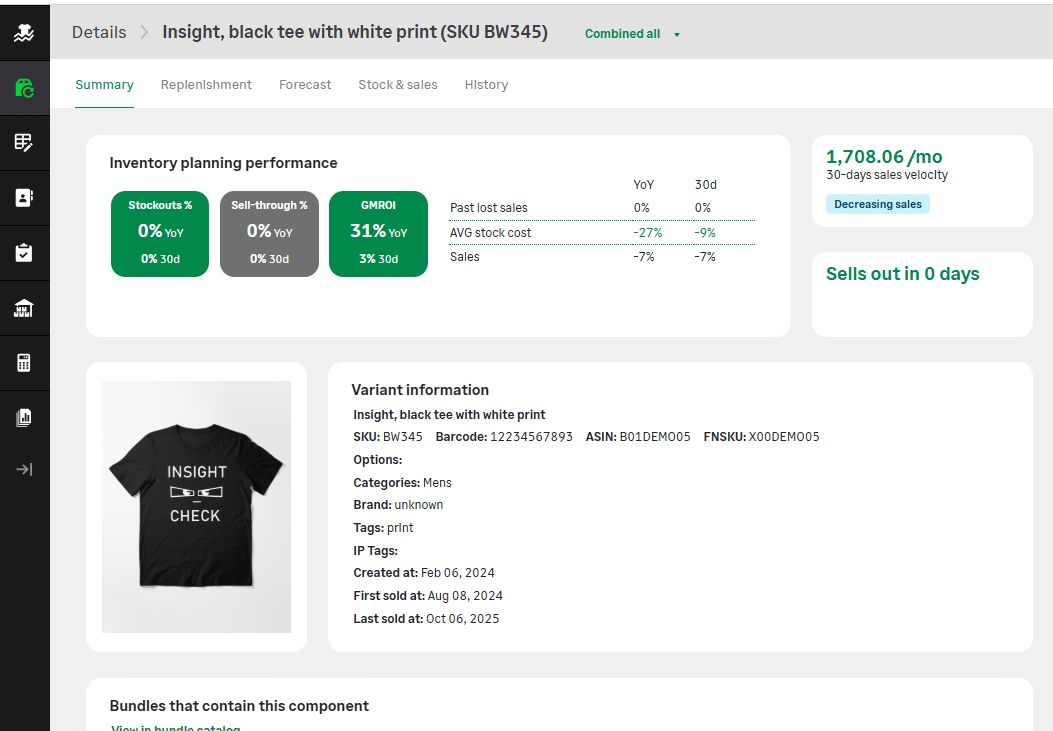
📷 Purchasing recommendations turn forecasted demand into suggested buying actions. Source: official vendor website.
💚 What we like
Strong retailer focus combines forecasting, purchasing and transfer decisions without becoming a full enterprise planning suite.
Broad integrations cover Shopify, Amazon, WooCommerce, major inventory platforms and several enterprise resource planning systems.
Forecast settings are transparent enough for planners to adjust seasonality, unusual periods and replenishment assumptions.
🟠 What to know
Pricing is sales-led, so buyers cannot estimate the full cost without requesting a quote.
Implementation is guided rather than instant; the vendor currently describes go-live in roughly five to six weeks.
💡 Why this score: It scores highest for balancing ecommerce relevance, planning depth and integration breadth. It loses some value points because pricing is not public and onboarding is more involved than app-style Shopify planners, but its core forecasting and purchasing workflow is unusually complete.
💰 Pricing: Custom quote based on inventory volume; unlimited users. Vendor currently describes implementations going live in roughly five to six weeks.
✅ Best fit: Retailers and ecommerce brands with meaningful SKU, channel or location complexity that want a dedicated planning layer above their operating systems.
🚫 Less ideal for: Very small stores that mainly need simple low-stock alerts, or teams wanting a self-serve tool with transparent entry pricing.
🧩 Key capabilities
SKU demand forecasting
Replenishment recommendations
Purchase order planning
Stock transfer planning
Open-to-buy planning
Inventory analytics
🔎 Official sources: Product · Pricing · Documentation

🥈 2. Prediko
91/100 · 💰 Budget · 🧩 Beginner · 🏢 SMB–Mid-market · ⚙️ No-code
🎯 Best for: Shopify brands wanting fast forecasting, replenishment, purchase orders and inventory transfers
⚡ Choose Prediko if your operation is Shopify-led and you want planning recommendations that quickly turn into purchase orders and transfers.
Prediko is an inventory planning app built around Shopify brands. It combines demand and supply planning with buying recommendations, purchase orders, inventory transfers, multi-store visibility and reporting. Forecasts can be planned at SKU and broader product levels, while supply planning turns demand into a forward purchasing calendar. Setup is relatively light, pricing starts publicly, and the workflow stays close to the way direct-to-consumer teams already operate in Shopify.

📷 Prediko demand and supply planning interface with a 12-month planning view. Source: official Shopify App Store listing.
💚 What we like
Shopify-first workflow makes forecasting, buying recommendations and purchase orders accessible to non-specialist operations teams.
Public revenue-based pricing starts at a relatively low level and includes unlimited users, SKUs and purchase orders.
Inventory transfer and multi-location features extend planning beyond simple reorder alerts as a brand grows.
🟠 What to know
The strongest native fit remains Shopify, so mixed enterprise estates should validate every required connector carefully.
Advanced enterprise planning depth is lighter than systems designed for complex multi-echelon supply networks.
💡 Why this score: Prediko earns near-top marks because it couples excellent ecommerce fit with low setup friction and transparent starting pricing. Its ceiling is lower than enterprise planning platforms for highly complex networks, but for Shopify-centric brands its workflow-to-value ratio is strong.
💰 Pricing: From $49/month for merchants under $100K gross merchandise value; 14-day free trial. Pricing scales with annual revenue.
✅ Best fit: Growing Shopify merchants that need a practical step up from spreadsheets into demand planning, purchase orders, transfers and inventory reporting.
🚫 Less ideal for: Enterprises with complex manufacturing, multi-echelon optimization or extensive non-Shopify systems that require a broader supply-chain planning suite.
🧩 Key capabilities
AI demand planning
Supply planning calendar
Replenishment buying table
Purchase order management
Inventory transfers
Multi-store planning
🔎 Official sources: Product · Pricing · Documentation

🥉 3. Flieber
89/100 · 💰 Premium price · 🧩 Intermediate · 🏢 Mid-market · ⚙️ No-code
🎯 Best for: Multichannel commerce brands coordinating forecasts, purchase orders and stock across channels
⚡ Choose Flieber if you sell across several channels and need one planning layer that can sit above your existing inventory stack.
Flieber positions its Inventory product as a planning layer for modern multichannel commerce. It connects sales channels, warehouses and suppliers, forecasts at SKU level, flags stockout risk and produces replenishment recommendations and draft purchase orders. It can sit on top of an existing enterprise resource planning or inventory management system, while also connecting directly to commerce data. The emphasis is on handling channel complexity without forcing a large replacement project.
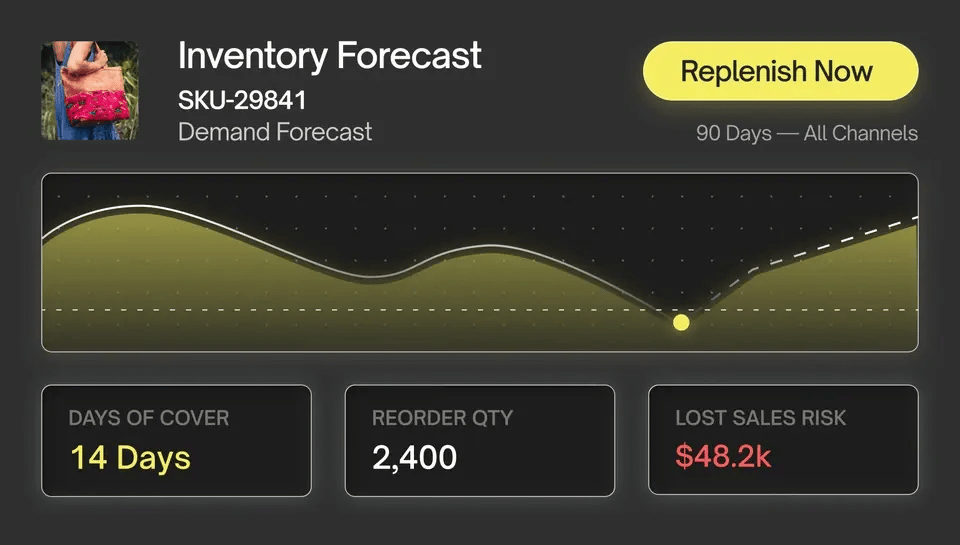
📷 Flieber combines forecast curves with days of cover, reorder quantity and stockout risk. Source: official vendor website.
💚 What we like
Strong multichannel orientation covers Shopify, Amazon, warehouses and other systems in one planning workflow.
Replenishment, transfer scenarios and draft purchase orders connect forecasting directly to day-to-day inventory decisions.
Current pricing model includes a 14-day trial, free onboarding and no implementation fee.
🟠 What to know
There is no public rate card, so final cost requires a demo and depends on operational complexity.
Brands with very simple single-channel inventory may not need the broader operational layer Flieber is designed to provide.
💡 Why this score: Flieber scores strongly on ecommerce fit and core planning, especially for multichannel brands. Its fast onboarding helps implementation points, while custom pricing limits value transparency. It sits between lightweight merchant apps and heavier enterprise planning systems.
💰 Pricing: Custom quote based on sales volume, channels and SKU count; 14-day free trial and free onboarding.
✅ Best fit: Scaling ecommerce teams managing several channels, locations or suppliers that want better purchasing decisions without replacing their existing operating systems.
🚫 Less ideal for: Small single-store merchants with a straightforward catalog and minimal purchasing complexity, or buyers requiring fully public pricing before evaluation.
🧩 Key capabilities
SKU-level forecasting
Replenishment alerts
Draft purchase orders
Transfer scenarios
Multichannel visibility
Commerce integrations
🔎 Official sources: Product · Pricing · Integrations

4️⃣ 4. Fabrikatör
86/100 · 💰 Budget · 🧩 Beginner · 🏢 SMB–Mid-market · ⚙️ No-code
🎯 Best for: Growing Shopify brands that want simple replenishment, purchase orders and demand planning
⚡ Choose Fabrikatör if you want a Shopify-native planning workflow with public entry pricing and little implementation overhead.
Fabrikatör is a Shopify-oriented inventory planning tool aimed at growing ecommerce brands. It brings forecasting, replenishment, purchase orders, bundle planning, reporting and backorders into one operating workflow. The product is designed to replace spreadsheet-based buying routines with recommended restocks and forward-looking inventory decisions. Public entry pricing and a no-code setup make it approachable for smaller teams, while unlimited SKUs and users on the displayed plan reduce friction as catalogs expand.

📷 Fabrikatör replenishment interface showing restock timing, suggested quantities and purchase-order actions. Source: official Shopify App Store listing.
💚 What we like
Public entry pricing gives smaller brands a clear starting point before they commit to a demo.
Shopify-native setup keeps adoption light for teams that do not have dedicated supply-chain systems specialists.
Forecasting, replenishment, purchase orders and bundle planning cover the core planning loop in one place.
🟠 What to know
The product is most naturally suited to Shopify-led operations rather than complex enterprise system landscapes.
Backorder usage carries a per-order charge on the displayed entry plan, which can matter at higher volume.
💡 Why this score: Fabrikatör combines strong ecommerce relevance with easy setup and attractive public pricing. It gives up points on integration depth and advanced planning breadth compared with higher-ranked tools, but offers a focused path from spreadsheets to structured inventory planning.
💰 Pricing: From $79/month billed annually for up to $500K annual revenue; 14-day free trial. Revenue-based tiers apply.
✅ Best fit: Small and growing Shopify brands that need a practical planning workspace for forecasting, replenishment, bundles and supplier orders.
🚫 Less ideal for: Large enterprises with complex manufacturing, broad enterprise resource planning estates or sophisticated multi-echelon inventory optimization requirements.
🧩 Key capabilities
Demand forecasting
Replenishment planning
Purchase order creation
Bundle planning
Backorder management
Inventory reporting

5️⃣ 5. StockTrim
84/100 · 💰 Mid · 🧩 Beginner · 🏢 SMB–Mid-market · ⚙️ No-code
🎯 Best for: SMBs wanting approachable forecasting and reorder planning across several accounting or inventory systems
⚡ Choose StockTrim if you want an easy planning layer with transparent forecast logic and broad small-business system connectivity.
StockTrim is a forecasting and replenishment tool aimed primarily at small and mid-sized businesses. It imports inventory and sales data, models seasonality and demand, then calculates reorder points, suggested quantities and future ordering schedules. It also supports multiple locations, automated purchasing workflows and bills of materials. Compared with enterprise planning suites, the appeal is lower implementation friction and a clear operational focus on turning forecasts into orders.
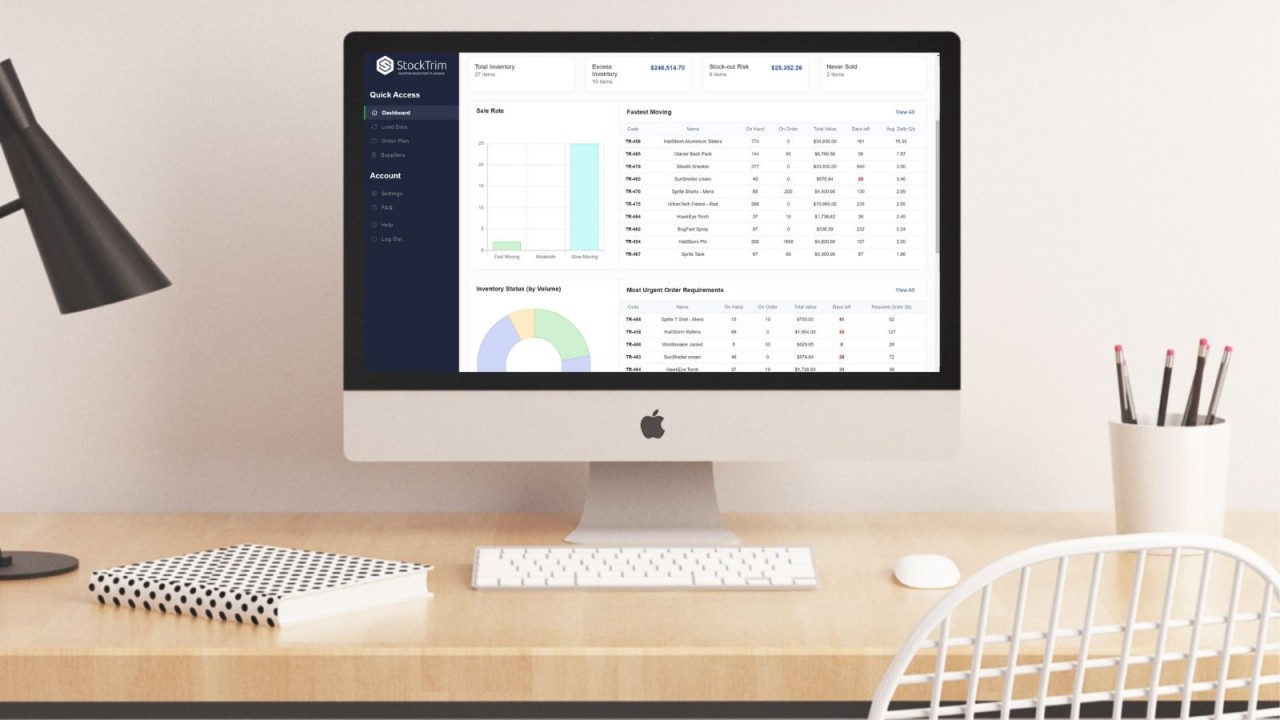
📷 StockTrim’s dashboard surfaces inventory value, excess stock, stockout risk and reorder priorities. Source: official vendor website.
💚 What we like
Forecasting, reorder points and future order schedules are presented in a straightforward workflow suited to operational buyers.
Integrations cover common ecommerce, accounting, inventory and enterprise resource planning systems, with an application programming interface available.
The vendor supports a 14-day trial and says most users can be running in under an hour.
🟠 What to know
Pricing changes with annual revenue, so buyers need to select their band rather than rely on one universal list price.
The interface and planning depth are more SMB-oriented than the larger enterprise suites in this comparison.
💡 Why this score: StockTrim scores well for ease of adoption, value and practical replenishment logic. Ecommerce fit is solid rather than specialized, and enterprise depth is lower than Netstock, Slimstock or Lokad, but it remains a useful bridge from spreadsheet forecasting to structured purchasing.
💰 Pricing: Revenue-based monthly or annual plans; 14-day free trial. The current page shows $298/month annually for $3M–$5M revenue, with lower and higher revenue tiers selectable. $299 onboarding is listed.
✅ Best fit: Small and mid-sized retailers, wholesalers or manufacturers needing demand forecasts and reorder recommendations without a long enterprise implementation.
🚫 Less ideal for: Large global organizations that need advanced cross-functional planning, deep scenario modeling or highly customized optimization across a complex network.
🧩 Key capabilities
Demand forecasting
Order planning
Reorder scheduling
Variable lead times
Multi-location planning
Automated purchasing
6️⃣ 6. Netstock
83/100 · 💰 Enterprise price · 🧩 Advanced · 🏢 Mid-market–Enterprise · ⚙️ Enterprise implementation
🎯 Best for: Mid-market and enterprise teams planning inventory directly from established enterprise resource planning systems
⚡ Choose Netstock if your planning team needs structured forecasting and ordering tightly connected to a mature enterprise resource planning system.
Netstock is a demand and supply planning platform built to turn enterprise resource planning data into forecasts, safety-stock policies, recommended orders and executive visibility. Its packages progress from inventory optimization into advanced forecasting, stock projection and demand planning. More than 60 enterprise resource planning integrations are listed, and the ordering workflow can push recommendations back into core systems. It is more implementation-heavy than merchant apps, but substantially deeper for established planning teams.
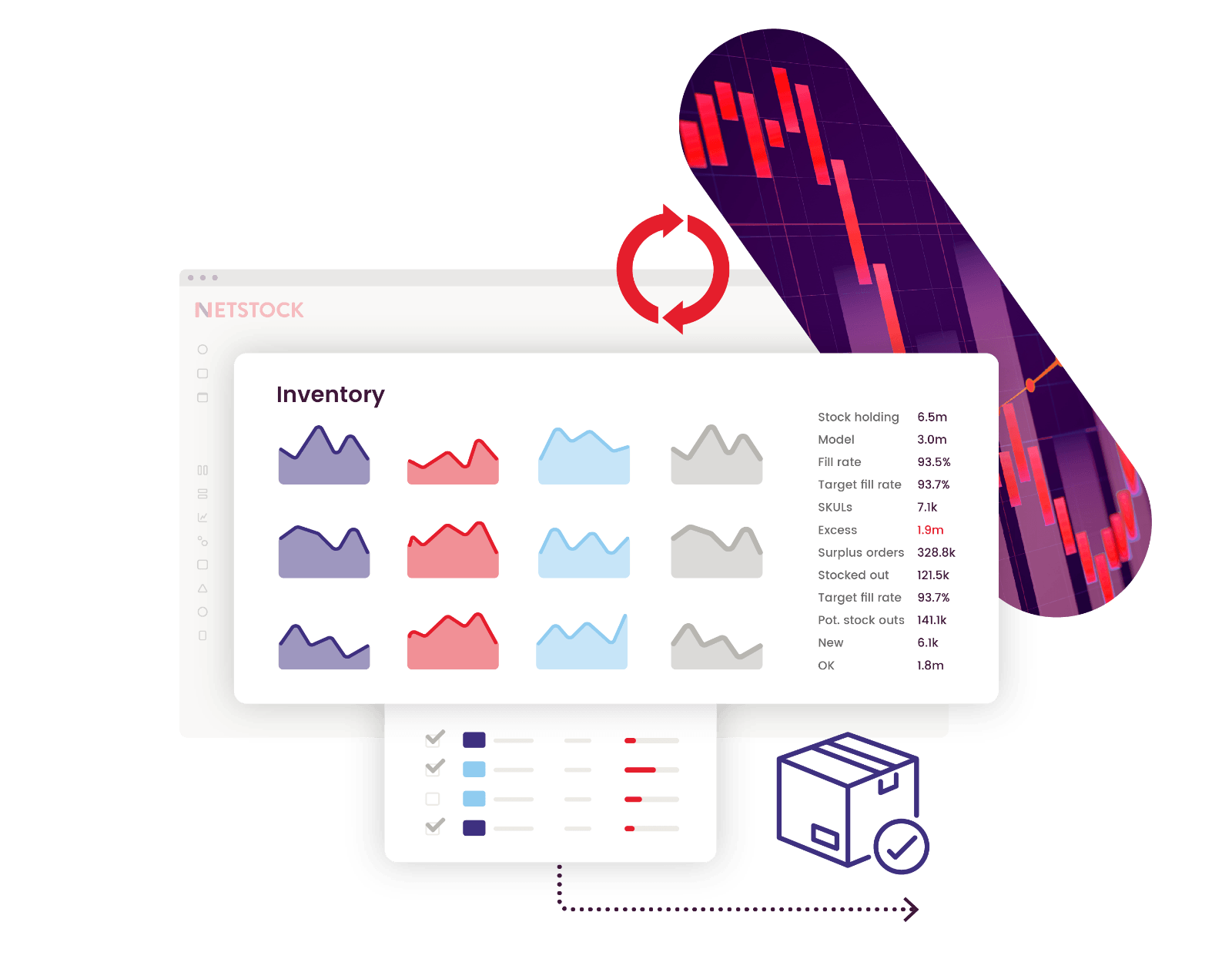
📷 Netstock’s inventory dashboard gives planners a consolidated view of stock health and key exceptions. Source: official vendor website.
💚 What we like
Strong core planning includes safety stock, forecasting, ordering, supplier performance and executive inventory visibility.
More than 60 enterprise resource planning integrations make it attractive for organizations with established back-office systems.
Demand-planning options add aggregation, promotions, new-product handling and forecast-performance monitoring for more mature teams.
🟠 What to know
Starting pricing is materially higher than merchant-oriented tools, and annual subscriptions are the standard commercial model.
Implementation typically takes six to ten weeks, making it a project rather than an instant self-serve install.
💡 Why this score: Netstock gets high marks for core planning, integrations and scale, but its ecommerce-specific fit is lower than the top merchant-focused tools. Its $900 monthly starting point and six-to-ten-week implementation also reduce value and setup scores for smaller brands.
💰 Pricing: From $900/month on an annual subscription. Vendor says implementation typically takes 6–10 weeks.
✅ Best fit: Mid-market and enterprise distributors, retailers or manufacturers that already run a substantial enterprise resource planning system and need a dedicated planning layer.
🚫 Less ideal for: Small Shopify-first brands seeking same-day setup, low entry pricing or an inventory planner designed primarily around direct-to-consumer workflows.
🧩 Key capabilities
Inventory optimization
Demand forecasting
Recommended ordering
Safety stock planning
Supplier performance
ERP integrations
🔎 Official sources: Product · Pricing · Documentation

7️⃣ 7. Slimstock
81/100 · 💰 Enterprise price · 🧩 Advanced · 🏢 Mid-market–Enterprise · ⚙️ Enterprise implementation
🎯 Best for: Large retailers and distributors needing broad demand, inventory and supply planning in one platform
⚡ Choose Slimstock if you need enterprise planning depth across demand, replenishment, allocation and multi-echelon inventory rather than an ecommerce app.
Slimstock’s Slim4 is an enterprise supply-chain planning platform covering demand forecasting, demand sensing, inventory optimization, replenishment, allocation, network balancing and wider planning processes. It can calculate location-specific requirements using demand, supplier lead times, constraints and service targets, then generate order recommendations. The platform is designed for complex retail and distribution networks, with integration into hundreds of enterprise resource planning systems and broader planning capabilities beyond ecommerce replenishment.
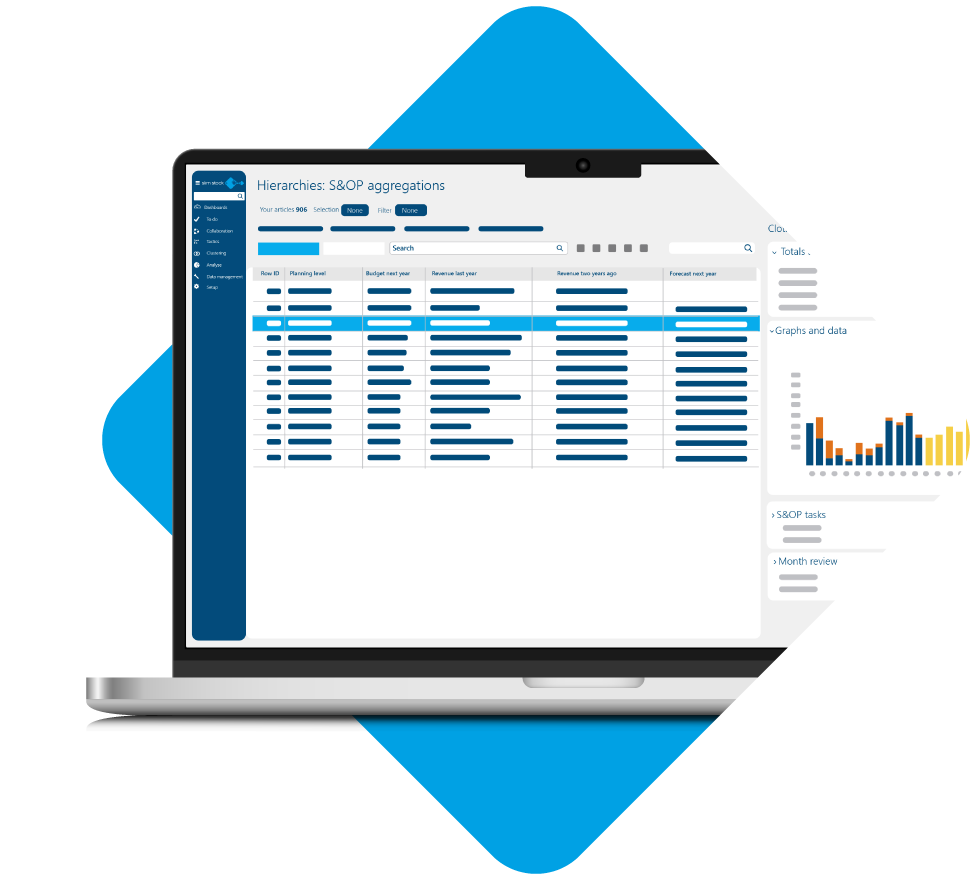
📷 Slim4 shows enterprise planning hierarchies, forecasts and decision views inside its planning workspace. Source: official vendor website.
💚 What we like
Deep planning scope spans demand, inventory, replenishment, allocation and multi-echelon optimization in a unified enterprise platform.
Location-level parameters can reflect lead times, constraints, service levels and demand variability when generating recommendations.
Hundreds of enterprise resource planning integrations support organizations that cannot replace their existing transaction systems.
🟠 What to know
Pricing is fully quote-based and depends on complexity, functionality and scale, limiting early-stage cost transparency.
The breadth of Slim4 makes it more appropriate for established planning organizations than small ecommerce teams.
💡 Why this score: Slimstock is one of the deepest planning products here, scoring strongly on core job performance and scale. Its ranking is pulled down by lower ecommerce specificity, custom pricing and enterprise implementation effort compared with merchant-focused tools.
💰 Pricing: Custom quote. Slim4 pricing depends on supply-chain complexity, required functionality and operating scale.
✅ Best fit: Large retailers, wholesalers and distribution networks with dedicated planning teams, multiple locations and complex demand, supply or allocation requirements.
🚫 Less ideal for: Small ecommerce brands that mainly need quick replenishment suggestions and purchase orders without an enterprise planning program.
🧩 Key capabilities
Demand forecasting
Demand sensing
Auto replenishment
Multi-echelon optimization
Inventory allocation
ERP integration

8️⃣ 8. Lokad
79/100 · 💰 Enterprise price · 🧩 Advanced · 🏢 Enterprise · ⚙️ Developer-led
🎯 Best for: Technical enterprises optimizing purchasing and inventory decisions under complex uncertainty
⚡ Choose Lokad if you want a highly quantitative, customized decision-optimization approach and can support a more technical implementation model.
Lokad is a quantitative supply-chain platform focused on optimizing operational decisions such as purchasing, allocation, pricing and inventory. Rather than providing a conventional merchant planner, it combines probabilistic forecasting, optimization and a domain-specific language called Envision with hands-on supply-chain scientists. The approach can model complex uncertainty and customized constraints, but requires more technical collaboration and data engineering than the ecommerce-focused tools above.
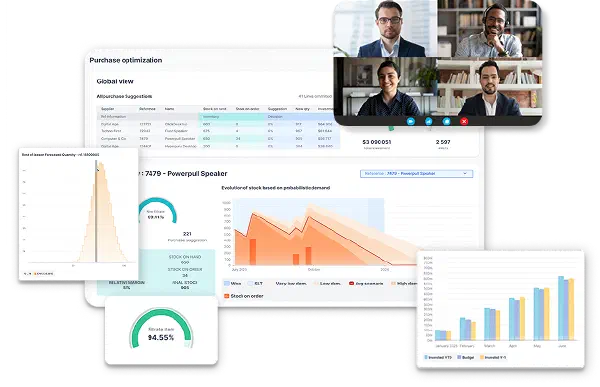
📷 Lokad combines supply-chain dashboards, probabilistic forecasts and decision views for complex optimization work. Source: official vendor website.
💚 What we like
Very deep optimization approach can model uncertainty and business constraints beyond conventional reorder-point planning.
Scope can cover purchasing, allocation, pricing and other linked decisions rather than forecasting in isolation.
Lokad’s technical platform and supply-chain-scientist model support highly customized enterprise planning problems.
🟠 What to know
Commercial engagements start in the low-thousands per month per decision scope and include significant onboarding effort.
Current integration guidance favors file-transfer pipelines, so implementation requires stronger technical ownership than plug-and-play commerce apps.
💡 Why this score: Lokad receives the highest core-performance score for quantitative optimization depth, but lower ecommerce fit, price accessibility and setup simplicity reduce its total. It is a specialist enterprise choice rather than a default replenishment app for most online merchants.
💰 Pricing: Custom scope-based quote. Lokad says a distinct supply-chain decision scope typically starts in the low thousands of EUR/USD per month; onboarding is commonly about six months.
✅ Best fit: Large, technically capable organizations with complex inventory economics, uncertainty and custom decision rules that justify a quantitative optimization program.
🚫 Less ideal for: SMBs wanting fast self-service onboarding, Shopify-first workflows or a standard planning interface with transparent monthly pricing.
🧩 Key capabilities
Probabilistic forecasting
Purchase optimization
Allocation optimization
Custom decision models
Envision language
Scenario analytics
🔎 Official sources: Product · Pricing · Documentation
🎯 Which tools should you actually shortlist?
Small Shopify brand: start with Fabrikatör and Prediko if your main goal is replacing spreadsheets with fast reorder guidance and purchase orders.
Growing multichannel brand: test Flieber and Inventory Planner when channels, warehouses and supplier decisions are becoming difficult to coordinate manually.
Established mid-market retailer: put Inventory Planner and Netstock on the list if you need stronger controls, broader integrations and more formal planning processes.
Large enterprise network: compare Netstock and Slimstock when enterprise resource planning integration, multi-location control and advanced planning depth matter more than app-style setup.
Technical optimization team: include Lokad when your planning problem is genuinely custom and probabilistic decision optimization is worth a developer-led implementation.
Value-conscious mixed-system buyer: test StockTrim alongside Prediko or Fabrikatör, depending on whether broad system compatibility or Shopify-native workflow matters more.
🧪 Run this test before you buy
Do not choose from a polished demo alone. Export the same recent sales, inventory, open purchase orders and supplier lead-time data into each finalist, then ask each vendor to forecast the same SKUs and produce the same replenishment decisions. Use a normal period plus a promotion, a seasonal item and a slow mover so you can see how the system behaves when demand is not clean.
Forecast the same 50 representative SKUs for the next 12 weeks.
Include at least five strongly seasonal products.
Include a recent promotion and see how it affects the forward forecast.
Change a supplier lead time and watch reorder dates and quantities update.
Add an incoming purchase order and confirm projected stock changes correctly.
Create a stockout-risk exception and trace the recommended action.
Test a new or low-history SKU and inspect how the forecast is created.
Compare recommendations across two warehouses or locations.
Override one forecast manually and check the audit trail or planner visibility.
Turn the final recommendations into a purchase-order or export workflow.
📏 Record the same things for every vendor: forecast error, stockout flags, suggested order date, suggested quantity, projected inventory, lead-time behavior, transfer handling, planner overrides, time to complete the workflow and any manual cleanup required.
🧾 10 questions to ask in every demo
Which parts of pricing change with revenue, SKUs, locations, users or order volume?
How are promotions, stockouts and one-off demand spikes treated in the forecast?
Can planners see why a reorder quantity or date was recommended?
How do supplier lead times, minimum order quantities and pack sizes affect recommendations?
Which integrations are native, and which require files, middleware or custom work?
How often does sales and inventory data refresh from each connected system?
What can planners override, and is there an audit trail for those changes?
How are transfers between stores or warehouses suggested and approved?
Who owns implementation, data cleanup and forecast configuration during onboarding?
If we leave, what forecast, purchasing and historical data can we export in a usable format?
❓ Frequently asked questions
What is demand forecasting and inventory replenishment software?
It is software that predicts future product demand and converts those forecasts into stock decisions. Instead of only showing what is on hand today, it estimates what will sell, combines that with lead times and incoming stock, and recommends what to reorder, when to place the order and how much to buy.
How is inventory planning software different from inventory management software?
Inventory management software is usually the system of record for stock, orders and warehouse transactions. Inventory planning software sits on top of that data to make forward-looking decisions about demand, safety stock, purchasing and transfers. Some products overlap, but this page compares planning decision tools rather than primary inventory databases.
What is the best demand forecasting tool for Shopify brands?
For Shopify-led operations, Prediko and Fabrikatör are the most native starting points in this comparison, while Inventory Planner and Flieber become more relevant as channel, location and planning complexity grows. The right choice depends on whether you value low-friction setup, multichannel breadth, deeper planning controls or enterprise system connectivity.
How much does demand forecasting software cost?
The range is wide. Merchant-oriented products can start below $100 per month, while StockTrim uses revenue-based tiers and Netstock starts at $900 per month. Enterprise platforms such as Slimstock and Lokad are quote-based, with Lokad describing decision scopes that typically start in the low thousands per month.
When is inventory planning software worth implementing?
It becomes useful when the cost of wrong purchasing decisions exceeds the cost of the tool and process change. Common signals are many SKUs, long supplier lead times, several channels or locations, frequent stockouts, excess inventory, or a planning team spending significant time maintaining spreadsheets and reconciling data.
What should a replenishment recommendation include?
A useful recommendation should show both timing and quantity, not just a low-stock alert. It should consider forecast demand, current and incoming stock, supplier lead time, safety stock or service targets, and practical constraints such as order multiples or minimum quantities. Stronger systems also explain exceptions and let planners override assumptions.
🔍 About this research
MarketMaze researches and scores each tool using its proprietary scoring methodology. Product details and pricing are checked against official vendor sources. Screenshots are from vendor websites, documentation, official demos, or MarketMaze product captures and are used to illustrate the products being reviewed.
Last research check: 26 September 2026.
